


Kazakhstan’s Middle Power Diplomacy
21 June 2023
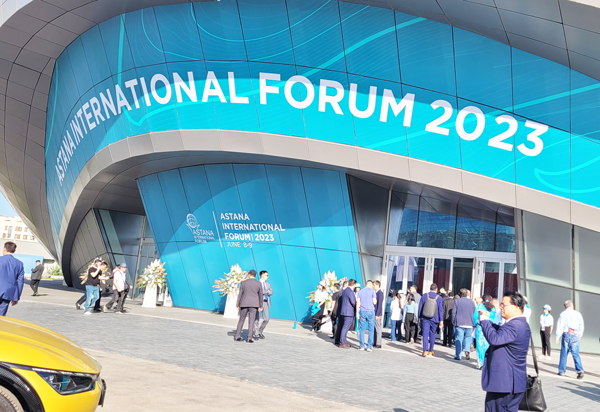
The inaugural Astana International Forum (AIF) which took place in Kazakhstan’s capital from 8-9 June has been lauded a success and is set to become an annual event. The AIF brought together over 4,000 delegates from all across the globe to discuss the many challenges facing the world today and to map out workable solutions for those challenges.
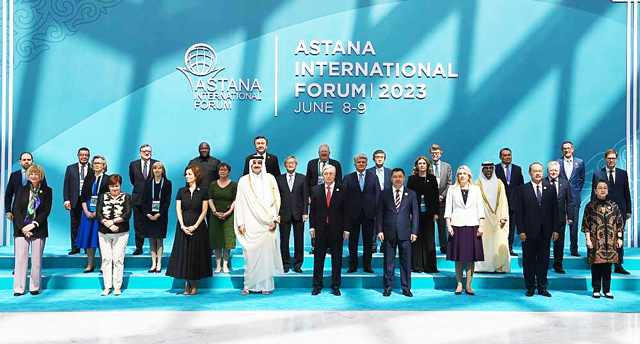
“We are also witnessing the return of earlier divisive ‘bloc’ mentalities unseen for 30 years. The forces of division are not purely geopolitical. They are also motivated by economic undercurrents. Economic policy itself is openly weaponized. These confrontations include sanctions and trade wars, targeted debt policies, reduced access or exclusion from financing, and investment screening. Together these factors are gradually undermining the foundation upon which rests the global peace and prosperity of recent decades: free trade, global investment, innovation, and fair competition,” Tokayev said at the plenary of the AIF.
Over 20 individual sessions over the two days discussed a range of issues including foreign policy, international security, energy, climate change, economy, finance and technology. The panels included experts in their fields who were able to move the debate forward.
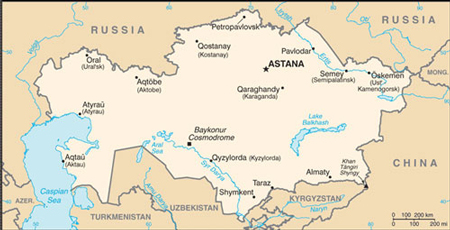
Kazakhstan, the largest land-locked country in the world, is also the largest economy in Central Asia. It has historically served as a bridge between not only the East and West, but also the North and South. The Middle Corridor links China to the European Union which provides opportunities for trade and investment. Opportunities and Challenges for the Middle Corridor was discussed at one of the panels. At a media briefing for international journalists Kazakh Deputy Minister of Foreign Affairs Roman Vassilenko said, “This visionary Trans-Caspian International Transport Route is a critical, relatively new, trade artery traversing Central Asia, the Caucasus, and Türkiye, spanning the Caspian and Black Seas. I say ‘relatively new’ because this route is the restoration of the ancient Great Silk Road in the modern environment, pure and simple. Where in the past camel caravans carried silk and fragrances from the East to Europe, now trains and trucks transport iPhones and computers, and other types of cargo.” The importance of the Belt and Road initiative in Kazakhstan was also emphasized as it promotes economic development and intraregional connectivity.
Kazakhstan follows a multi-vector foreign policy that strives to contribute to international peace, security and stability. Kazakhstan recently implemented far-reaching domestic reforms to ensure an inclusive and effective political system. The reforms ushered in new democratic principles including a more influential parliament, limited presidential powers and direct election of rural mayors. It is amid these sweeping reforms that the country hosted the AIF.
While South Africa and Kazakhstan are geographically in two different hemispheres, 14,000km apart, they have friendly relations and share many commonalities. They are both middle power countries, economically strong in their regions, rich in mineral resources and advocates for a nuclear-free world having surrendered their nuclear weapons, amongst others. The digital realm and growing technological enhancements have further spurred closer cooperation between these nations.
The ‘friends’ aspect was evident by the presence of Professor Anil Sooklal, South Africa’s BRICS Sherpa who participated as a speaker at the AIF. Also present was South Africa’s Deputy Minister of International Relations and Cooperation Candith Mashego-Dlamini and her delegation.
In an interview with the Diplomatic Society in Astana, Professor Anil Sooklal said that Kazakhstan was ideally positioned to host the Astana International Forum because of its close relationship with many countries across the world, and because of its neutrality, the discourse at the Forum was free and open.
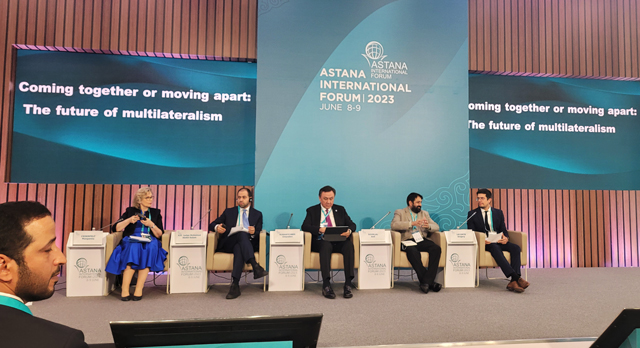
In the discussion ‘Coming Together or Moving Apart: The Future of Multilateralism’ Prof Anil Sooklal shared the stage with Kubanychbek Omuraliev, Secretary General, Organization of Turkic States, Judge Mohamed Abdel-Salam, Secretary General, the Muslim Council of Elders, UAE, Gregory Lecomte, Head of Central Asia Unit, Global Relations and Cooperation Directorate, OECD and Margareta Cederfelt, President of the OSCE Parliamentary Assembly. The session was facilitated by Le Figaro’s Renaud Girard.
Sooklal said that in Hiroshima on the margins of the G7 meeting, UN Secretary General Antonio Guterres described the current financial system as outdated, dysfunctional and unfair. The SG also said that the Global North must do more to ease the frustrations of the Global South. Sooklal said the reform of the multilateral system has been a standing agenda item since the formation of BRICS which is why under South Africa’s presidency, the theme for BRICS is ‘BRICS and Africa: Partnership for Mutually Accelerated Growth, Sustainable Development, and Inclusive Multilateralism’.
The world has changed significantly since the formation of the United Nations. Many see the ‘Super Powers’ as being the cause for much of the strife in the world today. Sooklal reiterated that the world needs a strong United Nations. Of the 51 founding members of 1945, there were only four African countries. Today membership stands at 193. The organisation needs not only to be reformed, it needs to be a transformed multilateral system. “BRICS has been calling for a reform of the UN to reflect the realities of 2023. 1945 is far behind us. The major part of Africa was still under colonial rule, most of the world was still under colonial rule when these rules and regulations were written. BRICS is here to work in conjunction with everyone, not just the Global South.” Sooklal said that multilateral bodies should not be politicised, they are around to serve the people and the multilateral system should be inclusive, equitable, fair and just that serves the global community.
BRICS has positioned itself as a champion of the developing world and at the BRICS Foreign Minister’s meeting in Cape Town recently, South African Minister of International Relations and Cooperation, Naledi Pandor said that the group’s vision was to provide global leadership in a world fractured by geopolitical tension, inequality and global insecurity. Kazakh First Deputy Minister of Foreign Affairs Kairat Umarov attended this meeting as current chair of CICA and future chair of the SCO. Providing a viable alternative, more than a dozen countries have expressed interest in joining the bloc including Kazakhstan. President Tokayev is expected to attend the BRICS Summit of heads of state that will be held in Johannesburg, South Africa in August later this year.
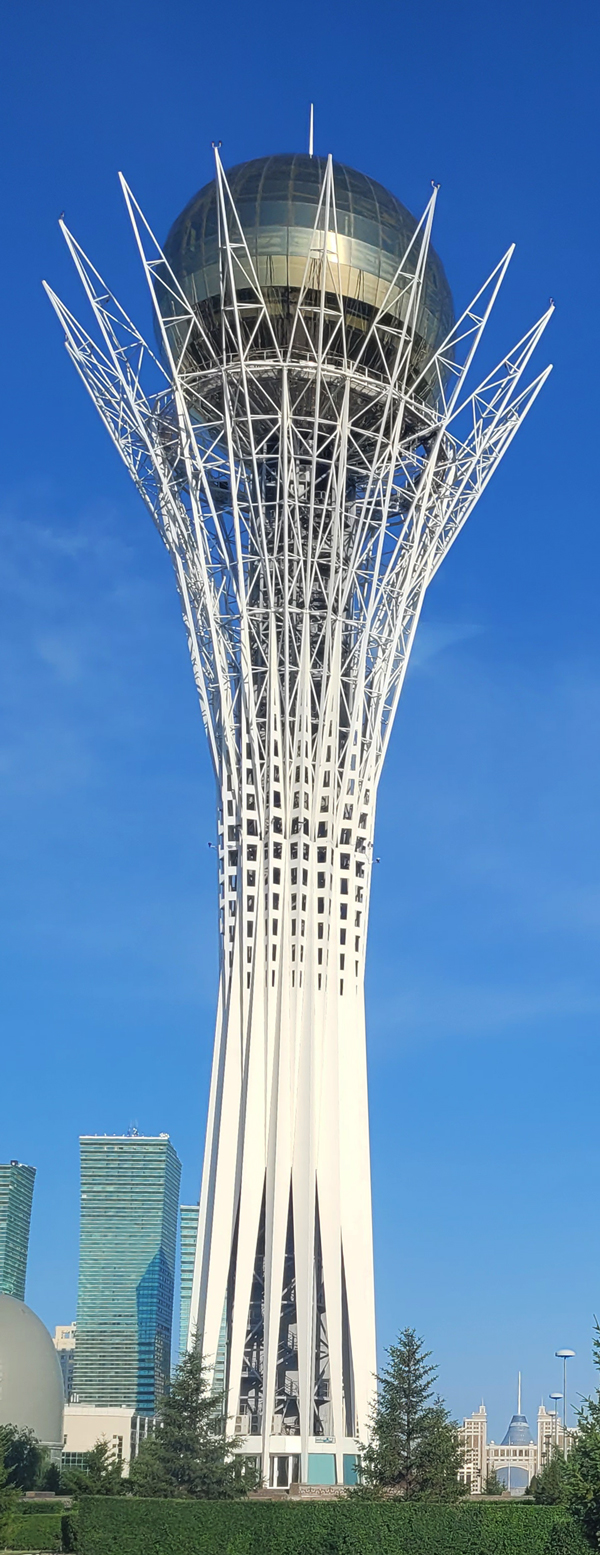
Kazakhstan’s capital Astana is a relatively new capital and has become renowned for its architectural wonders. The city’s big buildings and broad streets easily accommodated the influx of visitors to the Forum with ease.
Bayterek tower (photo TDS)
Kazakhstan’s very capable young people were out in full force at the Forum, directing, organizing, facilitating, controlling, communicating, and overall ensuring an efficient hosting of this large event. It seems that the city is under constant construction making room for young Kazakhs seeking opportunities in the capital city of Astana. With this calibre of youth, the future of Kazakhstan looks bright.
While dialogue is important in bringing people together and voicing varying viewpoints, actionable results are what is expected from forums like the AIF. Prime Minister of Uzbekistan Abdulla Aripov at the plenary of the AIF outlined his country’s goal of entering the ranks of upper middle income countries and together with the other Central Asian countries, increase trade and attract investment. When prodded by Richard Quest of CNN who facilitated the discussion how this will be achieved, his answer was simply, “Work….we have to work.”
TDS