


The Holy Month of Ramadan in Saudi Arabia

By Kirtan Bhana - TDS
19 March 2025
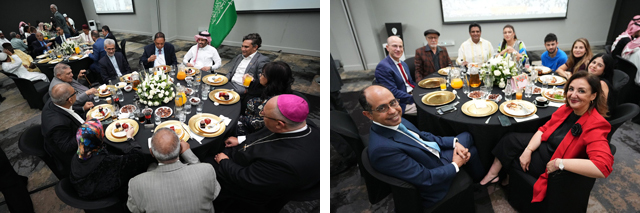
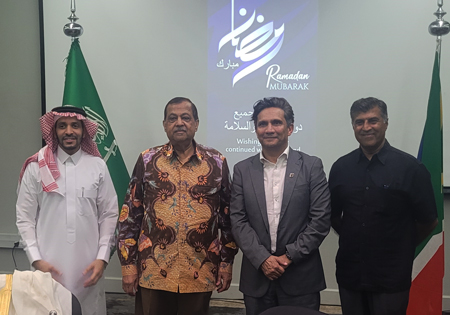
In the broader Islamic world, including South Africa, Ramadan and Iftar hold the same deep spiritual meaning. The gathering hosted by the Saudi Arabian Ambassador Mr Faisal Al-Harbi in Pretoria on 7 March is an example of how Muslims come together to observe Ramadan’s significance. For the guests at the Iftar observance, it is an opportunity to experience the communal and spiritual essence of the holy month, building bridges of understanding and solidarity among diverse cultures and backgrounds while honouring the shared values of faith, charity, and community that Ramadan embodies.
The over 200 guests at the Iftar that took place in Menlyn, Pretoria included members of the diplomatic corps and international organisations, government officials, the business community and friends of Saudi Arabia.
Ramadan is the ninth month of the Islamic calendar, and it holds profound significance for Muslims around the world. It is considered the holiest month in Islam, a time for spiritual reflection, self-discipline, devotion, and an opportunity for Muslims to strengthen their relationship with God. The month is marked by fasting from dawn until sunset, a practice that is central to the observance of Ramadan. Fasting during this time is not just a physical act of abstaining from food and drink, but also a spiritual exercise meant to foster empathy, humility, and a deepened sense of gratitude. The fast is broken each evening at Iftar, the evening meal, and marks a time of communal unity, spiritual celebration, and a connection with loved ones and the broader Muslim community.
In Saudi Arabia, the significance of Ramadan is particularly profound. As the birthplace of Islam, Saudi Arabia holds a central role in the Islamic world, and Ramadan is observed with a deep reverence and rich traditions throughout the Kingdom. The Kingdom’s atmosphere during Ramadan is characterized by a collective devotion to faith, charity, and social harmony. Iftar, the breaking of the fast, is an important occasion that is not only observed at homes but also in public spaces, where communities come together to share meals, exchange Du'a for each other and ask Allah to accept our fasting, and demonstrate acts of charity. It is a time when both rich and poor gather in solidarity to celebrate and commemorate the blessings of this holy month.
The observance of Iftar is integral to Ramadan, marking the moment when the day's fast is broken at sunset. Traditionally, Iftar begins with the consumption of dates and water, following the Sunnah, or tradition, of Prophet Muhammad (PBUH), who is believed to have broken his fast with dates. After the initial break, a meal is shared with family, friends, and community members, reflecting the sense of unity and compassion fostered by the month. In Saudi Arabia, large communal Iftars are often held in mosques, public squares, and homes. These gatherings are more than just meals; they are moments of spiritual connection, where Muslims come together in prayer and reflection.
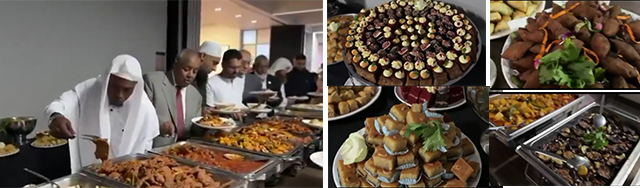
The types of foods served during Iftar in Saudi Arabia are diverse and rich, often reflecting the country's deep culinary traditions. Dates, as mentioned, are a staple, along with a variety of other foods that are both nutritious and satisfying after a day of fasting. Popular dishes include Samboosa (fried or baked pastries filled with meat, vegetables, or cheese), Jareesh (a dish made from crushed wheat and chicken or lamb), and Mandi (a flavorful rice dish often served with lamb or chicken). Additionally, Qamar al-Din (apricot juice) is a common drink during Iftar, providing refreshment after a long day of fasting.
In addition to food, there is a strong emphasis on charity during Ramadan in Saudi Arabia. Many people engage in Zakat (charitable giving), ensuring that those in need can partake in the blessings of Ramadan. The Kingdom is also known for hosting large-scale Iftar events for the less fortunate, especially in the holy cities of Mecca and Medina, where millions of pilgrims come to perform their Umrah pilgrimage during Ramadan.