


Media Wars and the New Harmony
Reclaiming the balance of the narrative in an Age of Digital Disruption
By Kirtan Bhana - Founder and President, The Diplomatic Society
“To see what is right and not do it is want of courage.” - Confucius
In an age where headlines travel faster than the truth, and algorithms often outrank accountability, we find ourselves in the middle of a profound battle, not of arms or ideologies, but of reality versus perception. The media, once a trusted mirror of society, is now a contested space where narratives are shaped, reshaped, and weaponised.
This year, I had the privilege of participating in the 4th China Media Group (CMG) Forum, held over three days in Qufu, Shandong Province, the birthplace of the revered philosopher Confucius. The theme, “Exchange, Mutual Learning, Technological Empowerment – The Power of Civilization in Transformation and Development,” could not have been more timely. As geopolitical tensions mount and the media landscape continues its rapid evolution, Qufu offered not just a setting steeped in heritage, but a lens through which to reflect on our shared future.
From Drums to Data: The Essence of Connection
Media has always been about connection. Long before the printing press, societies in Africa and Asia used drums as wireless communication tools, sending signals across forests and valleys. From those rhythms to papyrus scrolls, Gutenberg presses to global satellite broadcasts, the evolution of media has always been a response to the needs of its time.
Today, we hold in our palms a supercomputer, the smartphone, that allows anyone, anywhere, to become a broadcaster. With this shift comes unprecedented power and responsibility. Our ability to influence has never been greater; nor has the need for wisdom.
A Journey Through China’s Progress
Traveling from Beijing to Qufu aboard a high-speed train, covering 585 km in just 2 hours and 20 minutes, I experienced first-hand a tangible example of China’s transformative development. With magnetic levitation trains now being tested at speeds exceeding 600 km/h, it’s clear that China’s technological momentum is matched only by its national confidence.
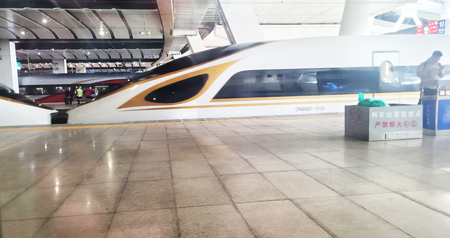
And yet, this progress is frequently misrepresented in dominant Western media narratives, not as advancement, but as a threat. Such portrayals are not only inaccurate, they reveal a fearful reluctance to acknowledge a multipolar world. This distortion feeds insecurity and misinforms citizens, many of whom are grappling with misgovernance at home.
The question is: Who controls the narrative—and to what end?
“We are living through the most profound disruption in media since the invention of the printing press.”
- Kirtan Bhana, CMG Forum
The Cyber Generation: Rewriting the Rules
One of the most energising developments in today’s discourse is the rise of the cyber generation, a globally connected youth who are not only consumers of content, but creators of meaning. Armed with access to diverse information sources, they are challenging outdated political, religious, social, and economic constructs that no longer serve inclusive progress.
These digital natives question authority, reject dogma, and advocate for causes that transcend borders - climate justice, economic equity, freedom of expression. Their voices, amplified by technology, are shaping a new kind of public sphere. Platforms like TikTok, YouTube, and Twitter/X are no longer just for entertainment, they are arenas of activism and transformation.
The implications are enormous: this generation is not inheriting the status quo, they are redefining it.
A Forum of Global Minds and Shared Mission
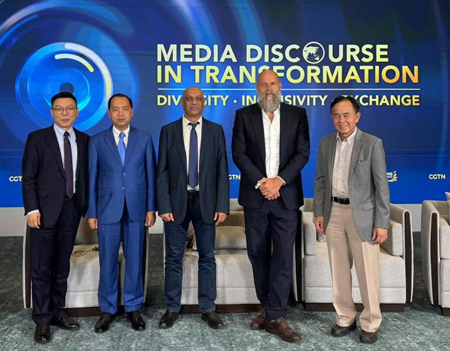
At the CMG Forum, I joined an esteemed panel that included Cambodia’s Minister of Information Neth Pheaktra, Holger Friedrich, publisher of Berliner Zeitung, and Thepchai Sae Yong, executive advisor at Thai PBS. Together, we explored the seismic shifts in the media ecosystem and the need to build a more balanced, inclusive, and ethical discourse.
Host and moderator Qinduo Xu, senior fellow at the Pangoal Institute, captured the moment in his opening remarks: “We are witnessing dramatic changes in how we absorb and transmit media information… countries are seeking to break through the old public opinion barriers.”
Indeed, the dominance of Western-centric narratives is waning, replaced by a multipolar media world where the Global South is rising, not just in numbers, but in narrative power. From African cinema to Chinese innovation, from Latin beats to Indian spirituality, cultures once marginalised, are now at the center of global storytelling.
Integrity in an Era of Disruption
Traditional media is struggling. Newsrooms are shrinking. Journalism jobs are disappearing. And with the shift to digital platforms, advertising revenue is concentrated in the hands of a few tech monopolies, not journalists. The race for attention often rewards going viral over veracity.
To navigate this disruption, we need a renewed commitment to values that have sustained credible journalism through centuries:
• Diversified funding to support independent, public-interest reporting.
• Cultural and educational partnerships to strengthen media as infrastructure.
• Ethical advertising that supports local ecosystems.
• Integrity as a strategic imperative, not a nostalgic ideal.
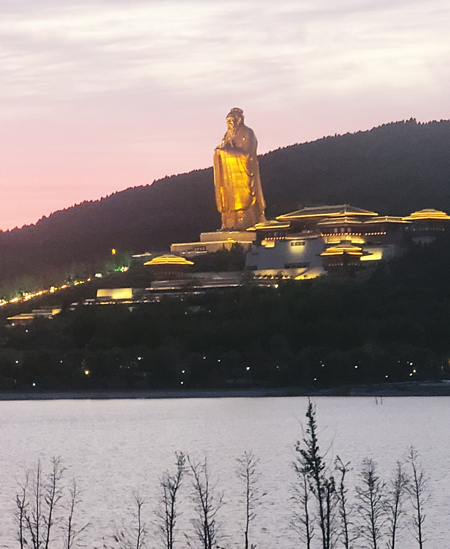
Confucius warned, “If names be not correct, language is not in accordance with the truth of things.” In the age of clickbait and AI-generated misinformation, that wisdom rings louder than ever.
Toward a Harmonious Discourse Ecosystem
From Qufu to Cape Town, Beijing to Bogotá, we are standing at a crossroads. We can allow media to be manipulated by those who seek to divide, or we can reclaim it as a tool for mutual understanding, accountability, and development.
The Confucian concept of “Great Harmony” envisions a world where diversity is not just tolerated, but celebrated; where communication is not just fast, but meaningful.
To achieve this, we must move:
• From dominance to dialogue
• From echo chambers to empathy
• From data to wisdom
Media must serve as the connective tissue of civilization -not its battleground.
Media wars are not just about headlines,they are about humanity. In this digital age, the truth is not just what is told, but how it is shaped, shared, and understood. As media practitioners, policymakers, and global citizens, our task is to ensure that authentic voices are heard, responsible stories are told, and dignity remains at the center of discourse.
Let us not forget, Confucius was not just a man of words,he was a man of vision. And today, his vision challenges us to elevate our communication to a higher purpose, toward balance, understanding, and harmony.