


Guizhou Province Shines in Johannesburg: A New Chapter in China–South Africa Economic, Cultural and Tourism Cooperation
By Kirtan Bhana
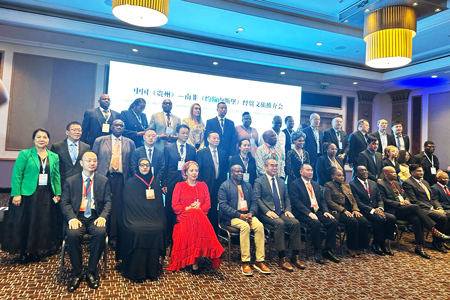
On 14 May 2025, Johannesburg played host to a vibrant and forward-looking engagement between South Africa and China’s Guizhou Province. Held at the NH Hotel in Sandton, the China (Guizhou)–South Africa (Johannesburg) Promotional Conference for Economy, Trade, Culture and Tourism was more than a showcase, it was a declaration of intent to deepen the already flourishing all-round strategic cooperative partnership between the two countries.
The high-level delegation from Guizhou, led by Mr. Sang Weiliang, Vice Chairperson of the Standing Committee of the Guizhou Provincial People’s Congress and Chair of the Guizhou Federation of Trade Unions, offered a dynamic presentation of the province’s strengths, aspirations and opportunities for partnership, with a specific focus on business, arts, sport, travel and tourism.
Situated on the Yunnan-Guizhou Plateau, Guizhou is a province rapidly shedding its former reputation as one of China’s less-developed regions. With a 2024 GDP of RMB 2.27 trillion and status as a national big data pilot zone, Guizhou has emerged as a hub for innovation, digital economy, and ecological sustainability.
Known for the iconic Moutai liquor, a global symbol of refined Chinese spirits, Guizhou is equally celebrated for its natural wonders. Four UNESCO World Natural Heritage Sites, including the famed Huangguoshu Waterfall and Zhijin Cave, place it at the heart of China’s ecotourism ambitions. President Xi Jinping’s description of Guizhou as a “province of parks” reflects its unspoiled landscapes and cool climate, making it a “natural air conditioner” and “green oxygen bar.”
But Guizhou is more than breathtaking scenery. It is a model for rural revitalization and cultural pride. Ethnic diversity, with over 36% of the population comprising minority groups such as Miao, Bouyei and Dong, has birthed world-famous grassroots events like the “Village Super” and “Village BA,” merging traditional culture with sport and tourism.
The promotional conference comes on the heels of several strategic milestones, including the elevation of China–South Africa relations to an “All-Round Strategic Cooperative Partnership in a New Era” during President Cyril Ramaphosa’s 2024 visit to China. This upgrade, as noted by Ambassador Siyabonga Cwele, reflects an ambitious vision to modernise trade, agriculture, infrastructure, and technology, with people-to-people exchange at the core.
“South Africa will benefit from collaborating with outstanding provinces such as Guizhou,” said Cwele, who praised Guizhou’s transformation from one of China’s poorest provinces into a beacon of innovation and high-quality growth. He highlighted the province’s embrace of big data, digital healthcare, and engineering prowess in infrastructure, noting its world-class bridges and tunnels, as lessons South Africa can adapt in its own rural development.
The mutual economic benefits are clear. In 2024, trade between Guizhou and South Africa reached nearly 1.1 billion yuan. With Guizhou’s growing industrial clusters, from advanced equipment manufacturing and new energy batteries to traditional exports like tea, chilli and guitars, the foundation is set for deeper commercial exchanges. The invitation from Guizhou to South African entrepreneurs to become “Guizhou merchants” was underscored by real opportunity: open markets, favourable policy environments, and complementary strengths.
Tourism emerged as a key focal point. With the sector contributing 9% to South Africa’s GDP and employing 1.4 million people, collaboration with Guizhou in nature-based, heritage and sport tourism offers major potential. Guizhou’s interest in co-developing tourism routes that connect nature with culture, pairing Moutai with Cape wines, village football with township tournaments, speaks to a people-centered approach to diplomacy.
The Speaker of the Gauteng Provincial Legislature captured the spirit of the event: “We gather here not just to discuss opportunities, but to lead where others retreat, build where others break, and act where others hesitate.” Her call for inclusive, long-term partnerships was echoed throughout the conference as the Belt and Road Initiative (BRI) was reaffirmed as a cornerstone for connectivity, infrastructure, and sustainable development.
As Consul General Pan Qingjiang and Gadija Brown, Special Economic Advisor to the Deputy President, pointed out, Guizhou’s transformation aligns with South Africa’s vision of inclusive development, social cohesion, and technological leapfrogging. There is a growing consensus that regional collaboration, between provinces, cities, and communities, is the most durable path to global peace and prosperity.
In a world marked by shifting geopolitical tides and growing uncertainties, Guizhou’s engagement with Johannesburg is a timely reminder of the power of cooperation. Whether through the lens of trade, tourism, technology, or sport, the message is clear: our destinies are interconnected.
South Africa welcomes Guizhou’s mountains and bridges, its liquor and lakes, its entrepreneurs and artists. And in turn, South Africa offers its markets, cultural richness, youthful energy, and gateway to the African continent.