

Africa Calls for Fairer Global Finance at G20–Africa High-Level Dialogue
19 November 2025
Africa faces growing financing pressures as rising debt service costs severely constrain development. By end-2024, public debt had reached USD 1.815 trillion, while annual debt servicing climbed to USD 163 billion, leaving 57% of Africans living in countries where debt payments exceed health or education spending.
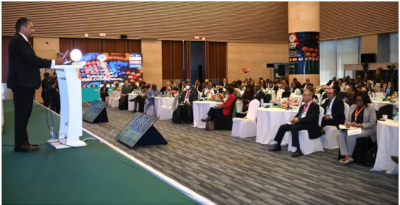
These escalating obligations not only erode fiscal space but are also directly reinforced by Africa’s persistently high cost of capital, a systemic penalty that inflates borrowing costs regardless of fundamentals. It is precisely in response to this dual challenge of unsustainable debt and prohibitively expensive financing that South Africa, under its G20 Presidency and in partnership with the AUC, UN DESA, and UNDP, convened the G20–Africa High-Level Dialogue on Debt Sustainability, Cost of Capital, and Financing Reforms at the AU Headquarters in Addis Ababa. The meeting brought together African Ambassadors, G20 Ambassadors, AU Commissioners, representatives from AU Member States, International Financial Institutions, UN agencies, Regional Development Banks, Credit Rating Agencies, Institutional Investors, Civil Society Organisations, Academia, Think Tanks from Africa and the Global South, as well as journalists and media practitioners.
In his remarks Mr. Alvin Botes, South Africa’s Deputy Minister of International Relations and Cooperation, highlighted the progress achieved under South Africa’s G20 Presidency and the importance of addressing the escalating cost of capital for developing economies. He underscored the establishment of the Africa Expert Panel, chaired by former Finance Minister Trevor Manuel, tasked with developing practical recommendations to lower borrowing costs and enhance Africa’s collective influence in global financial governance. He welcomed the G20 Ministerial Declaration on Debt Sustainability, noting its alignment with the Lomé Declaration on Debt and the Common African Position on Debt.
Mrs. Francisca Tatchouop Belobe, AU Commissioner for Economic Development, Trade, Tourism, Industry and Minerals, commended the Republic of South Africa for placing Africa’s priorities at the centre of the international agenda during its historic G20 Presidency. She emphasized that Africa remains resilient but constrained by disproportionately high borrowing costs and limited access to concessional finance. She called for urgent and equitable reform of the global financial architecture, fairer access to long-term finance, and stronger African representation in global fora. She reaffirmed the AU’s commitment to financial sovereignty through initiatives such as the African Credit Rating Agency and the African Debt Monitoring Mechanism, emphasizing that Africa seeks fairness, partnership, and shared responsibility.
The Dialogue built on key global and continental milestones, including the Compromiso de Sevilla (FfD4), the Rio BRICS Declaration, and the African Leaders’ Debt Relief Initiative (ALDRI). Aligned with Agenda 2063 and the 2030 Agenda for Sustainable Development, it provided a high-level platform to challenge prevailing narratives and advance practical African-led proposals to reform the global financial architecture.
This momentum carried into the two panel sessions, where experts and policymakers examined Africa’s rising debt vulnerabilities, the limitations of existing restructuring mechanisms, and the structural factors driving the continent’s high cost of capital. Across both sessions, panelists recommended urgent reforms to the G20 Common Framework, the establishment of an African Debtors’ Forum, the operationalization of Africa-led financing mechanisms such as the African Financial Stability Mechanism and African Credit Rating Agency, and the expansion of innovative instruments including debt-for-climate swaps, SDG-linked financing, and credit-enhancement facilities. They further called for stronger domestic fiscal capacity, responsible borrowing, modernized multilateral development banks, deeper domestic capital markets, and a greater African voice in global financial governance.
In their closing remarks, Ambassador Fathallah Sijilmassi, Director-General of the African Union Commission, and Mr. Alvin Botes expressed appreciation to all participants for their substantive contributions. They reaffirmed the continent’s collective commitment to advancing sustainable debt solutions, lowering the cost of capital, and promoting long-term, inclusive development in line with #Agenda2063.
The outcomes of the Dialogue will inform the Johannesburg Declaration and contribute to Africa’s continued advocacy within the G20 on debt sustainability, global financial reform, and equitable access to development finance in the lead up to the G20 Leadership Summit. The meeting underscored the unity of purpose between the African Union and the Republic of South Africa and reflected Africa’s shared vision for a fair, just, and more inclusive global financial system.
African Union Commission