


Vladimir Tretchikoff - The People’s Artist Who Painted Humanity into Diplomacy
By Kirtan Bhana
27 November 2025
When Alexander Pankin, Deputy Minister of Foreign Affairs of the Russian Federation, delivered his video address at the opening of the exhibition commemorating the artistic legacy of Vladimir Tretchikoff on 25 November 2025, his words carried an unmistakable truth: Tretchikoff was more than an artist — he was a bridge.
Hosted at the parish center of the Cathedral of St. Sergius of Radonezh in Midrand, the exhibition became a poignant marker of the enduring cultural affinity between Russia and South Africa. Organized jointly by the Russian Foreign Ministry and the Institute for African Studies of the Russian Academy of Sciences, the event drew together diplomats, academics, artists, government representatives and the Russian community in South Africa. Russian Ambassador to South Africa Roman Ambarov, who welcomed guests to the exhibition, captured the sentiment perfectly: “Tretchikoff, in his own way, united people just as effectively as any diplomatic forum. He saw beauty in diverse cultures… He created art for all groups of society, including those whose voices were often overlooked.”
An Artist of Courage, Curiosity, and Conviction
Born Russian, celebrated South African and embraced by the Global South, Vladimir Tretchikoff lived a life marked by creativity, openness and a fearless embrace of difference. He painted the world he encountered, not as an outsider looking in, but as a participant, as someone who took joy in seeing humanity in all its shapes, shades and stories.
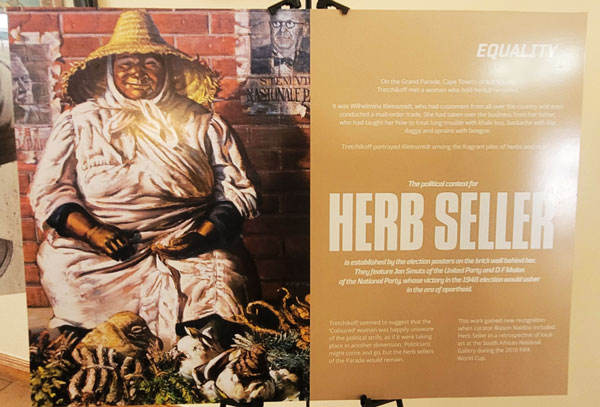
His portraits of African and Asian figures, his depictions of everyday life and his bold colour palette all spoke to a man who recognised human dignity where others refused to look. Amidst apartheid’s harsh divisions, Tretchikoff stood firm in his conviction that beauty, identity and humanity belonged to all. For this, he became widely known as “the people’s artist.”
Deputy Minister Alexander Pankin echoed this in his address: “A passionate defender of civilizational diversity and solidarity, he remains an outstanding representative of our shared cultural legacy. His commitment resonates today with the ideals of a polycentric world in which the voice of the Global South must be amplified.”
From the Studio to the Struggle - A South African Connection
Tretchikoff’s artistic lens was inseparable from South Africa’s historical journey. He arrived in a country fractured by race laws, yet he saw, and painted, unity. He captured Africans, Asians, Europeans, people of mixed heritage and South Africans of all walks of life. His work challenged the narrow confines of apartheid’s hierarchy of value.
This exhibition therefore was an affirmation of shared memory, an acknowledgment that in times of deep injustice, some voices found ways to insist on human beauty and dignity.
It is fitting that the exhibition took place during the 65th anniversary of the UN Declaration on Decolonization, a resolution initiated by the Soviet Union, a reminder of Russia’s long-standing solidarity with anti-colonial movements. As Pankin noted, the principles driving Tretchikoff’s work echo the philosophy of Ubuntu, a concept now guiding South Africa’s G20 Presidency: I am because we are.
And at this historic moment, with South Africa becoming the first African nation to assume the G20 Presidency, cultural diplomacy carried a new resonance.
Artistic Diplomacy in a Multipolar World
Ambassador Ambarov reminded attendees: “He understood the richness of communities from every background… we recognise in him something profoundly Russian, an instinct to connect, to include, to reveal shared humanity.”
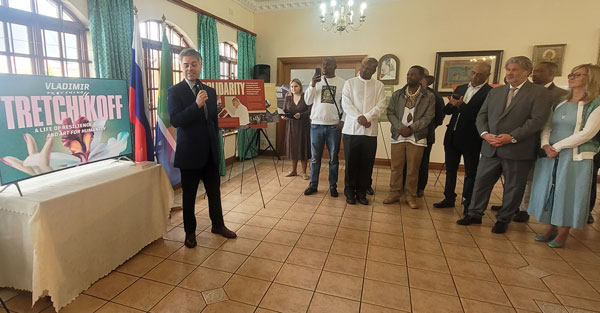
In this sense, Tretchikoff was practicing diplomacy long before the term “cultural diplomacy” became fashionable. His canvases were quiet ambassadors; his subjects became emissaries of empathy. The exhibition, curated by Dr Boris Gorelik, Senior Research Fellow at the Institute for African Studies, highlighted this legacy through a guided tour.
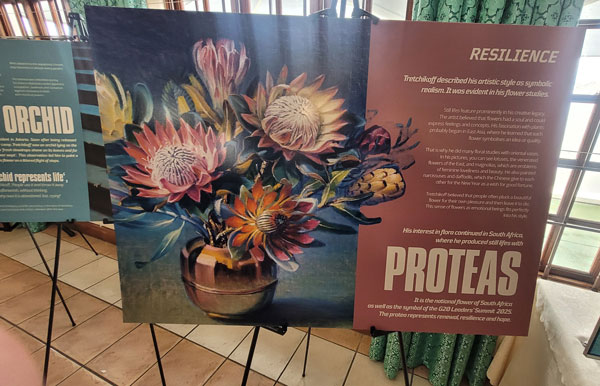
As the G20 Leaders’ Summit came to a close, Gorelik aptly curated the exhibition in line with South Africa’s G20 themes – ‘Solidarity, Equality and Resilience’.
Adding a deeply personal layer to the opening of the exhibition, Tretchikoff’s granddaughter, Natasha Swift, delivered a prerecorded message, a reminder that behind every global icon lies a family preserving the flame of memory.
Doing What You Love, Becoming Who You Are
There is an old adage: If you do what you love, you’ll never work a day in your life.
Tretchikoff embodied this belief.
He painted because he had to paint, because it gave him joy, purpose and a voice. And by doing so, he made his living not merely through skill, but through authenticity. His life stands as testament that passion, when pursued with integrity and openness, becomes its own form of freedom.
A Cathedral, A Canvas, A Connection
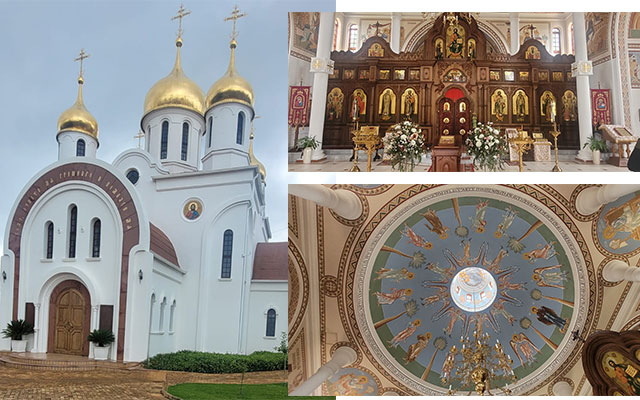
The Cathedral of St. Sergius of Radonezh, a spiritual home for the Russian community in South Africa, served as a poignant venue. It symbolised the historical, cultural and emotional threads that bind the two nations, from anti-apartheid solidarity to today’s cooperation in the BRICS family and South Africa’s G20 leadership.
On 25 November 2025, these threads came alive not through speeches alone, but through colour, light, brushstrokes and memory.
A Legacy That Belongs to All
As the exhibition concluded Russia’s contribution to South Africa’s G20 Presidency, it left attendees with a profound reflection: art endures where politics shift; culture connects where borders divide; and shared humanity persists where history has wounded.
Vladimir Tretchikoff remains, in every sense, a painter of the people, a reminder that the most powerful diplomacy often begins with the simple act of seeing one another.