


Kazakhstan Raises Alarm Over Drone Attacks on Tankers Linked to CPC Exports in the Black Sea
TDS – 15 January 2026
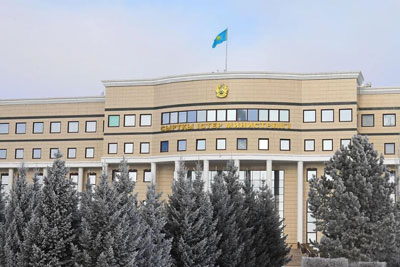
The Ministry of Foreign Affairs of the Republic of Kazakhstan has expressed serious concern following a series of drone attacks on oil tankers in the Black Sea linked to Kazakhstan’s main crude oil export route via the Caspian Pipeline Consortium (CPC).
In a statement issued on 14 January 2026, spokesperson Yerlan Zhetybayev confirmed that on 13 January unmanned aerial vehicles targeted three civilian tankers en route to the CPC Marine Terminal near Novorossiysk. The vessels were scheduled to load Kazakh-origin crude oil transported through the CPC pipeline.
According to the Ministry, the affected tankers, including the Greek-operated Delta Harmony (Liberian flag) and Matilda (Maltese flag), were fully compliant with international maritime requirements. They possessed the necessary permits and identification systems, and no casualties were reported, although damage to the vessels was confirmed.
Kazakhstan emphasized that it is not a party to any armed conflict and reiterated its role as a significant contributor to global and European energy security. During immediate consultations with ambassadors from several European countries, representatives of the United States, and other international partners, Kazakhstan emphasised the need for effective measures to safeguard hydrocarbon transportation, particularly maritime routes, in line with international law.
The Ministry noted that the increasing frequency of such incidents presents growing risks to international energy infrastructure and freedom of navigation. It called on partners to engage in close cooperation to prevent similar incidents and to protect civilian shipping and trade routes.
Strategic Importance of the CPC
The Caspian Pipeline Consortium is Kazakhstan’s principal oil export artery, transporting crude from major producing fields in western Kazakhstan, including Tengiz, Kashagan and Karachaganak, to the Black Sea. The approximately 1,500-kilometre pipeline terminates at the CPC Marine Terminal near Novorossiysk, from where oil is shipped to international markets.
Under normal operating conditions, CPC carries more than 80% of Kazakhstan’s crude oil exports and handles volumes equivalent to over 1% of global oil supply. In 2024, Kazakhstan supplied approximately 1.05 million barrels per day to the European Union via CPC, accounting for around 11.5% of total EU crude oil imports.
The CPC operates as an international consortium and supports the upstream assets of major international energy companies, including Chevron, ExxonMobil, ENI, Shell and TotalEnergies. Kazakhstan has consistently maintained that the pipeline and its marine terminal are civilian facilities protected under international legal norms.
Impact on European Energy Security
Kazakhstan ranks among the largest crude oil suppliers to the European Union, and CPC Blend is a crude grade widely processed by European refineries. Disruptions to CPC operations, including attacks on tankers linked to CPC loadings, have direct implications for supply stability, freight availability and insurance costs.
Kazakhstan has warned that alternative supplies cannot easily offset disruptions to CPC Blend, given refinery configurations across Europe. Beyond immediate supply concerns, repeated attacks raise broader questions about the security of civilian maritime trade and international energy infrastructure in the Black Sea region.
Pattern of Disruptions
The January 2026 tanker attacks follow a series of incidents affecting CPC operations over the past year. In February 2025, a drone strike damaged the Kropotkinskaya pumping station in Russia, reducing pipeline throughput. Between September and November 2025, multiple drone-related incidents near Novorossiysk led to temporary suspensions of oil loadings. On 29 November 2025, a drone attack damaged a key mooring at the CPC Marine Terminal, further constraining exports.
As a result of these cumulative disruptions, Kazakhstan’s oil exports via the Black Sea have been significantly reduced. January loadings are expected to fall to between 800,000 and 900,000 barrels per day, down from normal levels of up to 1.7 million barrels per day.
Kazakhstan’s Position
Kazakhstan has lodged formal protests against repeated attacks on CPC infrastructure and associated commercial shipping, stressing that such actions undermine international energy markets and violate established norms of international law. The Government has reiterated its commitment to diplomatic engagement, de-escalation, and open communication, while safeguarding its sovereign economic interests.
The Ministry of Foreign Affairs concluded that protecting civilian energy infrastructure and maritime trade routes is essential to global energy stability and called on international partners to cooperate in ensuring the security of hydrocarbon transportation and freedom of navigation.