


Positioning Africa to Lead a New Global Economy - Alamein Africa Forum
By Kirtan Bhana
13 May 2026
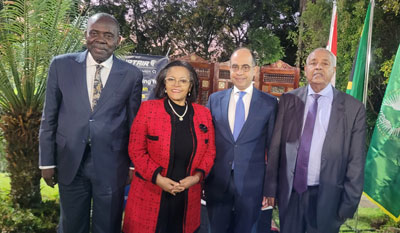
At a pivotal moment for the African continent and the wider global economy, an important diplomatic and economic engagement hosted at Egypt House in Pretoria placed Africa’s future squarely at the centre of international discourse. Convened by Ambassador of Egypt Ahmad Sharief, the reception titled 'African Opportunity and Partnership: In Promotion of the Alamein Africa Forum' introduced the vision and ambition behind the inaugural Alamein Africa Forum GO63, to be held in El Alamein from 25–27 June 2026 alongside the 2026 African Union Mid-Year Summit.
The promotional event reflected a broader continental shift that Africa is an emerging centre of global economic direction, innovation and strategic leadership.
The Alamein Africa Forum GO63 is designed as Africa’s premier “implementation-first” business forum platform where policy, finance and private sector leadership converge to accelerate the goals of Agenda 2063. Co-organised by the Government of Egypt, African Export-Import Bank, the African Union Commission and African Union Development Agency – NEPAD, the forum aims to move beyond declarations toward measurable implementation, investment mobilisation and continental integration.
In his welcoming remarks, Ambassador Sharief stated the urgency of transforming African aspirations into coordinated action. He stressed that the forum seeks to shift discourse from rhetoric to delivery, from policy statements to executable projects capable of reshaping the continent’s economic trajectory.
Sharief pointed to the immense collective power already present within Africa, noting that between South Africa and Egypt alone, the two economies account for nearly a quarter of Africa’s GDP.
The question that resonated throughout the event was what economic and social transformation could emerge if African nations, from Cape to Cairo and Durban to Dakar, streamlined their geopolitical ambitions, harmonised bureaucratic systems and aligned their development agendas?
That question framed the deeper significance of GO63. In an era marked by geopolitical fragmentation, supply chain volatility and shifting centres of global power, Africa increasingly recognises that it cannot remain a passive observer in decisions shaping its own future. Instead, the continent is positioning itself as an active architect of a new economic order.
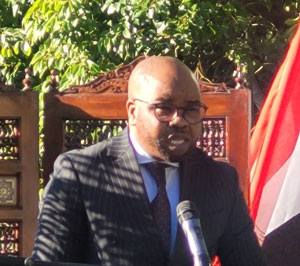 Setting the scene, Goodwill Stanley Kachingwe of the South African Institute of International Affairs (SAIIA) highlighted the importance of creating practical continental platforms that connect political leadership with investment and implementation.
A strong developmental perspective was provided by CEO of AUDA-NEPAD Nardos Bekele-Thomas, who reflected on the role of AUDA-NEPAD in driving some of Africa’s most important developmental initiatives since its establishment in 2001. She acknowledged Egypt’s historic contribution as a founding member of the African Union and pointed to encouraging economic indicators emerging across the continent.
According to Bekele-Thomas, nearly 41 percent of African countries are recording growth levels exceeding five percent as evidence of a continent steadily strengthening its infrastructure, logistics systems and digital connectivity. She emphasised that the harmonisation of regulatory frameworks and the improvement of continental mobility are becoming central to unlocking deeper economic integration and accelerating intra-African trade.
Her remarks reflected a recurring theme throughout the event: Africa’s development is no longer theoretical. Tangible progress is already underway through infrastructure expansion, digital transformation and regional connectivity.
The demographic dimension of Africa’s future was articulated by the Dean of the South African Diplomatic Corps, Ambassador Salih Omar Abdu of Eritrea, who highlighted the continent’s greatest strategic advantage, its youth.
“Young Africans are not waiting for the future; they are creating it,” he remarked, pointing to a continent where nearly 70 percent of the population is aged 30 and under. His observations reflected growing confidence in African intellectual capital, innovation and knowledge systems, positioning Africa as a driver of solutions for global challenges.
He further emphasised the increasingly important role being played by continental financial institutions such as African Export-Import Bank and the African Development Bank in financing African priorities and reducing dependency on external economic structures.
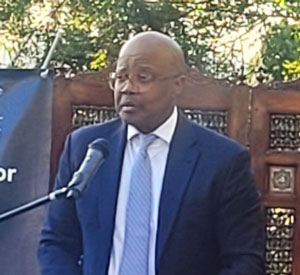 The business dimension of continental growth was strongly articulated by Ronnie S. Ntuli, Chairperson of Thelo Group and Board Member of Afreximbank. Ntuli described the private sector as the backbone supporting Africa’s aspirations, carrying the responsibility of transforming policy ambitions into industrial, infrastructural and economic realities.
He pointed to Egypt’s remarkable national transformation under Vision 2030, describing the development trajectory of the nation of more than 100 million people as evidence of what strategic planning, infrastructure investment and political coordination can achieve on the continent.
 Further reinforcing the investment narrative, Fernando Balderrama of the AfDB spoke of the institution’s role as a strategic stakeholder in the Alamein Africa Forum. Since its establishment in 1964 and headquartered in Abidjan, the bank has evolved into one of Africa’s most influential financial institutions supporting continental development.
Balderrama highlighted the importance of aligning the African Union Mid-Year Summit with the business forum, creating a rare convergence between political decision-making and project financing. He stressed that the current global environment presents significant opportunities for Africa to mobilise capital, bridge financing gaps and accelerate viable cross-border projects in infrastructure, connectivity, trade and emerging industries.
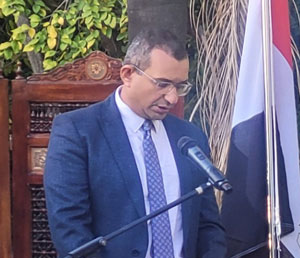 Closing the programme, Ehab Salah El-Din, Commercial Counsellor at the Embassy of Egypt, reflected on the importance of strengthening meaningful African partnerships while shaping a future rooted in sustainable development and shared prosperity. He highlighted Egypt’s evolving economic landscape and the growing role of its private sector in areas including agriculture, tourism and industrial development.
Egypt’s unique geographic position at the intersection of Africa, the Middle East, Eurasia and Southeast Asia makes it a strategic location that increasingly positions the country as a gateway for trade, logistics and investment flows connecting multiple regions.
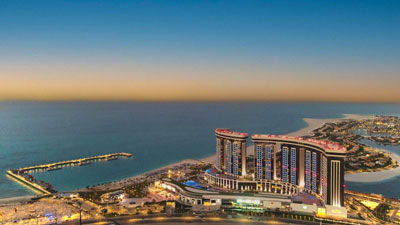
The choice of El Alamein as host city for GO63 further symbolises this forward-looking vision. Situated along Egypt’s Mediterranean coastline between Alexandria and Marsa Matrouh, Alamein has rapidly emerged as one of the country’s most ambitious fourth-generation smart cities. Conceived as a hub for investment, culture and modern urban living, the city represents a new African narrative built on innovation, sustainability and international connectivity.
Beyond its striking coastal setting, Alamein reflects a broader continental ambition: building modern African cities capable of hosting global dialogue, attracting investment and nuturing knowledge economies. Its long-term development includes universities, arts and cultural institutions, hospitality infrastructure and integrated urban planning which are all symbolic of Africa’s evolving economic identity.
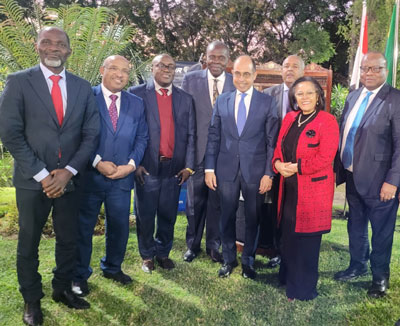
Ultimately, the reception at Egypt House in Pretoria was about affirming a continental mindset increasingly defined by implementation, confidence and ownership of Africa’s future.
As global economic systems undergo profound transition, Africa’s responsibility is no longer merely to participate in global conversations, but to shape them. The Alamein Africa Forum GO63 appears poised to become one of the key platforms through which Africa seeks to align political leadership, entrepreneurial energy and financial capital into a coherent force capable of defining the continent’s next decade of growth.
In many respects, the event captured the essence of Agenda 2063 itself, an Africa that is integrated, innovative, self-assured and increasingly prepared to lead within a rapidly changing world.
(Photos: TDS)