

From Soccer City to the Azteca-Bafana Bafana, Africa's Hope and Football's Great Reunion
By Kirtan Bhana
8 June 2026
There are moments in sport when history appears to pause, look back at itself, and then stride confidently into the future.
When South Africa's Bafana Bafana walk onto the hallowed turf of the Estadio Azteca in Mexico City on 11 June 2026 to face Mexico in the opening match of the FIFA World Cup, the world will witness one such moment.
Sixteen years ago, in 2010, Mexico and South Africa opened the first FIFA World Cup ever held on African soil. The image of Siphiwe Tshabalala's thunderous opening goal remains etched in football folklore, accompanied by the unmistakable sound of vuvuzelas that announced Africa's arrival on football's grandest stage. Today, destiny has brought these two nations together once again, this time on North American soil, in a symbolic passing of the baton between hosts of football history.

For South Africans, the occasion evokes nostalgia, pride and renewed belief. Bafana Bafana's qualification for the 2026 FIFA World Cup represents the continuing evolution of a nation that has undergone profound transformation over the past three decades. In a country where sport has often served as a bridge across divisions and a catalyst for nation-building, every appearance on the global stage carries significance beyond the scoreboard.
South Africa occupies a unique place in world sporting history. It remains the only country to have hosted the FIFA World Cup, the Rugby World Cup and the Cricket World Cup. It has welcomed the Africa Cup of Nations on multiple occasions and has repeatedly demonstrated its ability to unite people through sport. Football, however, occupies a special place in the national consciousness.
From dusty township fields to packed stadiums, football has long been the sport of the people. It sustained communities during difficult times, inspired generations of youth, and provided a common language across cultures. The current Bafana squad carries that legacy with them to Mexico.
Their arrival in Pachuca, greeted by the stirring sounds of a mariachi band after travel delays caused by visa complications, was a reminder that football remains one of humanity's most universal cultural expressions. The players may have appeared weary from their journey, but the warm Mexican welcome reflected the spirit of hospitality and friendship that defines the beautiful game.

For the first time, ten African nations have qualified for football's biggest tournament, representing the strongest African presence in World Cup history. The continent arrives not as an outsider hoping for a surprise run, but as a genuine footballing force. African football has steadily matured over decades. The dazzling flair of West Africa, the tactical sophistication of North Africa, the physical resilience of Southern Africa and the technical excellence emerging across the continent have elevated African teams into serious contenders. The dream that once seemed distant—the possibility of bringing football's most coveted trophy to Africa for the first time—no longer belongs solely to the realm of imagination.
Africa has produced world-class players, iconic clubs and unforgettable World Cup moments. The next logical step is for an African nation to lift the trophy itself. Whether it is South Africa or one of the continent's other representatives, the aspiration belongs collectively to Africa's 1.4 billion people.
The geopolitical context surrounding this World Cup also adds a fascinating dimension.
The 2026 tournament is jointly hosted by Mexico, the United States and Canada—the first World Cup shared by three nations. It arrives at a moment of considerable global uncertainty. Geopolitical tensions, economic pressures, technological disruption and ideological divisions have reshaped international relations in ways few could have imagined a decade ago.
Historically, the FIFA World Cup has served as one of the few global events capable of transcending political differences. For one month, football has repeatedly reminded humanity of its shared passions and collective aspirations.

The United States, in particular, carries enormous expectations. Long regarded as the epicentre of global entertainment, media innovation and celebrity culture, America possesses the infrastructure, resources and cultural influence to help deliver what many hope will be the most spectacular World Cup ever staged.
Yet unlike previous tournaments, success in 2026 will be measured by more than dazzling ceremonies, advanced technology and record-breaking audiences. It will be judged by the tournament's ability to restore a sense of common humanity in an increasingly fragmented world.
The opening match between Mexico and South Africa may attract hundreds of millions of viewers worldwide. It is a fixture rich in symbolism. It links Africa and North America, past and future, memory and possibility.
READ ALSO: United States, Mexico and Canada Celebrate Bafana Bafana Ahead of FIFA World Cup
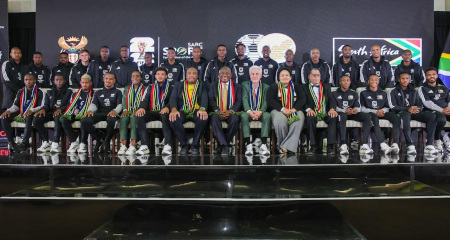
The diplomatic receptions hosted in Pretoria by the ambassadors of the United States, Mexico and Canada ahead of the tournament reflected this reality. Their collective support for Bafana Bafana demonstrated how sport continues to create spaces for dialogue, friendship and cooperation even when politics often struggles to do so.
Football diplomacy remains one of the most effective forms of soft power ever invented.
As kick-off approaches, South Africans will remember Tshabalala's goal, the euphoria of 2010 and the sense that anything was possible. They will remember the journey that brought the nation from isolation to global sporting prominence. They will remember that sport has often helped the country believe in itself.
President Cyril Ramaphosa may have jokingly promised a national holiday should Bafana lift the trophy on 19 July, but behind the humour lies a deeper truth. Victories in sport matter because they remind nations of what they can achieve together.
Bafana Bafana enter this World Cup as underdogs. The rankings may not place them among the favourites. The experts may focus on traditional football powers. Yet every World Cup begins with possibility. And perhaps that is the enduring magic of football.
As South Africa returns to the opening stage of the FIFA World Cup against Mexico, the echoes of 2010 accompany them. The hopes of a nation travel with them. The aspirations of a continent stand behind them. And somewhere between memory and destiny lies the possibility that Africa's greatest football story has yet to be written.