


The Philippines is a Nation Forged by Freedom, Connected by Friendship, and Looking Confidently to the Future
By Kirtan Bhana - TDS
1 July 2026
There are few countries whose national story is as compelling as that of the Philippines. An archipelago of more than 7,600 islands scattered across the western Pacific, the Republic of the Philippines is a nation where geography has shaped culture, resilience has defined identity, and history has cultivated an unwavering commitment to freedom.
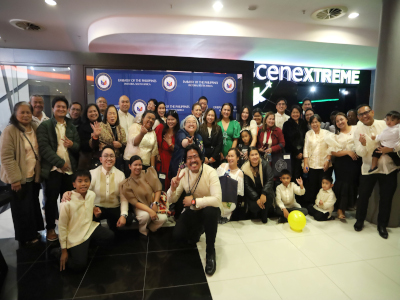
As the Philippines commemorated the 128th Anniversary of the Proclamation of Philippine Independence on June 12th, the Philippine Embassy in Pretoria transformed the occasion into a celebration of national identity, artistic excellence, enduring friendship and a confident vision for the future. Hosted by Ambassador Myla Grace Ragenia Macahilig, the event, under the theme "SineKalayaan 128: The Philippines in Portrait," used cinema as the lens through which to explore the Filipino spirit.
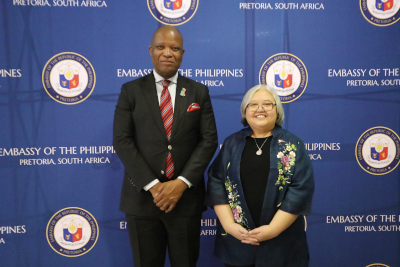
The evening's Guest of Honour, South Africa's Deputy Minister of Cooperative Governance and Traditional Affairs, Dr Namane Dickson Masemola, reflected on the remarkable parallels between South Africa and the Philippines. Both nations, he noted, emerged from long and often painful struggles against domination and oppression. Their democratic journeys were born from sacrifice, perseverance and the determination of ordinary people to reclaim their sovereignty and dignity.
Few nations have experienced as many transitions of colonial authority as the Philippines. The closing years of the nineteenth century marked another pivotal chapter in Philippine history. The Spanish–American War of 1898 ended more than three centuries of Spanish colonial rule, yet for many Filipinos, the promise of independence remained elusive as sovereignty over the islands passed from Spain to the United States under the Treaty of Paris. The ensuing Philippine-American War became another defining struggle in the nation's long journey toward self-determination, later experiencing military occupation during the Second World War.
These experiences profoundly shaped the Philippines' modern foreign policy, fostering a deep appreciation for national sovereignty, multilateral diplomacy and an international outlook that seeks constructive partnerships while carefully safeguarding its independence. Today, the Philippines engages confidently with both traditional allies and emerging partners across the Global South, ASEAN and Africa, guided by the lessons of a history that taught the enduring value of freedom earned rather than freedom bestowed.
Rather than allowing occupation to erase its culture, the Philippines absorbed influences from East and West while preserving an unmistakably Filipino character. That resilience continues to define the nation today.
Addressing guests, Ambassador Macahilig reminded the audience that independence is not simply an historical milestone. "One hundred and twenty-eight years ago, our ancestors hoisted our flag and birthed the very first democratic republic in Asia. It was a declaration to the world that the Philippines, and the Filipino people, belong to no one else but to their own sovereign destiny." Freedom is not merely political independence; it is the preservation of identity, culture, language and shared values despite the pressures of changing times.
The Embassy invited guests to experience the Philippines through film. "Cinema," Ambassador Macahilig explained, "is the window to a nation's soul." Through Philippine cinema, international audiences encounter not simply entertainment but the everyday struggles, aspirations and triumphs of Filipino society. The screening of Ang Larawan (The Portrait), adapted from National Artist Nick Joaquin's celebrated literary work with music composed by National Artist Ryan Cayabyab beautifully illustrated that message.

Set in Manila on the eve of the Second World War, the story follows two sisters struggling to preserve their family's honour and cultural inheritance despite financial hardship. The narrative serves as an elegant metaphor for national identity itself. As Ambassador Macahilig observed, "True independence is the courage to defend who we are against the pressures of a changing world."It is an idea equally relevant to nations navigating today's rapidly evolving geopolitical landscape.
While history remains an essential part of the Philippine story, it no longer defines the country's future. Today's Philippines is one of Southeast Asia's most dynamic emerging economies. Its youthful population, expanding middle class, vibrant entrepreneurial culture and rapidly growing digital economy are transforming the country into one of the Global South's most promising investment destinations.
Tourism has emerged as one of the country's great success stories. From the pristine beaches of Palawan and Boracay to the dramatic rice terraces of Banaue, from the bustling cosmopolitan energy of Manila to the cultural richness found across its many islands, the Philippines offers extraordinary diversity for international travellers. Increasingly recognised as one of Asia's premier travel destinations, the country has successfully positioned itself as a leading centre for sustainable tourism, luxury hospitality, eco-tourism, wellness travel and cultural experiences.
Beyond tourism, sectors including renewable energy, infrastructure development, information technology, advanced manufacturing, maritime industries, agriculture and business process outsourcing continue to attract international investment. Membership of the Association of Southeast Asian Nations (ASEAN) further strengthens the Philippines' position within one of the world's fastest-growing economic regions. As Ambassador Macahilig reminded guests, "The Philippines stands with you in showcasing the rich, vibrant melange of ASEAN talent, warmth, and artistic excellence to the global stage."
ASEAN today represents far more than regional cooperation. It is increasingly becoming one of the principal engines of global economic growth, with the Philippines contributing significantly through innovation, manufacturing, education, digital services and creative industries.
The country's greatest export, however, remains its people. Across every continent, millions of Filipinos have become respected professionals in healthcare, engineering, education, hospitality, maritime industries, finance and technology.
South Africa itself has benefited from this remarkable diaspora. Many Filipino professionals have established successful careers while becoming valued members of South African society. Speaking directly to the Filipino community gathered in Pretoria, Ambassador Macahilig offered a moving tribute. "You are the real-world ambassadors of Philippine values and spirit." She reminded overseas Filipinos that distance never diminishes patriotism. "Love for the motherland knows no distance or boundaries; it remains burning in every corner of the world wherever a Filipino is."
It is a sentiment that resonates strongly within Africa, where diasporas have similarly become important bridges between continents. Relations between the Philippines and Africa have matured considerably over recent decades. Trade is expanding. Educational partnerships are increasing. Diplomatic cooperation within multilateral institutions continues to deepen. People-to-people exchanges are flourishing.
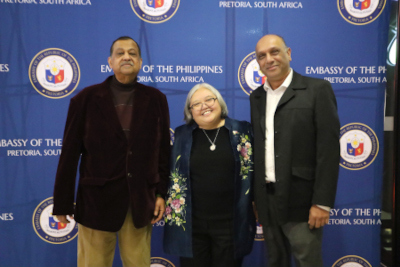
Nowhere is this relationship more visible than in South Africa. The two countries share constitutional democracies founded upon difficult struggles for freedom. Both are influential voices of the Global South and increasingly advocate for more inclusive international governance, equitable development and stronger South-South cooperation.
Deputy Minister Masemola highlighted these shared values during his address, emphasising that the friendship between South Africa and the Philippines extends well beyond diplomatic protocol. It is rooted in common historical experiences, mutual respect, cultural understanding and a shared commitment to building peaceful, prosperous and inclusive societies.
The Philippines' remarkable journey from colonial subjugation to confident democracy, from occupied territory to emerging economic power offers an inspiring example of national resilience. Its story reflects the broader transformation taking place across much of the Global South, where nations are increasingly defining development on their own terms while preserving their unique cultural identities. As the Philippine flag continues to fly proudly across its thousands of islands and in embassies around the world, it symbolises not only independence won, but opportunity embraced.
In celebrating 128 years of freedom, the Philippines is confidently painting the portrait of its future, one defined by innovation, creativity, economic opportunity, regional leadership and enduring friendship with partners across ASEAN, Africa and the wider international community.
As Ambassador Macahilig concluded so fittingly: "Let us celebrate this evening as a testament to the enduring friendship between the Philippines and South Africa, and to the eternal freedom of our nations."