

SA, Namibia Strengthen Partnership
20 July 2026
TDS
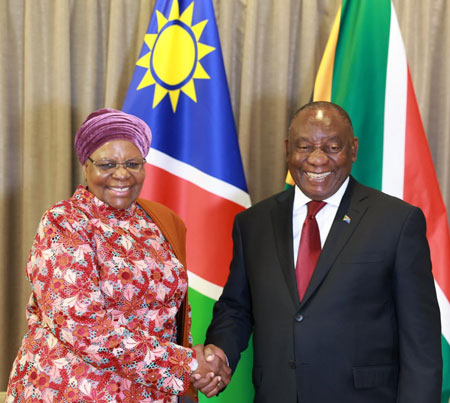
South Africa and Namibia have reaffirmed one of Southern Africa's closest bilateral relationships following Namibian President Netumbo Nandi-Ndaitwah's working visit to Pretoria for the Fourth Session of the South Africa–Namibia Bi-National Commission (BNC).
Co-chaired by President Cyril Ramaphosa and President Nandi-Ndaitwah, the Commission reflected not only on the progress made since its establishment in 2013 but also set an ambitious agenda centred on industrialisation, regional integration, energy cooperation and shared economic growth.
Welcoming the Namibian delegation, President Ramaphosa described Namibia as "our sister nation", saying the relationship between the two countries was forged through a shared struggle against colonialism and apartheid and continues to serve as an example of African solidarity. He called on both countries to move beyond exporting raw materials and instead develop regional value chains that create jobs, expand manufacturing and retain greater value within Africa.
"The days when our minerals leave our shores simply as rock and dust must steadily come to an end," President Ramaphosa said, advocating increased beneficiation, manufacturing and innovation across Southern Africa.
For Namibia, the visit aligned closely with President Nandi-Ndaitwah's vision of building an economy that delivers greater value from the country's natural resources while creating employment opportunities. Since assuming office in 2025, she has consistently promoted economic diversification, local value addition and attracting investment that supports Namibia's long-term development priorities.
The two leaders agreed to deepen cooperation across strategic sectors including mining, oil and gas, renewable energy, transport, water management, agriculture and skills development. Particular attention was given to opportunities arising from Namibia's offshore oil and gas discoveries in the Orange Basin, with both countries exploring ways to develop integrated regional energy industries rather than simply exporting resources.
The Commission also recognised the potential of green hydrogen, linking Namibia's ambitions with South Africa's Boegoebaai Deepwater Port and Green Hydrogen Development Programme near the Namibian border, creating the prospect of a cross-border green industrial corridor.
Economic ties between the neighbours continue to strengthen. More than 50 South African companies invested in Namibia between 2023 and 2025, contributing approximately US$1.2 billion in investment and creating about 4 900 jobs in sectors including mining, banking, insurance, renewable energy and property. Both governments encouraged greater two-way investment while calling on the private sector to identify bankable projects in infrastructure, logistics, manufacturing, agriculture and digital technologies.
The visit culminated in the signing of seven agreements covering employment and labour, public administration, legal cooperation, correctional services, bilateral air services, gender equality and women's empowerment, as well as an economic cooperation agreement between the South African Chamber of Commerce and Industry and the Namibia Chamber of Commerce and Industry.
In the joint communiqué, both Presidents reaffirmed their commitment to strengthening cooperation within the Southern African Development Community (SADC), the African Union (AU) and the African Continental Free Trade Area (AfCFTA). They agreed to accelerate regional industrialisation, facilitate cross-border value chains and strengthen transport corridors to improve regional trade and competitiveness.
President Nandi-Ndaitwah also reaffirmed Namibia's commitment to regional cooperation and invited President Ramaphosa to Namibia to co-chair the Fifth Session of the Bi-National Commission, an invitation he accepted.
The visit demonstrated how relations between South Africa and Namibia have evolved from liberation-era solidarity into a mature strategic partnership focused on economic transformation. With 75 bilateral agreements already in place and renewed political commitment from both leaders, the two countries are positioning themselves to play a leading role in advancing industrialisation, regional integration and sustainable development across Southern Africa.