


Africa's multipolar moment is turning global rivalry into strategic opportunity
BY DESTA GEBREHIWOT
30 July 2026
The world is entering an increasingly multipolar order with nations forming new alliances and recalibrating their foreign policies to better serve their national interests. Recent developments have shaken the status quo to its core, pushing the world order into uncharted territory with nations finding it tough to adapt to the state of flux with a rigid foreign policy. More vividly, the conflict between Russia and Ukraine and the prolonged Middle East crises and the ongoing war between US and Iran have laid bare limits of the existing global system and the rapidly changing to a new world order.
Over the years, from the gulf nations to Asian heavyweights, many countries have increased their presence and stake in global politics through military might and petro dollars. This dynamism presents both opportunities and challenges to fast growing continent like Africa.
The rivalry among nations and the proliferation of proxies have turned African minefields and fertile lands to battlefields. The crisis in Sudan and Sahel are textbook examples of the unprecedented ramifications of unchecked powers of vying alliances. This is a perfect example that Africa needs cooperation not intervention. In fact, the continent has long been a victim of an interventionist policy and continues to face a bumpy road because of these deep-rooted complications.
Despite its immense potential and decisive role, the continent is yet to have its fair share in global organizations. This is partly ascribable to its own failure to stand united and firm. In a sharp contradiction to its actual potential, the biggest continent with 55 member nations has been left out of critical global institutions like the United Nations Security Council and International Monetary Fund.
The issue of global representation has gained traction lately and despite the extensive campaigns the UN body is yet to take concrete action. And, the calls for equal representation can no longer be ignored, the rise of BRICS and other blocs is surly and slowly challenging the existing global architecture and will continue to put maximum pressure the architects of the global system to go back to the drawing board and put in place measure and redesign the system mirroring the current situation.
Given its undisputed leverages, working with Africa is not an option but a must-do task. With its youthful population, vast treasures including rare earth minerals and dynamic and diverse population and colossal body mass with strategic importance, nations near and far, small and superpowers have been throwing their full weight behind nurturing strong and elevated ties with Africa.
The bottom-line is the global crisis and emerging woes facing the planet cannot be overcome without the engagement of the 1.3 billion people. Whether it is curbing climate change or curtailing global pandemic, the world cannot afford to leave Africa behind. It is in this sense that forming partnership with the continent of 55 member nations has become the order of the day.
From the US-Africa Summit to Russia Africa Forum or FOCCAC, TICAD and India Africa Summit, over the years there have been extensive activities to engage Africa separately or nations collectively. These are solid remainders that are gone are old days where the continent has been viewed as unequal partner. Africa many agree that it can no longer be a junior partner and bystander in major international decisions and undertakings.
On the flipside, the rise of competing forces globally will be offering amble opportunities for the continent so long as it able to strike a balance and stick to pragmatist approach, sometimes turning the lemon of global dynamism to lemonade of wellbeing.
Rise of emerging and new actors mean multiple choices of partners. In the growing transactional foreign policy and quid pro quo approach, Africa has so much to give and many more to take. In so doing it can garner the capital it needs and the technology it aspires to fuel its expanding economies. Elevating cooperation on bilateral and multilateral frontiers requires well-crafted policies and savvy approach. Although cooperation must not be equated with intervention, the continent shall be proactive enough to explore all opportunities and turn them to its own advantage. To do so, however, the continent needs to see inside out. It is when Africans devoid their difference stand united and in solidarity their bargaining power increases. Cementing internal cohesion and unlocking domestic potential will put the continent in a stronger position to increase its visibility and influence in global spectrum.
A stronger Africa means stronger lobbying capacity in international stage. Since lately, the international community has come into terms that the existing system cannot be fully functional and effective without Africa and other continents that have remained unrepresented.
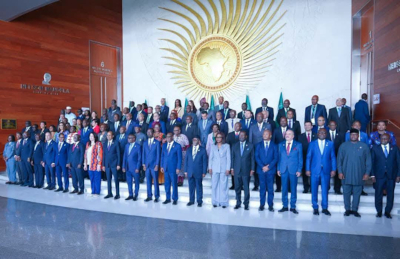
The call for greater representation has become clearer and louder. Lately, speaking at the 49th Ordinary Session of the African Union Executive Council at the AU Headquarters in Addis Ababa, Chairperson of the African Union Executive Council, Édouard Nduwimana, has renewed Africa's call for fair and permanent representation on the United Nations Security Council, stressing that global governance structures must reflect the realities of the 21st century.
The Chairperson said Africa’s progress on the international stage should be accompanied by reforms that ensure the continent receives fair and permanent representation in global decision-making structures.
The Chairperson, who is also Burundi's Minister of Foreign Affairs and Development Cooperation, highlighted Africa’s membership in the G20 as a historic milestone that demonstrates the continent’s important role in global economic governance, while emphasizing the need to continue advocating for reform of the United Nations Security Council.
He reaffirmed the Ezulwini Consensus and the Sirte Declaration as the foundations of Africa's common position on reform of the United Nations Security Council.
The Chairperson also called on African countries to continue speaking with one voice, defend common interests and strengthen solidarity at international forums.
The continent is experiencing a decisive period in its history, facing challenges including persistent conflicts, the effects of climate change, economic pressures, employment challenges, and the need to accelerate industrialization and strengthen self-reliance, Nduwimana noted.
Despite these challenges, Africa has reasons for hope as it continues to assert itself as an indispensable player in global affairs.
The Chairperson also emphasized the importance of translating African Union commitments, decisions, and policies into concrete outcomes that benefit African citizens.
He underscored the need for sustainable financing of the African Union, stating that the continent should rely on its own resources to implement its priorities and preserve its independence in decision-making.
“A strong Union should be funded first by Africans themselves,” the Chairperson said, stressing that member states contributions strengthen the credibility and predictability of the continental organization.
Moreover, he called for maintaining consensus-based decision-making within the African Union, describing consensus as an expression of political maturity and a means of promoting unity among member states.
Also speaking at the occasion, Foreign Minister Dr. Gedion Timotheos stressed that Africa needs to step up as a key strategic player in today's rapidly shifting global politics.
Addressing both continental and global issues, the Minister noted that the summit comes at a time when the international order and geopolitical structures are undergoing deep transformation.
He pointed out that intensifying geopolitical competition, technological shifts, climate impacts, and the race for strategic natural resources are reshaping the global order.
Dr. Gedion urged Africa to seize this moment by offering homegrown solutions to global challenges rather than remaining on the sidelines.
Dr. Gedion emphasized that the African Union must stand out as a strong voice that drives the continent's priorities, defends its rights, and delivers real hope.
Highlighting Africa’s potential, he noted that the continent is home to eight of the world’s ten fastest-growing economies in 2026, positioning it to become a primary engine of global economic growth in the second half of the 21st century. He also reaffirmed Ethiopia’s strong commitment to the African Union’s unity and continental strength.
To achieve these goals, he called on the Union to secure reliable, long-term financing to turn its decisions into action, manage shared resources fairly and cooperatively for regional integration, and resolve continental challenges through African institutions and frameworks.
To sum up, the emerging multipolar world presents Africa with a rare strategic window that may not remain open indefinitely. If the continent can strengthen its unity, invest in self-reliance, pursue pragmatic diplomacy, and negotiate from a position of confidence, it can transform global competition into a catalyst for prosperity and influence. Rather than becoming an arena for great-power rivalry, Africa can become one of the principal architects of a more balanced, inclusive, and equitable international order. The multipolar era should therefore not be viewed as a threat, but as Africa's defining moment to shape its own destiny and claim the place it rightfully deserves in global affairs.