


Atomic Energy Education and Industry at the heart of Nuclear Day in Johannesburg
By Kirtan Bhana and Anisha Pemjee
7 October 2026
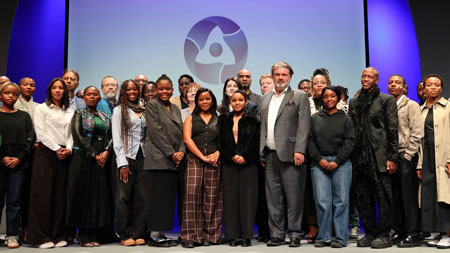
The peaceful use of nuclear technology presents an important opportunity for Africa as the continent addresses interconnected challenges of energy security, industrialisation, water scarcity, climate change and the development of advanced scientific skills. These issues were at the centre of Nuclear Day: Industrial and Educational Partnership Seminar – “Nuclear Technologies and Education: Energy and Non-Energy Solutions”, held in Johannesburg on 1 October 2026 by the Embassy of the Russian Federation in South Africa and Lesotho and Rosatom Central and Southern Africa.
The seminar brought together perspectives on nuclear energy, industrial cooperation, education and the wider applications of nuclear technology. Presentations covered small nuclear power plants, modern large-scale and floating reactors, radiation protection and radioecology, nuclear desalination, geology and mining education, artificial intelligence and digital twins, as well as the training of nuclear engineering professionals.
South Africa occupies a distinctive position in this discussion. During the apartheid era, the country developed nuclear weapons capability and subsequently dismantled the programme before joining the Nuclear Non-Proliferation Treaty as a non-nuclear-weapon state in 1991. The International Atomic Energy Agency later carried out extensive verification activities and reported that South Africa had terminated its nuclear weapons programme and dismantled and destroyed its related facilities and equipment.
This history gives South Africa an important perspective on the distinction between nuclear technology developed for warfare and nuclear technology used for peaceful purposes.
South Africa's nuclear experience today includes electricity generation, nuclear research and applications of nuclear science and technology in areas including medicine, agriculture and industry. Koeberg Nuclear Power Station, commissioned and operational since 1985, remains the country's only commercial nuclear power station, and the only one on the African continent, while the country also has a broader nuclear research and skills base.
From nuclear power to broader applications
Russia's own nuclear history illustrates the development of nuclear technology over several decades. The Soviet Union's Obninsk nuclear power plant began generating electricity in 1954 and is recognised as the world's first nuclear power plant to generate electricity for a power grid.
Since the early development of nuclear power, reactor technology has progressed through successive generations of designs, including large modern reactors, smaller nuclear technologies and floating nuclear power plants.
The development of nuclear technology has also been accompanied by increased attention to radiation protection, environmental monitoring, radioactive waste and spent-fuel management, emergency preparedness and safety throughout the life cycle of nuclear facilities.
These themes featured across the seminar’s presentations.
Dr Masamba Kah, Head of the Industrial and Educational Partnership Project and Coordinator for Cooperation with African Countries, examined industrial and educational partnerships with African countries and the potential for nuclear projects to connect with wider areas of economic activity rather than being treated as isolated energy projects.
Dr Dmitrii Samokhin, Head of the Department of Nuclear Physic sand Engineering, National Research Nuclear University MEPhl, addressed Russia's experience in nuclear power and the training of nuclear engineers, while discussing the development of nuclear technologies from large conventional nuclear power plants to floating plants and smaller nuclear systems.
Prof. Vyacheslav Andreev, Head of the Department of Nuclear Reactors and Power Facilities, R.E Alekseev Nizhny Novgorod State Technical University, focused specifically on small nuclear power plants, examining their history, characteristics and potential role in future energy systems.
Prof. Alla Udalova, National Research Nuclear University MEPhl, addressed radiation protection and radioecology, highlighting the importance of understanding radiation, environmental protection and safety alongside nuclear engineering.
Ryan Collyer, CEO of Rosatom Central and Southern Africa, who was also present, has contributed to the perspective of Rosatom's work in developing nuclear technologies and partnerships in Africa. His wider work in the region has included advanced nuclear technologies such as floating power units and small modular reactors, as well as skills development, localisation and the transfer of technical expertise.
In his remarks Russian Ambassador Roman Ambarov highlighted the growing global demand for reliable electricity. He said that nuclear energy means stability, pointing to renewed international interest in nuclear power and the development of projects using Russian technologies in countries across the Global South.
“Today the interest in nuclear power is on the rise again. New nuclear projects are being developed, or planned, across the world in countries including China, India, Türkiye and Egypt. In many countries of the Global South these power plants are developed using Russian technologies. For example, Rosatom is building Akkuyu nuclear power plant in Türkiye, El Dabaa in Egypt and Paks II in Hungary, while also expanding Kudankulam in India,” Ambarov noted.
Education and industrial partnerships
Education and human-capital development formed an important part of the seminar, particularly in discussions of cooperation between universities, industry and African institutions.
The presentations on cooperation between RUDN University and partners in Ghana, together with discussions on geology and mining education, broadened the scope of nuclear cooperation beyond reactor technology. Geological knowledge, resource management, scientific research and university partnerships are relevant to developing the technical capacity needed to support sophisticated industrial sectors.
READ ALSO: From Refilwe to the North Pole
The experience of South African graduates who have received training in Russia provided a further practical dimension to the discussion.
A nuclear programme requires engineers, scientists, technicians, regulators, operators, environmental specialists and managers with specialised knowledge. Universities and research institutions therefore form part of the wider infrastructure supporting the nuclear sector, while cooperation between educational institutions and industry can contribute to research, innovation and technical skills.
Nuclear technology beyond electricity
The seminar also examined applications of nuclear technology beyond electricity generation.
Nuclear desalination was discussed as a potential application, particularly relevant to water-stressed regions. The International Atomic Energy Agency recognises nuclear desalination as an application in which nuclear energy can provide the heat or electricity required to produce fresh water from seawater.
Artificial intelligence and digital twins were also examined. These technologies can support operational monitoring, predictive maintenance, modelling and the management of complex systems throughout the life cycle of a nuclear plant.
Together, these presentations demonstrated the range of scientific, technological and industrial disciplines connected to nuclear development.
Nuclear Now and the energy debate
The seminar concluded with a screening of Oliver Stone's 2022 documentary Nuclear Now, which examines nuclear energy in the context of climate change and growing global energy demand.
The documentary presents nuclear power as a potential part of the response to the need for large quantities of reliable, low-carbon electricity and addresses some of the public concerns surrounding nuclear energy.
As a documentary presenting a particular perspective, Nuclear Now forms part of the debate around the future of nuclear power.
South Africa's nuclear choice
South Africa's nuclear history gives particular significance to its role in the future of nuclear energy. The country once developed nuclear weapons, dismantled its arsenal and became the only country to have voluntarily abandoned a nuclear weapons programme before joining the NPT as a non-nuclear-weapon state. That decision helped establish South Africa as a strong advocate of nuclear disarmament and the peaceful use of nuclear technology.
Today, South Africa is considering how nuclear energy can contribute to energy security, industrialisation and a just energy transition while remaining committed to non-proliferation and the peaceful use of nuclear technology. Its position gives the country a particular voice in discussions about nuclear energy in Africa and in international forums.
But the question of South Africa's nuclear future extends beyond energy policy.
What would South Africa's just energy transition looked like if the country had continued to pursue nuclear weapons rather than dismantling its arsenal? Would nuclear weapons have strengthened its international standing or undermined the credibility it has built through disarmament? And if South Africa were today recognised as a nuclear-armed power, would it still be able to occupy the same position as an advocate for nuclear disarmament, peaceful nuclear cooperation and the development of nuclear energy across Africa?
Perhaps the deeper question is whether South Africa's greatest strength in the nuclear age lies not in the weapons it could have retained, but in the decision it made to give them up, and in how it now chooses to use nuclear science for energy, development and peaceful cooperation.