


SHANGHAI
Smooth Operators
Automation, digitisation, and innovation lead the way in Shanghai’s industrial upgrading
By Xia Yuanyuan - ChinAfrica
July 2024
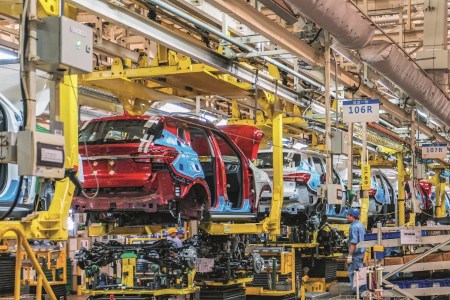
That’s the scene at the Lingang Base of Shanghai-headquartered SAIC Motor Passenger Vehicle Co., one of China’s top automakers. But SAIC is not alone. More and more factories in Shanghai are making use of advanced technologies like robotics, artificial intelligence, and big data to revolutionise the factory setting.
In the Chinese economic powerhouse of Shanghai, a fresh round of industrial upgrading is supporting the country’s drive to foster strategic emerging industries and technological innovation, putting into practice the vision of “developing new quality productive forces.” Propelled by applications ranging from large-scale scientific installations and high-quality incubators to robots, automobiles and biomedicine, the notion of new quality productive forces is permeating every aspect of production process in the east China city, enhancing efficiency and quality.
Intelligent applications
The Lingang Base is located just a short distance from the sea. Completed and put into production in September 2008, the 1.2-million-square-metre plant is one of the core production facilities of SAIC Motor, including vehicle and engine manufacturing.
In addition to making vehicles for SAIC’s four independent brands - IM, Rising Auto, Roewe and MG - the base also serves as the main centre of innovation for the auto giant.
Guan Yizhong, general manager of SAIC’s Public Relations Department, recalled that the automaker used to rely on workers in Shanghai to hammer and forge complex body panels. Now, the entire manufacturing process is digitised, with production coordinated through smart devices and digital platforms.
Inside the base, along the assembly line where vehicles move at a measured pace, workers at different points are busy tightening screws or marking spots, while the more complicated or heavier operations are left to robotic arms.
“On average, a new car rolls off the production line every 70 seconds in this plant,” Chen Peifeng, chief of the Lingang Base, told ChinAfrica.
In 2023, SAIC’s overall vehicle sales reached a new historical high, with overseas sales reaching 1.21 million units for the year, a year-on-year increase of 18.8 percent, ranking first in the domestic industry, which helped China to surpass Japan to become the world’s top automobile exporter. Sales of new energy vehicles (NEVs) was particularly outstanding, with 1.12 million units sold throughout the year, a year-on-year increase of 4.6 percent.
The Lingang Base is a microcosm of the transformation and upgrading of Shanghai’s traditional automobile industry. As intelligence, digitalisation and low-carbon development become the future trend, Shanghai’s NEV industry is ascending to a new height. According to data from the Shanghai Statistics Bureau, Shanghai’s NEV production reached 1.29 million units in 2023, a year-on-year increase of 35 percent, accounting for 13.4 percent of the national production.
Sustainability gains
Located 80 km from SAIC’s Lingang Base, Baosteel Co. under China Baowu Steel Group is witnessing a similar industrial upgrading.
Baowu Group is a large state-owned steel company headquartered in Shanghai. In recent years, Baowu Group has continuously promoted the structural upgrading of China’s steel industry and enhanced its consolidation through mergers and acquisitions. It has now become a globally competitive steel company with a high level of modernisation.
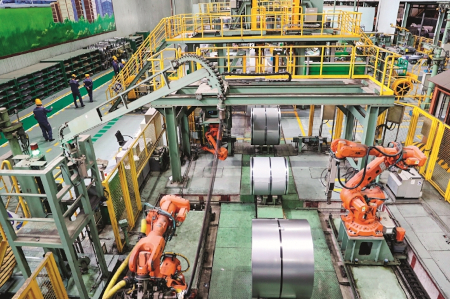
Walking into Baosteel, one can see how the steelmaker is trying to match the modern image of the Shanghai City with a green manufacturing transformation. In its cold-rolling workshop, an “AI brain” supports the main control room with only three operators. Robots have replaced manual work in the workshop, so the lights are often turned off to save energy. Even automotive panels that require high process complexity can be smoothly produced with almost no lighting.
The production process of steel is energy intensive and generates high carbon dioxide emissions. So, the steel industry’s green and low-carbon transformation is crucial for the country’s sustainable development. While achieving world-leading steel production, Baosteel also emphasises green, low-carbon development.
The company independently developed the first domestic integrated flue gas treatment technology, which meets the highest industry standards. The world’s first backup system for coke oven flue gas purification is constantly lowering emissions.
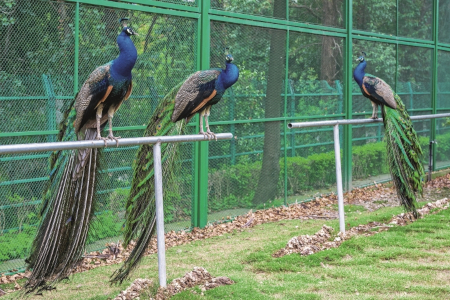
There is also a zoo on the factory premises that is home to 65 national first-class protected wild animal sika deer, 76 blue peacocks and a variety of birds. “The presence of these environmentally sensitive animals is a good indicator of environmental quality. They have thrived here for more than 30 years, fully proving the high ecological quality of the factory,” Li Jungong, chief engineer of the zoo, told ChinAfrica.
In recent years, Baosteel has made breakthroughs in developing key low-carbon metallurgical process technologies, said Liu Shijun, deputy general manager of Baosteel’s Operation Centre. In 2022, Baosteel announced a carbon neutrality action plan, which aims to reduce carbon emissions by 30 percent by 2035, and achieve carbon neutrality by 2050.
Raising innovation level
In CHINT Group’s Shanghai transformer factory, robots stack silicon steel sheets as thin as 0.23 mm one on another in accordance with the design requirements. A single robot can stack more than 1,680 layers within 24 hours, which is equal to the work of six experienced workers in one day.
Another remarkable achievement is the use of oil in transformers. While transformers typically use mineral oil, CHINT’s persistent efforts have led to the adoption of vegetable oil, a renewable and degradable alternative. This transition has resulted in a reduction of carbon emissions by 98 percent.
The company has achieved a groundbreaking milestone with the development of a 750-kv natural ester-filled transformer, the highest voltage level in the world to date, astonishing global industry players. Offering a comprehensive product range from 10 kv to 750 kv, CHINT is now the world’s leading manufacturer in terms of sales volume for natural ester transformers.
From frigid Finland to the deserts of Saudi Arabia and the tropical rainforests of Ecuador, CHINT has expanded its footprint to over 100 countries and regions. According to Chen Chengjian, vice chairman of CHINT Group’s electric company, international business accounts for about 30 percent of their total revenue.
To date, CHINT has constructed photovoltaic power plants with a combined capacity of more than 30 gw around the world, which can provide more than 34 billion kwh of green electricity and reduce carbon dioxide emissions by more than 30 million tonnes every year.
Innovation has always been a cornerstone of CHINT’s growth, according to Chen.
As of the end of 2022, the company had developed over 900 products, obtained 404 patents, led or participated in revising 215 national industry standards, and engaged in over 30 industry-university-research collaboration projects.
SHANGHAI
Collective Undertaking
Medical institutions and enterprises in Shanghai join hands for technological breakthroughs
By Xia Yuanyuan - ChinAfrica
July 2024
The medical equipment valley in Jiading District of Shanghai, known as Shanghai MedValley, is a powerhouse of medical innovation. As an industrial park centred on creative medical equipment development, the valley has gathered a cluster of high-end medical device enterprises and highly qualified professionals. It aims to promote new quality productive forces in the medical field, with a focus on developing devices for advanced diagnosis and highly effective treatment. It is home to seven major research institutions and joint labs, including a medical robot training centre and a medical chip research institute.
The concept of new quality productive forces refers to initiatives aimed at enhancing productivity, innovation, sustainability and quality in different sectors of the economy through technological innovation including digital transformation.
Doctors and nurses are a major force behind medical innovation in the valley. “There are lots of unresolved problems in the medical field, and doctors and nurses are on the frontline of assessing patients’ needs,” Ning Guang, head of Ruijin Hospital in Shanghai, said. “Eventually, the achievements of the medical industry need to be tested through practice. Therefore, doctors should be given a chance to steer innovation within the industry.”
Frontline ideas
The valley’s doctor-directed medical innovation model has yielded positive results in recent years.
The non-invasive blood glucose detector developed by Wang Weiqing, director of the Endocrine and Metabolism Department at Ruijin Hospital, together with a medical chip technology enterprise, has been clinically validated to meet the international standard for glucose detectors.
Niu Chuanxin, a researcher from the Rehabilitation Department of Ruijin Hospital, has collaborated with enterprises within the cognitive rehabilitation field and launched more than 30 products that meet patients’ needs with high-level accuracy and flexibility, including a robot that helps patients to recover control over their upper limbs.
Chen Saijuan, a member of the Chinese Academy of Engineering, made breakthroughs in gene-based therapy for haemophilia, a rare disorder that prevents blood from clotting. Previously, patients of the disease had to undergo regular plasma transfusions, and the treatment could be hampered by shortages of plasma. Chen’s breakthroughs mean patients now only require one-off or occasional treatments.
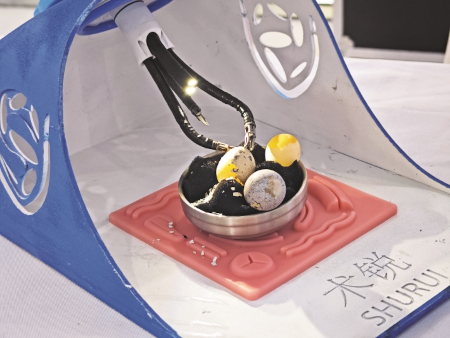
The single-port laparoscopic surgical robot jointly developed by Beijing Surgerii Robotics Co. Ltd. and Ruijin Hospital allows for various complex surgeries through a skin incision of less than 3 cm on the patient’s abdomen.
“Shanghai MedValley has gathered a large group of doctors with pioneering ideas, who seek to cooperate with enterprises to achieve breakthroughs in medical equipment development and large-scale production, drawing on their clinical experiences,” Ning said.
In the past three years, medical staff of Ruijin Hospital have applied for more than 1,000 patents. “We’ve been thinking about the role of large public hospitals in the development of new quality productive forces,” Ning added. “And our answer is to highlight the non-profit nature of public hospitals, encouraging and cultivating public medical staff as the powerhouse of creative work to further promote the development of medical industries.”
The biomedical industry is one of the top three pioneering industries in Shanghai, alongside the integrated circuits and artificial intelligence industries, and a key industry for developing new quality productive forces. The annual scale of the biopharmaceutical industry reached 933.73 billion yuan ($128.68 billion) in 2023, an increase of 4.9 percent, according to a press conference on Shanghai’s high-quality development held on 22 May.
“The new creative Class III medical equipment developed by institutions in Shanghai accounted for 16.67 percent of those in China,” Ge Dongbo, an official from Shanghai, told the press, adding that the local government is stepping up efforts to enhance the mechanisms that benefit creative enterprises and institutions and facilitate the industrialisation of creative ideas.
Class III medical equipment is high-risk equipment that is very important to health or sustaining life, such as devices for transplanting artificial organs and cardiac pacemakers, which are under strict supervision of quality inspection agencies.
Advanced domestic technology
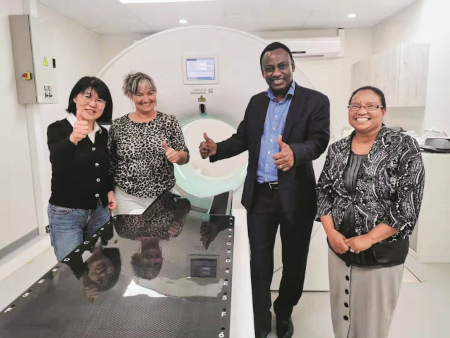
Medical innovation is vibrant not only within Shanghai MedValley, but also in medical centres in surrounding areas focusing on specialty treatment technologies. The proton therapy centre at Ruijin Hospital, located close to MedValley, is renowned for its high-end tumour treatment technologies.
Proton therapy is a powerful tool for precision radiotherapy in cancer treatment. It has advantages over traditional radiotherapy technologies in terms of accuracy, therapeutic effects, and less harm to patients, making it the most advanced medical technology in the world to combat tumours. In the past, domestic proton treatment relied on imported equipment, leading to high costs and low access to proton therapy in many regions of China.
“Proton therapy equipment is huge in size and has high manufacturing, operating and maintenance costs,” Chen Jiayi, head of the Radiotherapy Department of Ruijin Hospital, said. “If we simply relied on imported equipment instead of mastering the core technology for producing the equipment by ourselves, it would be difficult to reduce the costs [for patients].”
“In the past, the cost of proton therapy was about 300,000 yuan ($41,345) - too heavy a financial burden for many patients. As a result, many patients for whom proton therapy was suitable chose to undergo X-ray therapy instead,” Chen Jiayi added.
Construction began on the building for housing domestic proton devices at the north campus of Ruijin Hospital in December 2014.
Soon after, Ruijin Hospital formed a qualified team including physicians, technicians, physicists, researchers, and other personnel, to overcome difficulties the project faced.
Ruijin Hospital worked with the Shanghai Institute of Applied Physics and Shanghai Advanced Research Institute, both under the Chinese Academy of Sciences, as well as Shanghai APACTRON Particle Equipment Co. Ltd., to jointly develop domestically produced proton therapy systems.
On 24 November 2023, the first domestically produced proton therapy test device in the 180-degree rotation beam therapy room was put into use. As of March this year, the number of patients receiving proton therapy had reached 100. So far, the proton therapy device at Ruijin Hospital has treated patients for more than 20 different types of tumours and all patients have shown ideal short-term results.
The 360-degree proton therapy system, a more advanced device developed by Ruijin Hospital and Shanghai APACTRON Particle Equipment Co., is expected to be put into clinical use this year. The 360-degree rotating frame can provide an all-around treatment angle to strike the tumour target area and protect surrounding normal tissues without moving the patient. The domestic proton therapy system currently costs a maximum of 170,000 yuan ($23,429) per course of treatments.
According to Chen Jiayi, in addition to making significant breakthroughs in hardware, the proton therapy personnel are consistently exploring and enriching, through trial and error, their experience in proton treatment, aiming to independently develop an optimised proton therapy plan.
“We have developed a meticulous set of technology and management solutions that can be directly packaged and applied to any hospital in the country,” she said.
Self-reliance equipment
High-end medical equipment are an important manifestation of China’s independent technological innovation capability. In recent years, China has continuously developed world-class high-end medical equipment with independent intellectual property rights. The high-end medical equipment industry has not only achieved full independent research and development, but also reduced China’s reliance on imports and has even exported its products to multiple countries and regions around the world, winning overseas recognition.
United Imaging, a Shanghai-based private enterprise founded in 2011, has developed a series of medical imaging and radiotherapy products and life science instruments, and provides medical digitisation and medical artificial intelligence solutions.
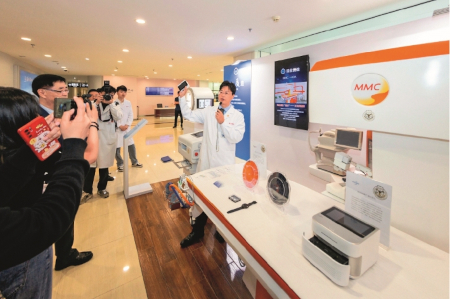
The world’s first 2-metre PET-CT, the world’s first whole-body ultra-high field 5.0T MRI, the world’s first 75-cm ultra-large aperture 3.0T MRI ... Cutting-edge medical devices adorn the 1,500-square-metre exhibition hall of United Imaging. Since 2014, the company has launched 78 products with fully independent intellectual property rights.
China’s self-developed medical equipment also brings benefits to people around the world. United Imaging exports a series of high-end medical imaging equipment to more than 70 countries and regions, including the US, Japan, Italy, New Zealand, Poland, India and Republic of Korea. It serves more than 13,100 medical institutions.
According to data from the General Administration of Customs, the total export value of medical devices of China reached over 484.3 billion yuan ($69.1 billion) in 2023, with medical equipment exports increasing by 5.4 percent year on year and 54.8 percent compared to 2019.
A Nurturing Space
Shanghai is providing ample space and policy support to enterprises to grow AI expertise and application
By Chang Ning - ChinAfrica
July 2024
Workers at a kitchen appliances manufacturer use robotic arms to make a pot in less than five minutes; dock workers use levers in an office to accurately grab and move containers; and doctors operate auxiliary robot systems to perform complex surgical operations with just a flick of their fingers …
In Shanghai, artificial intelligence (AI) has become a common sight in numerous fields including smart production, smart finance, and smart cities, and is profoundly changing people’s lifestyles. AI and other cutting-edge technologies are also sparking a new wave of innovation globally.
As one of the three leading industries, AI has seen a rapid development in Shanghai, which has formed an active and integrated industrial ecosystem across the city, and established a number of AI specialty parks.
Smart factory
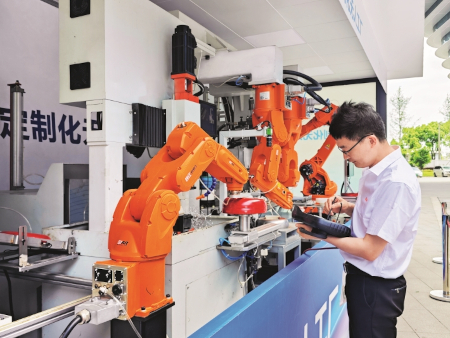
In the Aishida (ASD) Intelligent Valley in Qingpu District, Shanghai, orange robots are simulating the production of cookware, from polishing, sorting, and assembling to handling and palletising, with each step marked by precision and efficiency.
“Through the application of robotic arms, the production of a pot, which used to take two hours, has now been shortened to five minutes,” said Chen Meirong, executive vice general manager of Shanghai ASD Robotics.
To many Chinese, ASD is a bellwether of the Chinese cookware industry. However, what many people don’t know is that this “pot-making company” has long seen the business potential of AI and has begun to enter the field of intelligent manufacturing.
In 2016, ASD embarked on a path of transformation. At that time, the company acquired Zhejiang Qianjiang Robot Co. and began to expand to the field of intelligent manufacturing, creating a full industrial ecosystem for robots. Nowadays, almost all core components of the industrial robots it produces are independently developed. These robots excellently perform various tasks such as welding, polishing, cutting and casting, besides other applications, which can help in sectors such as automotive parts, food and beverage, and metal processing.
Chen said that the 500 Qianjiang robots and more than 1,000 complete sets of automated intelligent production lines deployed by ASD have increased production efficiency by an average of 22.46 percent, reduced costs by 23 percent, and decreased unit energy consumption by 12 percent.
Shanghai is the first city in China to include robot density into its statistics - the number of robots per 10,000 employees. At present, the robot density of key industrial enterprises in the city has reached 426 units, ranking top in the world.
Super AI brain
At present, the large language models (LLMs) have become the mainstream trend of AI development. Official data shows that China ranks second in the world in terms of the number of self-developed LLMs, and over 100 LLMs with more than 1 billion parameters each have been launched in the country.
Shanghai is on course to build itself into an AI nexus with global influence by fostering research and development platforms, industrial clusters and pilot projects.
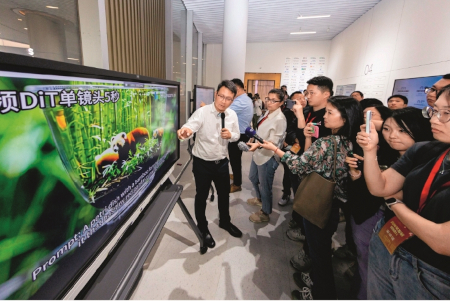
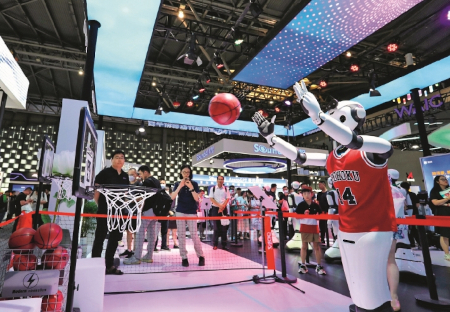
In Shanghai’s Xuhui District, the SMC Shanghai Foundation Model Innovation Centre vividly displays the rapid advancement of the LLM industry in the city.
Officially launched in 2023, the centre is one of China’s first dedicated incubators and accelerators for large-scale AI models. It aims to solidify Shanghai’s bid to create a world-class, globally competitive AI industry cluster. Now, a total of 60 LLM-related enterprises have already joined the community.
For LLM-related enterprises and startups, computing power determines model speed. Strong computing power support is what many companies want. “The high cost of computing power can deter many small and medium-sized enterprises. But SMC provides computing power support for its tenant companies,” said Shen Weifeng, vice president of HiDream.ai, an early tenant specialising in the use of AI to generate images and videos.
Policy support
Zhang Bing, a product manager at Midu, one of the first enterprises to settle in the centre focusing on government large models, said, “Our team started with only around 10 people last year, and now we have over 100 employees, significantly exceeding our expectations. The most crucial factor is the attention and support from the national and local governments for this industry.”
On 7 November 2003, Shanghai announced 11 measures for the innovative development of LLMs from 2023 to 2025, focusing on supporting the innovation capability of LLMs, enhancing the supply of innovation elements, promoting innovative application, and creating a first-class innovation environment. Other cities such as Beijing in north China, Shenzhen in south China’s Guangdong Province and Hangzhou in east China’s Zhejiang Province have also rolled out AI technology advancement plans.
The Shanghai Measures to Promote the Innovation and Development of Big Models in Artificial Intelligence (2023-2025), issued in 2023, cover 11 areas, including the implementation of the big model innovation support plan and the implementation of the big model demonstration application promotion plan. According to the measures, Shanghai will encourage Pudong New Area, Xuhui District and other places to establish LLM clusters, focusing on the research and development, and industrialisation of LLMs. In terms of talent, Shanghai is encouraging enterprises, universities and scientific research institutions to jointly cultivate interdisciplinary LLM talent.
China’s AI industry is thriving, reaching a scale of 500 billion yuan ($71.4 billion) with the number of enterprises surpassing 4,300. Continuous innovation has led to a steady stream of achievements, data from Ministry of Industry and Information Technology showed in July 2023.
The Silky Way
Digital Silk Road e-commerce carries unlimited potential for traders
By Zhang Xiao - ChinAfrica
July 2024
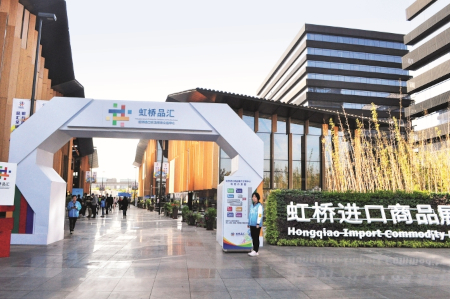
During a public class on livestreaming e-commerce organised by Hongqiao Import Commodity Exhibition and Trading Centre in Shanghai, Abdou Yahouza Mariama from Niger and Zvavarumbi Prince from Zimbabwe experienced firsthand the pressure of this line of work during a mock livestreaming session. As newcomers, they were visibly nervous and timid when they first stood in front of the camera to showcase products for sale.
On 18 May, 40 international students from Shanghai Dianji University participated in this public class where they acquired theoretical knowledge about livestreaming e-commerce. They also had the opportunity to gain hands-on experience by participating in a mock livestreaming session in a real studio setting. This practical exercise enabled them to immerse themselves in the entire process of livestreaming e-commerce, gaining insights into the various tasks involved.
The public class project initially began as a teaching initiative targeted at businesses located within the centre, which is also known as Hongqiao Pinhui. However, in response to the pressing need from universities to train talents in this emerging field and to create a talent pool, Hongqiao Pinhui collaborated with Shanghai Yibo Internet Technology to hold organised livestreaming classes for Shanghai Dianji University and Shanghai Minhang Polytechnic in May and June.
Zhu Jing, deputy general manager of Shanghai Hongqiao International Imports Exhibition and Trade Co., said, “Training Silk Road e-commerce talents and providing livestreaming training for international students from partner countries at universities is an important part of Hongqiao Pinhui’s operation mechanism. Each year, we aim to train 100 foreign livestreamers.”
Silk Road e-commerce has emerged as a new way to tap into China’s expansive market. Leveraging its platform and operational advantages, Hongqiao Pinhui Livestreaming Base is actively expanding Silk Road e-commerce. The base provides services to CIIE exhibitors from the Belt and Road Initiative (BRI) partner countries. With its distinctive emphasis on foreign live streamers, the base facilitates the participation of overseas businesses in the Digital Silk Road, thereby facilitating market entry for high-quality enterprises and their products from partner countries.
A platform for all
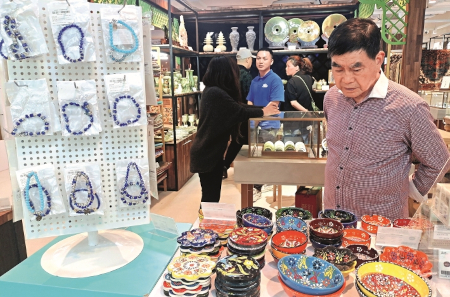
At the CIIE Bazaar City Arena in Shanghai, Serbian wines and delicacies are prominently displayed, allowing Chinese consumers to sample and purchase these products as if they have travelled to the banks of the Sava River.
This culinary feast was made possible through a Serbian products promotion event held on 11 May at Greenland Global Commodity Trading Hub in Shanghai. During the event, Sasha Jeremic, acting consul general of Serbia in Shanghai, introduced the recently approved Serbian products such as fresh blueberries and wines for import into China. He stated, “Serbia’s exports to China have been increasing annually, reaching a record of $1.2 billion in 2022. More and more Serbian enterprises are interested in exporting to the Chinese market. The upcoming China-Serbia Free Trade Agreement, set to take effect on 1 July, is expected to unleash vast opportunities for Serbian businesses in the preserves, fresh fruits, frozen fruits, brandy, and wine sectors.”
“Through events such as the CIIE Bazaar, high-quality Serbian products can now reach the general public. The Silk Road E-commerce Serbian Wine Festival has been launched both online and offline, providing consumers the option to purchase products online or experience them in person,” said Xue Yingjie, general manager of Greenland Global Commodity Trading Hub.
Meanwhile, at the CIIE Bazaar City Arena, the New Zealand Pavilion also attracted considerable attention, particularly with their honey yogurt, with sales of 500 cups daily. Shi Qunyi, head of the New Zealand Pavilion, expressed satisfaction with this performance and characterised it as a prime opportunity to introduce New Zealand’s local products to Chinese consumers.
In this regard, Xue told China Today that the CIIE Bazaar City Arena hosts 25 national pavilions showcasing over 5,000 products with distinctive national characteristics. Nearly 80 percent of these products originated from Silk Road e-commerce partner countries. Since its inception, the CIIE Bazaar City Arena has launched a variety of promotional campaigns, attracting a daily average of nearly 10,000 visits.
An increasing number of BRI partner countries are seizing the opportunities presented by the Silk Road e-commerce pilot zone in Shanghai to seek higher level of cooperation and mutual benefits. Nepal, for instance, aims to establish a Chinese goods centre in its capital Kathmandu, to increase the import of Chinese electronic products and electromechanical equipment.
Forty-eight pavilions for BRI partner countries and 22 pavilions for Silk Road e-commerce partner countries have been established, collectively showcasing over 15,000 products, Xue told China Today.
Opportunities for all
Ethiopian coffee exhibitor Addis, participating in the CIIE for the first time in 2021, decided to set up a base in the Hongqiao International Coffee Port due to its confidence in the Chinese market. Over the past two years, it has successfully launched two coffee trading companies, achieving a remarkable transformation from exhibitor to investor.
“Their coffee beans are shipped directly from Africa and sold at the Hongqiao International Coffee Port using a combined store-warehouse trade model,” said Zhu.
Employing intelligent logistics and inventory management to reduce costs and improve response speed, the new quality productive forces facilitate the construction of a more efficient and transparent supply chain management system for Silk Road e-commerce. Addis has reaped the benefits of this approach. Operating from the advantageous Hongqiao International Coffee Port, which hosts a multitude of coffee-related enterprises, Addis has optimised its operations. It strategically selects cost-effective roasting and processing facilities, significantly boosting the value of its coffee beans five to 10 times through deep processing. Facilitated by the transportation infrastructure of Hongqiao International Central Business District, Addis can easily connect with coffee traders and buyers nationwide. As a result, over the past two years, Addis has achieved a remarkable five-fold increase in sales.
Silk Road e-commerce cooperation demonstrates China’s achievements and expertise in applying technology and innovative e-commerce models.
The Digital Silk Road addresses the longstanding infrastructure and technological barriers that have hindered economic progress in developing countries. Through collaborative initiatives such as building cross-border e-commerce platforms and smart logistics systems, the Digital Silk Road aims to integrate more countries into the global supply chain. The international cooperation platform of Silk Road e-commerce is set to expand further, offering new opportunities for all parties to capitalise on market opportunities.