


Deepavali - A Festival Rooted in Meaning
by Anisha Pemjee
19 December 2025
In Why Bharat Matters, India’s External Affairs Minister Dr S. Jaishankar frequently draws on the Ramayana to explain how civilisational memory shapes modern statecraft. The epic’s enduring narrative - the ceaseless struggle between good and evil, doubt and duty, exile and return - finds its symbolic culmination in Deepavali, the Festival of Lights. More than a religious observance, Deepavali represents renewal, moral clarity and the reaffirmation of social bonds, values that Jaishankar argues are central to how Bharat understands itself and engages the world.
This understanding was given formal international recognition when Deepavali was inscribed on UNESCO’s Representative List of the Intangible Cultural Heritage of Humanity at the 20th session of the Intergovernmental Committee for the Safeguarding of Intangible Cultural Heritage, held at the historic Red Fort in Delhi. The inscription affirms Deepavali as a living social practice, one sustained through rituals, exchanges, storytelling and community participation.
READ ALSO: India's Predicament and Why Bharat Matters
Such recognition brings global visibility to the festival, reinforces a shared sense of identity and continuity among communities, and highlights the importance of cultural diversity without elevating one tradition above another. Crucially, it also places responsibility on the state and communities alike to ensure transmission to future generations through safeguarding and education.
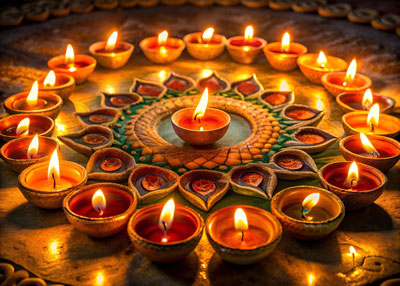
Across India and the diaspora, Deepavali carries layered meanings. For many it marks the return of Lord Rama to Ayodhya; for others it honours Lakshmi, the goddess of prosperity; elsewhere it commemorates regional narratives of moral triumph. Beyond mythology, the festival is grounded in everyday acts: cleaning homes, lighting lamps, sharing sweets, settling differences and renewing relationships. These practices give Deepavali its social power and explain why it resonates far beyond religious boundaries.
With this inscription, India’s total number of recognised intangible cultural heritage elements rises to sixteen, reinforcing the idea that cultural life is not peripheral but integral to national identity and diplomacy.
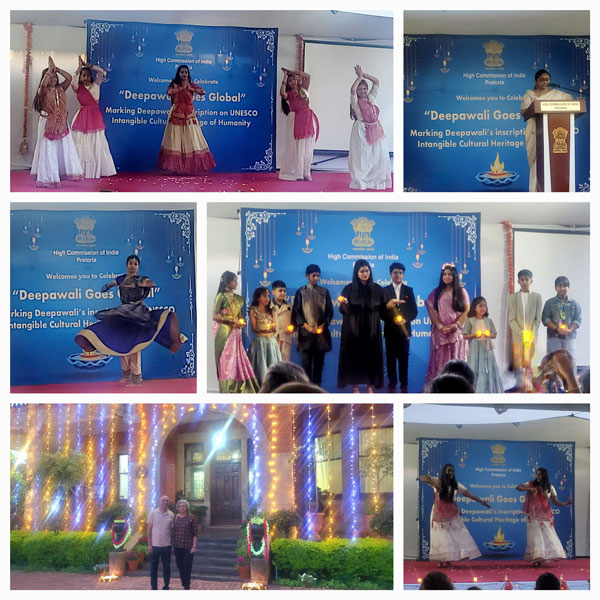
In South Africa, the significance of the UNESCO inscription was marked by a reception hosted by the High Commission of India in Pretoria. Deputy High Commissioner of India Banu Prakash thanked South Africa for its affirmative vote for Deepavali’s inscription. She said that Prime Minister Narendra Modi welcomed the recognition stating that Deepavali is deeply linked to India’s culture and ethos, and represents the very soul of India’s civilisation. Banu said that this recognition is a tribute to the millions who celebrate the festival with great devotion, to the artisans who keep the traditions alive and to the timeless principles it represents.
Through diya lighting, cultural performances and community gathering, the event reflected shared values of renewal, coexistence and the collective affirmation that light ultimately prevails.