

Space industry of BRICS countries: technological cooperation and projects of global scale
How will the cooperation and technological integration of the countries influence the exploration of the Moon and deep space? Read more in the TV BRICS feature
TV BRICS

13 April 2026
Active discussions about the need for BRICS countries to transition to a technological alliance in the field of space cooperation began several years ago. The reason is not merely the exchange of experience and mutual support. Space exploration requires colossal financial investments, the integration of advanced technologies and the resources of different countries, as no single state is capable of bearing such high risks and costs alone.
This primarily concerns ambitious global projects such as the creation of complex orbital stations, missions to the Moon and Mars, not to mention research beyond the Solar System. Moreover, scientific development and the provision of security in outer space progress much faster through collective efforts. Today, all the countries of the group are developing their own space programmes, BRICS unites 40 per cent of the world’s population, and the economies of its members are growing. This represents a serious bid for success in the most ambitious space initiatives.
BRICS Space Council
At present, the activities of BRICS countries in the space sector have entered a phase of cautious institutionalisation, experts say. Whereas partnerships previously tended to be bilateral and limited to individual projects, BRICS is now moving towards the establishment of a permanent Space Council. The leaders of the BRICS countries agreed on the creation of such an institution and on joint space exploration at the XVII BRICS Summit held in Brazil in 2025.
“We recognise the importance of international cooperation in the exploration and use of outer space for peaceful purposes and reaffirm our commitment to reducing existing asymmetries in the space capabilities of BRICS countries. We acknowledge that strengthening the exchange of data, experience and best practices in space activities is an important element in developing cooperation among our space agencies and promoting sustainable progress. [...] We agree in principle to establish a BRICS Space Council and to continue work on its terms of reference in order to foster further cooperation in space activities within the grouping,” the declaration states.
The BRICS Space Council could form a unified coordination structure capable of competing with other space alliances. According to forecasts, competition in space exploration will increasingly take place at the level of country groupings. At the initial stage, experts believe that the Council could lay the foundation for a global satellite constellation. In practice, this would represent the economic utilisation of near-Earth space through the creation of low-Earth-orbit communication and Earth remote sensing systems.
A second important and particularly interesting area is the exploration of deep space. There are several reasons for cooperation. First, such projects are extraordinarily expensive. For example, the deployment of the Russian Orbital Station (ROS), scheduled for 2028 and intended for deep space exploration, is estimated to cost 608.9 billion roubles.
“The key economic logic lies in pooling resources, which will significantly reduce the burden on participating countries. Our (BRICS) combined potential is impressive: several spaceports, more than 1,500 satellites and nearly 100 launches per year,” said Oleg Alekseenko, Candidate of Political Sciences and Associate Professor at the Department of Global Studies, Faculty of Global Processes, Lomonosov Moscow State University, in an exclusive interview with TV BRICS.
Another reason for BRICS cooperation in the space sector is the absence of long-term national goals for Mars or the Moon among individual countries, while humanity as a whole shares such an objective: expanding the habitat of humankind and mitigating risks threatening the development of civilisation.
“I also believe that large-scale projects cannot be implemented by a single country because the range of technologies required is vast and extensive. The implementation of complex, large-scale projects is possible only through cooperation. In this, I see the prospects for uniting countries that together will be able to carry out major projects for the exploration of our natural satellite and, subsequently, the creation of a colony, for example, on Mars,” said space expert and aerospace engineer Denis Prudnik.
Moon Exploration
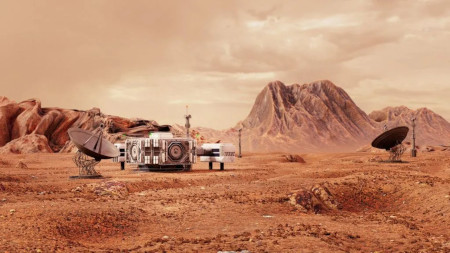
One of the central themes of the BRICS space agenda remains the exploration of the Moon. Russia plans not only to continue but also to expand its lunar programme, notes Oleg Alekseenko. The Luna-27 project provides for launch of two heavy landing stations: one to the southern pole and the other to the northern pole. The launch of the first mission is scheduled for 2029 and will represent an important stage in the creation of the International Lunar Research Station (ILRS). The station is expected to include modules on the lunar surface, with construction planned for 2031–2035. The joint Russia–China project is open to participation by other countries: as of April 2025, 17 states and international organisations, as well as more than 50 research institutes, had joined.
Deputy Head of the China National Space Administration (CNSA), Bian Zhigang, noted that joint lunar research is transitioning from short-term missions to the construction of long-term facilities, and from individual launches to international cooperation.
Another lunar initiative is being implemented by India. At the BRICS CCI WE 2026 summit, the country presented the world’s first international lunar mission composed entirely of girls. The aim of the ShakthiSAT programme is to train 12,000 girls aged 14 to 18 from 108 countries in programming, physics, electronics, and satellite design. After completing a 120-hour online training programme, one top participant from each country will gather in India for practical training from June to August. The culmination will be the creation of the final version of the satellite, scheduled for launch into lunar orbit in 2026, according to ANI, a partner of TV BRICS.
“The project covers 12,000 girls from 108 countries, including all BRICS+ states. The Indian initiative transforms space from a field of competition into a field of cooperation,” Alekseenko believes.

BRICS Space Infrastructure
Another key element in the development of the BRICS space sector is launch infrastructure. Collectively, the countries of the group possess nine orbital spaceports: one in Brazil (Alcantara), one in India (Satish Dhawan Space Centre, formerly Sriharikota), four in China (Xichang, Taiyuan, Jiuquan and Wenchang), and three operated by Russia (Baikonur in Kazakhstan, as well as Vostochny and Plesetsk in Russia). Although Baikonur is formally located in Kazakhstan, Russia holds a lease until 2050. Thus, BRICS already has a wide range of launch options across different latitudes. Planned spaceports in Indonesia and Africa will further strengthen infrastructure resilience. Launches from territories near the equator are particularly advantageous, as they provide rockets with additional initial thrust due to the maximum linear velocity of the Earth’s rotation.
Another significant advantage of BRICS countries in the space sector, according to experts, is that, based on estimates by the Center for Strategic and International Studies (CSIS), BRICS+ countries account for approximately 72 per cent of global rare earth metal reserves, which are critically important for the production of satellites, propulsion systems and various components.
Advantages of BRICS Countries in the Space Sector
The countries of the grouping possess not only natural resources but also substantial scientific and technological capabilities. According to Alekseenko, a certain functional specialisation has even emerged within BRICS.
Russia is a technological leader in human spaceflight, nuclear power systems and fundamental science. The country has a ten-year plan for the development of its space sector and is conducting experiments with plasma rocket engines for deep space missions. Russia proposes that partner countries join efforts in costly interplanetary missions, including those to Mars and Venus. It also possesses unique scientific schools and technologies for landing on Venus that have not yet been replicated elsewhere in the world. These achievements could serve as a foundation for BRICS programmes.
China operates its own orbital station, Tiangong, which has been in orbit since 2021. Designed as a long-term modular platform, it already hosts experiments in biology, medicine, and materials science. China also has an extensive lunar programme aimed at robotic exploration of the Moon and plans to land taikonauts there before 2030.
India acts as a diplomatic integrator, promoting the concept of “space as a public good” through educational and scientific projects. Following the success of the Chandrayaan missions and the achievement of a soft landing on the lunar surface, India expects to play a key role in joint lunar projects, leveraging its experience in low-cost yet highly effective missions.
The United Arab Emirates (UAE) has distinguished itself through the Hope probe mission, which successfully entered Mars orbit on 9 February 2021. Today, the country seeks to capitalise on this experience by participating in lunar initiatives and the development of robotic modules and scientific instruments.
South Africa cooperates with China in the field of quantum communications, having established a secure satellite communication channel resistant to interception. Such solutions, experts believe, could significantly enhance the technological position of BRICS, while cooperation in the space sector may generate a synergistic effect.
“The UAE, Egypt, Iran, Indonesia, Ethiopia, and others provide geographical presence, access to frequencies, growing markets for space services and new human resources. Overall, the establishment of the BRICS Space Council opens up a number of prospects: joint procurement, standardisation of production, the possibility of creating an independent supply chain (engines, life-support systems, etc.), and the development of unified technical regulations,” Alekseenko concludes.

Barriers and Prospects
Thus, by combining the technological capabilities of China, Russia and India with the ambitions of other countries, BRICS is actively building its own space architecture. According to experts, this new ecosystem will rely on the growing participation of the private sector and shared infrastructure. At the same time, the group is promoting alternative principles of space governance: inclusivity and the peaceful use of orbit. Astropolitics serves as a reflection of the broader multipolar order advocated by BRICS.
However, despite the attractive prospects of joint lunar missions and deep space exploration, BRICS space cooperation faces several barriers and challenges. Among these, experts cite differing technical approaches, levels of development and legal aspects.
“Roscosmos (Russia), CNSA (China) and ISRO (India) have historically developed on the basis of different technical solutions, which poses an obstacle to the establishment of unified standards. In addition, the countries of the grouping are at different stages of implementing their national space programmes, and technology transfer remains a delicate issue. Differences in legislation, patent law and export control must also be taken into account,” Alekseenko notes.
Therefore, specialists emphasise that the success of BRICS space cooperation will depend directly on the countries’ ability to harmonise technical standards and create a sustainable governance system. If these challenges are overcome, BRICS could become an alternative centre of global space governance and a leading platform for decision-making in the exploration of the Moon and deep space.
“Joint development of major projects by BRICS member states for the benefit of all humanity will demonstrate the constructive dimension of cosmonautics and shape the image of the future to which we should aspire. It seems to me that this is an important idea: space is about the image of the future; it is about cooperation. Here, it is possible not only to accomplish large-scale tasks but also to demonstrate that it is a space for interaction among different countries,” concluded space expert and aerospace engineer Denis Prudnik.
The article was prepared by Svetlana Khristoforova.