

The Environment is Everything, Leadership, Conservation and Collaboration at SANBI
By Kirtan Bhana
21 April 2026
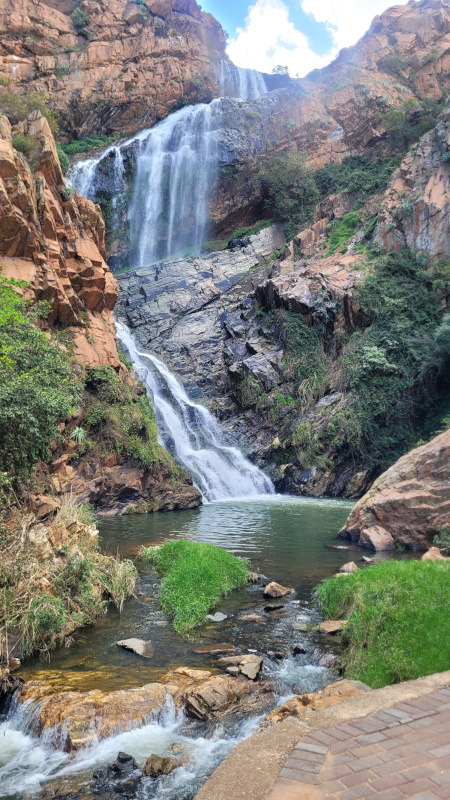
Set against the dramatic backdrop of the 70-metre Witpoortjie Falls, cascading into the lush expanse of the Walter Sisulu National Botanical Garden, a recent gathering hosted by the South African National Biodiversity Institute (SANBI) underlined a simple but urgent truth, the environment is not separate from human progress, it is its foundation.
Nestled near the Cradle of Humankind, the Garden is a scenic retreat that represents a living intersection of natural heritage, scientific research and sustainable development. Since its establishment in 2004, SANBI has played a central role in safeguarding South Africa’s biodiversity, facilitating access to ecological data, shaping policy, building capacity and maintaining national botanical and zoological gardens that showcase the country’s rich natural assets.
Nature as a Strategic Asset
The event, led by Deputy Minister of Forestry, Fisheries and the Environment, Narend Singh, was designed as a reflective experience for leaders navigating high-pressure environments. Removed from the noise of daily operations, participants engaged with nature as a tool for clarity, resilience and improved decision-making.
This approach reflects a growing global recognition: nature is not merely a backdrop but a strategic asset. In some countries, time in nature is even prescribed to improve mental well-being and combat burnout, an idea that aligns with the experience curated at SANBI. Within this living landscape, biodiversity was positioned as an environmental priority and as a driver of long-term economic resilience and ESG performance.
Leadership Voices and Collaborative Insight
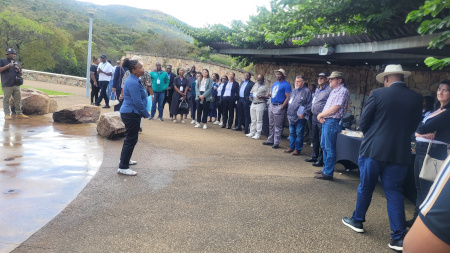
The event brought together influential voices from across conservation, tourism and science, reinforcing the importance of cross-sector collaboration. Guests were welcomed with an overview of SANBI’s vision by CEO Shonisani Munzhedzi, setting the tone for a day focused on sustainability and shared responsibility. This was complemented by insights from Tshifhiwa Tshivhengwa, CEO of TBCSA, who highlighted biodiversity as a critical tourism asset and emphasised the value of strong partnerships in unlocking its potential.
Further depth was provided through presentations by SANBI experts, including Nontsikelelo Mpulo, Pearl Gola and Funanani Muremi, who collectively showcased the organisation’s work in research, conservation and community engagement. Closing reflections from board member Mmaphaka Tau reinforced the importance of governance, innovation and sustained partnerships in driving environmental progress.
Art, Environment and Emotional Connection
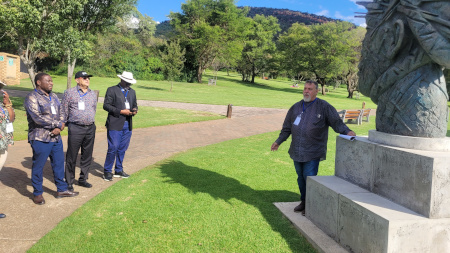
A highlight of the day was a guided tour by renowned South African sculptor Anton Smit, whose monumental works are displayed throughout the gardens. His sculptures range from towering human forms to abstract expressions, exploring themes of suffering, reconciliation and transcendence.
Working primarily with materials such as steel, stone and bronze, Smit creates pieces that suggest movement and emotional intensity. Limbs stretch outward, bodies twist and rise, inviting viewers into a shared human experience. This dynamic quality, combined with a raw, earthy aesthetic, allows his work to resonate deeply within the natural setting, bridging art and environment in a way that feels both powerful and distinctly African.
The Walter Sisulu National Botanical Garden continues to evolve as a space of inclusivity and education. Recent developments include a modern 150-seat hall named after the Strelitzia, alongside the People’s Plant Garden, which showcases indigenous species used in traditional healing, culinary practices and cultural rituals.
Through its accessible membership programme, SANBI ensures that people from diverse backgrounds can engage with these spaces. Benefits such as free entry, event access and discounts encourage ongoing public participation and foster a collective sense of environmental stewardship.
While the setting inspired reflection, the message delivered by government was clear. Drawing on findings from the National Biodiversity Assessment, Singh warned that “pressures on biodiversity are intensifying,” with nearly one-third of South Africa’s ecosystems under threat due to habitat loss, pollution, invasive species and climate change.
Freshwater systems remain particularly vulnerable, despite their outsized importance to national water security. Singh emphasised that targeted, well-funded interventions are essential, noting that strategic investment must deliver maximum impact in high-priority areas.
Encouragingly, he pointed to the success of existing conservation programmes, stating that these “prove what is possible when efforts are sustained and well-supported.” Central to scaling these successes, however, is stronger collaboration with the private sector.
Collective Responsibility
The Deputy Minister stressed that public–private partnerships are vital to advancing conservation goals, enabling investment, innovation and job creation. He called on businesses to support the development of botanical and zoological gardens, highlighting their role in research, education and biodiversity preservation.
Sustained funding, supported by transparent ESG frameworks, is essential to ensuring long-term impact. Environmental stewardship is no longer optional, it is a shared responsibility that underpins economic stability and social well-being.
The gathering at SANBI served as both a reflection and a call to action. From the leadership insights shared, to the emotional resonance of Anton Smit’s work, the message was unmistakable, the environment is everything. Safeguarding it will require commitment, collaboration and continued investment. Through unified efforts across sectors, South Africa has the opportunity to not only protect its natural heritage, but to build a more resilient and sustainable future.