


The Red Sea’s Emerging Complexities and Untapped Opportunities
By Kester Kenn Klomegah, Moscow Bureau Correspondent, The Diplomatic Society
17 August 2026
The Red Sea is entering a new and increasingly complex geopolitical phase.
What was once viewed principally as a maritime corridor connecting the Mediterranean with the Indian Ocean is rapidly developing into a multidimensional strategic space where maritime security, international trade, energy, logistics, defence cooperation, tourism, environmental sustainability and the blue economy converge.
Recent developments have reinforced this transformation. Saudi Arabia's initiative to establish a multinational maritime defence coalition, followed by the signing on 7 August 2026 of the Mecca Joint Defence Agreement between Saudi Arabia, Türkiye and Pakistan, points towards the emergence of overlapping regional security arrangements stretching from the Red Sea and Bab el-Mandeb to the Gulf of Aden, Arabian Sea and wider Indian Ocean.
At the same time, established institutions such as the African Union (AU) and the Indian Ocean Rim Association (IORA) provide existing multilateral frameworks through which security, maritime governance, economic development and regional cooperation can be addressed. This evolution raises a fundamental question: will the Red Sea become primarily a theatre in which regional and external powers compete for strategic influence, or can the countries connected to it convert its geography into a platform for shared economic development and greater regional agency?
The Geography of a Strategic Corridor
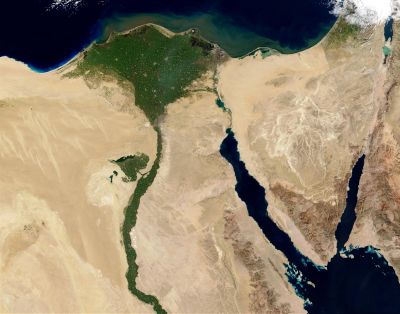
The Red Sea is a seawater inlet of the Indian Ocean, separating the Arabian Peninsula from north-eastern Africa.
The Red Sea proper is bordered by Saudi Arabia and Yemen to the east, and Egypt, Sudan, Eritrea and Djibouti to the west. Its northern extensions include the Gulf of Suez and Gulf of Aqaba.
Somalia is not a littoral state of the Red Sea proper, but its extensive Gulf of Aden coastline places it firmly within the wider maritime security system surrounding the Bab el-Mandeb.
This distinction is increasingly important.
The strategic geography of the Red Sea cannot now be considered in isolation from the Suez Canal, Bab el-Mandeb, Gulf of Aden and western Indian Ocean. Events in one part of this interconnected maritime system can quickly affect the others.
The Red Sea is therefore becoming less a single geographical space and more a strategic corridor linking Africa, the Middle East, Europe, South Asia and the wider Indian Ocean region.
Economic and Security Implications
The Red Sea is one of the world's most consequential maritime corridors.
Through the Suez Canal, it provides a substantially shorter maritime connection between Asia and Europe than the alternative route around the Cape of Good Hope.
Before the recent disruptions, the Suez Canal carried a significant proportion of global commerce. IMF estimates indicated that approximately 12% of global trade and around 30% of global container traffic passed through the canal in the first half of 2023.
The subsequent disruption of shipping has demonstrated how instability in the Red Sea can reverberate through global supply chains, increasing voyage times, insurance costs, freight rates and pressure on energy and food markets.
The strategic importance of the waterway extends beyond commercial shipping. The Red Sea system connects Europe with the Gulf and Asia and is closely associated with energy flows, ports, logistics centres, telecommunications infrastructure and international naval operations.
The maritime environment is consequently shaped by both conventional and non-traditional security challenges.
These include attacks on commercial shipping, piracy, arms trafficking, illegal fishing, human smuggling, maritime terrorism and vulnerabilities affecting ports, energy infrastructure and submarine communications cables.
The continuing threat posed by the Houthi movement in Yemen has demonstrated the vulnerability of the Bab el-Mandeb chokepoint.
The International Maritime Organization reported in July 2026 that it had recorded 24 attempted or actual incidents of piracy and armed robbery against ships in the Red Sea and Gulf of Aden region over the preceding three months, while seafarers remained in captivity following attacks off Somalia and in the Gulf of Aden.
The Red Sea is therefore no longer simply a waterway through which global trade passes. It has become a strategic corridor whose security directly affects global commerce.
From Littoral Security to a Wider Maritime Architecture
A significant development came in July 2026 when Saudi Arabia announced a multinational maritime defence coalition intended to protect navigation and commercial and energy routes around the Red Sea, Bab el-Mandeb and Gulf of Aden.
The proposed grouping extends beyond the traditional Red Sea littoral states and includes countries from the Middle East, Africa and South Asia.
Its significance lies precisely in this wider geographical composition.
The emerging arrangement demonstrates that the strategic geography of the Red Sea is being understood in broader terms — encompassing the Gulf of Aden, western Indian Ocean and maritime routes connecting Africa, the Middle East and South Asia.
Saudi Arabia is positioning itself at the centre of this emerging maritime security architecture.
The initiative is intended to strengthen coordination and maritime defence cooperation while protecting freedom of navigation and international trade and energy routes.
It should nevertheless be viewed as an emerging mechanism rather than a fully tested collective-security organisation. Its effectiveness will ultimately depend upon command arrangements, intelligence-sharing, interoperability, political cohesion and the willingness of participating states to translate commitments into operational cooperation.
That distinction is important.
The region is not witnessing the creation of one single new alliance. Rather, multiple layers of security cooperation are beginning to overlap.
The Mecca Joint Defence Agreement Changes the Strategic Equation
The maritime initiative was followed by an even more consequential development. On 7 August 2026, Saudi Arabia, Türkiye and Pakistan signed the Mecca Joint Defence Agreement, establishing a mutual-defence framework under which an armed attack against one member is to be regarded as an attack against all three.
The agreement also provides for high-level strategic political and military coordination, joint exercises involving land, naval and air forces, air defence and unmanned systems, as well as deeper defence-industrial cooperation involving joint development, production, technology cooperation and logistics support.
The agreement should not be regarded simply as another Red Sea initiative.
Its geographical implications are considerably broader.
Saudi Arabia represents the Gulf and Arabian Peninsula while possessing a strategically important Red Sea coastline. Türkiye connects the Middle East with the eastern Mediterranean, Europe and Eurasia. Pakistan brings the strategic geography of South Asia, the Arabian Sea and wider Indian Ocean into the equation.
Together, these three countries create a political and military connection across several strategic regions.
The agreement has consequently generated comparisons with NATO's collective-defence principle. However, it would be premature to describe it as a fully developed NATO-style alliance. Its practical mechanisms, command arrangements and obligations remain less institutionalised than those of established collective-defence organisations.
Türkiye has nevertheless indicated that the agreement is intended to place defence relations on a more institutional and sustainable footing, with strategic mechanisms involving defence ministers, foreign ministers and military commanders. Joint exercises and cooperation in unmanned systems, electronic warfare and artificial intelligence are also envisaged.
The agreement is therefore significant not simply because of its military provisions, but because it demonstrates the willingness of regional powers to construct their own mechanisms for security cooperation.
Türkiye's simultaneous involvement in efforts to establish an international coalition to protect Red Sea shipping adds another layer to its strategic importance.
The result is best understood as an emerging network of overlapping security arrangements, rather than one unified alliance.
Africa's Strategic Agency
For Africa, this transformation presents both a challenge and an opportunity.It is important, however, to move beyond the argument that Africa or the African Union simply “cares less” about the Red Sea. That conclusion is no longer sustainable.
On 23 July 2026, the Chairperson of the African Union Commission explicitly condemned attacks on commercial vessels in the Red Sea and described obstruction of maritime traffic as a grave threat to international maritime security. The AU also reaffirmed the importance of freedom of navigation and the security of commercial shipping.
The challenge for Africa is therefore less about a lack of awareness than about implementation, coordination and strategic agency.
Five African countries — Egypt, Sudan, Djibouti, Somalia and Comoros are associated with the new Saudi-led maritime initiative.
Egypt controls the northern gateway through the Suez Canal.
Sudan and Eritrea occupy strategically important positions on the African Red Sea coast.
Djibouti sits beside one of the world's most consequential maritime chokepoints.
Somalia's extensive Gulf of Aden coastline gives it a direct connection to the maritime environment surrounding Bab el-Mandeb.
The African continent consequently possesses an extraordinary geographical position.
But geography alone does not create strategic influence.
It must be converted into infrastructure, investment, trade, security capacity and institutional participation.
IORA and the Wider Indian Ocean Architecture.
This is where the Indian Ocean Rim Association (IORA) becomes particularly important.
The Red Sea does not end at Bab el-Mandeb.The Gulf of Aden opens into the Indian Ocean, making the security and economic future of the Red Sea inseparable from the wider Indian Ocean maritime system.
IORA provides an existing multilateral institution through which this broader relationship can be addressed. The Association has 23 member states and 12 dialogue partners, with India currently serving as Chair for the 2025–2027 period. Its priorities include maritime safety and security, trade and investment, fisheries, tourism, disaster-risk management, academic and scientific cooperation and the blue economy. Egypt and Türkiye are among IORA's dialogue partners, while several African Indian Ocean states participate as members.
This institutional distinction is critical.
The emerging Saudi-led maritime coalition is principally security-oriented. The Saudi–Türkiye–Pakistan Mecca agreement is a defence arrangement. The African Union provides a continental political and strategic framework. IORA provides something different: a multilateral Indian Ocean framework capable of connecting maritime security with economic development, trade, investment and sustainable use of ocean resources.
Its Working Group on Maritime Safety and Security is particularly relevant. In June 2026, representatives from IORA member states met to advance cooperation on maritime safety and security, with Türkiye participating as an IORA Dialogue Partner. This creates an important institutional bridge between the Red Sea and the wider Indian Ocean. It also illustrates why the emerging regional architecture should not be viewed solely through military alliances.
There is an opportunity to connect security cooperation + maritime governance + trade + ports + logistics + blue economy + environmental sustainability. That is potentially far more consequential for Africa's long-term development.
The African and Indian Ocean Opportunity
Africa should therefore consider the Red Sea as part of a much larger African–Indian Ocean economic corridor. The continent possesses coastlines, ports, labour, natural resources, expanding consumer markets and enormous potential for logistics, fisheries, tourism, renewable energy and other elements of the blue economy. The opportunity is to transform this geographical advantage into economic value.
The African Union's maritime strategies already provide a continental foundation, while IORA provides an established multilateral platform for engagement across the wider Indian Ocean.
The challenge is to connect these mechanisms.
Instead of creating another institution, African states could seek stronger practical cooperation between:
• the African Union;
• IORA;
• Red Sea and Gulf of Aden coastal states;
• regional economic communities;
• port authorities and logistics operators;
• maritime-security institutions; and
• international organisations such as the International Maritime Organization.
The IMO's Red Sea Project is already working with regional stakeholders including Djibouti, Ethiopia, Somalia, Sudan and Yemen to strengthen maritime and port security, maritime domain awareness and implementation of international security standards.
This illustrates that institutional foundations already exist. The challenge is to connect them.
Securing Blue Economy
The strategic contest surrounding the Red Sea should therefore not be understood exclusively through military power. Ports and logistics infrastructure are becoming increasingly important instruments of economic diplomacy. Saudi Arabia is investing heavily in its Red Sea coastline, ports, logistics and tourism ambitions.
Egypt continues to develop infrastructure associated with the Suez Canal and surrounding economic zones. Across the African side of the Red Sea and Gulf of Aden, there are opportunities for investment in ports, transport corridors, fisheries, renewable energy, tourism, ship services and digital infrastructure.
This is precisely where the IORA framework becomes valuable. The Association's blue-economy agenda provides a basis for cooperation in areas including fisheries, seaports and shipping, renewable ocean energy, marine biotechnology, tourism and sustainable marine-resource development.
The potential is substantial. But the risks are equally significant. Security instability can discourage investment, increase insurance premiums and undermine the predictability upon which modern logistics depend. Environmental degradation can damage fisheries and tourism. Competition over ports and infrastructure can also become an extension of geopolitical rivalry. The economic future of the Red Sea will therefore depend upon the ability of states to connect security with sustainable development.
Emerging Challenges
Maritime Security
The continuing threat to shipping remains the immediate challenge.
The Bab el-Mandeb is a chokepoint. Any sustained disruption can affect shipping between Asia and Europe and create consequences far beyond the immediate region.
The Saudi-led maritime initiative represents one attempt to address this challenge through greater regional cooperation.
International naval forces, the IMO and other maritime-security initiatives remain additional elements of the wider security environment.
Competing Security Architectures
The more important long-term development may be the emergence of multiple, overlapping security structures.
Saudi Arabia is simultaneously strengthening maritime cooperation and developing deeper defence relations with Türkiye and Pakistan.
Egypt remains a major Red Sea and Suez power.
Türkiye has interests stretching across the Mediterranean, Middle East, Red Sea and Eurasia. Pakistan connects the system to the Arabian Sea and Indian Ocean. Meanwhile, the Gulf states do not necessarily share identical strategic priorities, while global powers retain major economic and naval interests in the region. The Red Sea is consequently becoming a meeting point between African, Arab, Turkish, South Asian and global security interests.
Critical Infrastructure
The protection of ports, energy facilities, pipelines, shipping terminals and submarine communications cables will become increasingly important. The future maritime security environment will not be defined only by warships. Artificial intelligence, satellite surveillance, unmanned aerial and maritime systems, electronic warfare and real-time vessel tracking are likely to play an increasing role.
The countries able to integrate maritime intelligence with civilian logistics and commercial shipping systems will possess a significant strategic advantage.
Environmental Sustainability
Economic development cannot be separated from environmental protection. The Red Sea contains important coral reef systems and marine ecosystems, while its coastlines are increasingly being developed for tourism, ports and industrial activities.
Saudi Arabia's Red Sea development programme illustrates the attempt to combine tourism, renewable energy and environmental conservation with large-scale infrastructure.
For Africa, this creates an opportunity to develop a distinctly sustainable model of Red Sea economic cooperation — one in which tourism, fisheries, renewable energy and conservation complement rather than undermine one another.
A New Role for Africa
The most important question for Africa is not whether external powers will continue to compete for influence in the Red Sea.
They almost certainly will. The question is whether African countries will have sufficient strategic coordination to ensure that this competition produces tangible benefits for the continent. African countries should therefore consider the Red Sea not simply as a security theatre but as an economic corridor.
A comprehensive African approach could bring together:
• maritime security;
• port and logistics development;
• fisheries and marine resources;
• renewable energy;
• tourism;
• digital and submarine cable infrastructure;
• blue-economy investment;
• maritime skills development;
• environmental protection; and
• trade integration.
The African Continental Free Trade Area provides an additional framework through which maritime connectivity can be linked to continental markets. IORA provides another avenue through which African Indian Ocean states can engage with South Asia, Southeast Asia, the Gulf, Australia and other partners. The objective should not be to compete with Saudi Arabia, Türkiye or other external powers for control of the Red Sea. Rather, African states should seek partnerships that create shared ownership of economic opportunity and strategic decision-making.
The Future of the Red Sea
The Red Sea is entering a new strategic phase.The Saudi-led multinational maritime initiative and the Mecca Joint Defence Agreement between Saudi Arabia, Türkiye and Pakistan are important indicators of this transformation. Together, they demonstrate that regional states are constructing overlapping mechanisms for maritime and strategic security extending from the Red Sea and Bab el-Mandeb towards the Gulf, Arabian Sea and wider Indian Ocean.
But this emerging security architecture should not be interpreted solely through the prism of rivalry. The same geography that creates vulnerability also creates opportunity. The Red Sea connects Africa to the Gulf, Europe and Asia.
Its ports can become logistics hubs.
Its coastlines can support sustainable tourism.
Its marine resources can contribute to the blue economy.
Its strategic location can facilitate trade and investment.
And its importance can provide African countries with greater diplomatic leverage — provided they are sufficiently organised to use it.
This is where the relationship between the African Union and IORA becomes particularly significant.
The AU provides the continental political framework.
IORA provides the wider Indian Ocean platform
The emerging maritime and defence arrangements provide security mechanisms. The challenge is to make these different layers complementary rather than competitive. The future of the Red Sea will therefore depend not only on who can secure its waters, but on who can shape the economic architecture around them.
For Africa, the imperative is to move from being a geographical stakeholder to becoming a strategic, economic and institutional stakeholder. The Red Sea is no longer simply a sea between Africa and Arabia.
It is becoming a strategic corridor connecting Africa, the Middle East, the Mediterranean, South Asia and the wider Indian Ocean.
Its future will be shaped by regional powers, African states, established institutions and global actors alike.
The defining question is whether Africa will merely provide the geography upon which this new strategic order is built or whether it will help design, shape and benefit from it.
The opportunity is not to create another institution. The opportunity is to connect the institutions, resources and strategic interests that already exist.
In that sense, the Red Sea may ultimately become more than a contested maritime space.
It could become a platform for a new form of Africa–Middle East–Indian Ocean cooperation, where security provides the foundation, connectivity provides the infrastructure, and the blue economy provides the opportunity for shared development.