


Algeria and South Africa, a growing strategic partnership
By Kirtan Bhana | The Diplomatic Society
10 November 2026
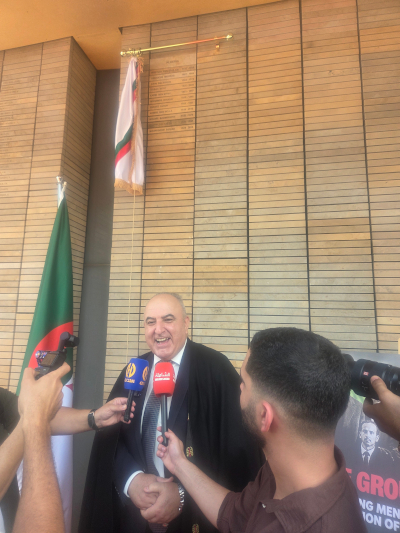
The historical bonds between Algeria and South Africa, forged in the common struggle against colonialism, racial oppression and the pursuit of freedom, were brought into focus at Freedom Park in Pretoria, where the two countries commemorated the 72nd anniversary of the outbreak of Algeria’s Revolution of 1 November 1954.
The occasion was a reaffirmation of the enduring solidarity between two African nations whose paths to liberation were shaped by courage, sacrifice and an unwavering determination to reclaim their sovereignty and dignity.
Freedom Park, an institution dedicated to honouring those who sacrificed their lives in the pursuit of freedom and humanity, provided an especially appropriate setting. The symbolism was further enriched by a video tribute to the legendary Miriam Makeba, affectionately known as Mama Africa, performing I Am Free in Algeria. Makeba, whose music and international advocacy became synonymous with the South African liberation struggle, represented the powerful role of culture and people-to-people solidarity in bringing nations together.
A particularly significant moment was the inauguration of the Wall of Names, which now includes the names of members of Algeria’s liberation movement and other individuals who fought against colonialism, apartheid and racial discrimination. The recognition of these individuals at Freedom Park serves as a lasting testament to the interconnected histories of liberation movements across the African continent.
Addressing the gathering, Algeria’s Ambassador to South Africa, Mr Ali Achoui, recalled the events of 1 November 1954, when Algerian nationalists launched the revolution that would ultimately end 132 years of French colonial rule. The uprising marked a decisive turning point in Algeria’s modern history and initiated a struggle that culminated in independence on 5 July 1962.
At the forefront of the revolution were the Group of Six, six nationalist leaders who secretly organised and initiated the armed struggle against colonial domination. Their courage and determination helped mobilise a nation around the common objective of freedom and self-determination.
For Algeria, independence represented rebuilding a nation and improving the lives of its people. Since 1962, the country has invested substantially in agriculture, housing, education, healthcare and infrastructure, while pursuing inclusive development and progress towards the United Nations Sustainable Development Goals.
Ambassador Achoui highlighted the importance of strengthening domestic production, protecting purchasing power and creating opportunities for sustainable economic growth. With the International Monetary Fund projecting economic growth of 3.8% for Algeria in 2026, the country remains focused on economic revitalisation and welcomes partnerships founded on shared interests and mutual benefit.
Two liberation struggles, one enduring African solidarity
The Ambassador drew particular attention to the historical parallels between Algeria’s revolution and South Africa’s struggle against apartheid. The relationship between the two liberation movements was of practical assistance and shared commitment.
Among the most significant historical connections was the military training received by the late President Nelson Mandela from Algeria’s National Liberation Front (FLN), demonstrating the tangible support extended by Algeria to South Africa’s freedom fighters.
Algeria also played an important role in the international campaign against apartheid. In 1974, during Algeria’s presidency of the United Nations General Assembly, the apartheid regime was expelled from participation in the Assembly, marking an important diplomatic victory in the international isolation of apartheid South Africa.
These historical connections established a bond that transcended conventional diplomatic relations. They were founded on shared experiences, mutual sacrifice and a common understanding of the importance of sovereignty, equality and human dignity.
Today, that solidarity continues to provide the foundation for an evolving strategic partnership. Both countries remain committed to multilateralism, international law, the peaceful resolution of conflicts and the advancement of Africa’s development agenda.
Renewing the strategic partnership
The contemporary relationship is supported by institutional mechanisms designed to translate political goodwill into practical cooperation. A central pillar is the Bi-National Commission (BNC), established in September 2000 and co-chaired by the respective Heads of State. Its seventh session, held in Algiers in December 2024, provided fresh impetus to bilateral engagement and identified opportunities to strengthen cooperation across several areas.
Further momentum was generated on 15 October 2026, when the Foreign Ministers of the two countries co-chaired the BNC Mid-Term Review meeting in Algiers. The meeting welcomed the signing of a Memorandum of Understanding establishing a mid-term review mechanism, in accordance with the directives of the two Heads of State.
The engagement brought together approximately 60 experts who deliberated over several days on the different areas of bilateral cooperation. Discussions have also commenced between representatives of the mining and energy sectors, reflecting growing interest in identifying opportunities that can translate the strategic relationship into concrete economic projects.
For both countries, the challenge and opportunity lie in moving beyond the historical and political foundations of their relationship towards a more dynamic economic partnership.
Unlocking economic and investment potential
Economic cooperation is increasingly becoming a priority in Algeria–South Africa relations. Both countries possess considerable resources, industrial capabilities, institutional experience and access to important regional markets.
The Ambassador highlighted opportunities in automotive manufacturing, energy, agriculture, healthcare, pharmaceutical production and water management. These sectors offer scope for investment, technology exchange, industrial cooperation and the development of mutually beneficial commercial ventures.
The establishment of a bilateral Business Council is anticipated soon and is expected to provide a platform for greater private-sector engagement. Such a mechanism could help connect businesses, identify investment opportunities and facilitate partnerships between companies in both countries.
The importance of this economic dimension was also reflected in discussions held in Algiers in September 2025 between South Africa’s Minister of Trade, Industry and Competition, Mr Parks Tau, and Algeria’s Minister of Foreign Trade and Export Promotion, Mr Kamal Rezig.
Their discussions focused on implementing the Memorandum of Understanding on Economic Cooperation, which provides for the establishment of a Joint Trade and Investment Committee (JTIC). The committee is intended to facilitate regular engagement and promote trade and investment opportunities between the two economies. The MoU establishing the JTIC has since been finalised and is ready for signature at the next session of the Bi-National Commission.
The underlying message is that political goodwill must increasingly be matched by commercial engagement, with the private sector playing a more active role in realising the potential of the relationship.
Aviation and people-to-people relations
Connectivity is another important component of the growing partnership. The resumption of Air Algérie flights between Algiers and Johannesburg in February 2026 represents a welcome development, with implications extending beyond passenger travel.
Direct air connectivity makes it easier for businesspeople, entrepreneurs, investors and officials to travel between the two countries. It also creates opportunities for tourism, cultural exchanges and closer people-to-people relations.
Improved air links can support the movement of goods and commercial delegations, facilitate business development and make it easier for companies to explore opportunities in each other's markets.
In an increasingly interconnected global economy, transport and logistical links are important enablers of economic diplomacy. The restoration of this route therefore represents a practical contribution towards strengthening the wider bilateral relationship.
Shared principles in an increasingly complex world
Beyond bilateral cooperation, Algeria and South Africa continue to share positions on a number of important international questions, particularly the principles of self-determination, sovereignty and the right of peoples to determine their own futures.
Under the leadership of President Abdelmadjid Tebboune, Algeria continues to advocate regional peace and stability and to maintain an active role in international affairs. Its historical support for liberation movements and peoples resisting colonialism and racial discrimination remains an important feature of its foreign policy.
The Palestinian question remains central to this position. Algeria has consistently condemned occupation and called for an end to the aggression in Gaza, a halt to settlement activities and the realisation of Palestinian rights, including the establishment of an independent Palestinian state within the 1967 borders, with Al-Quds (Jerusalem) as its capital.
Similarly, Algeria supports the decolonisation of Western Sahara and the inalienable right of the Sahrawi people to determine their future through a free and fair referendum, in accordance with relevant United Nations resolutions.
Ambassador Achoui commended South Africa for its consistent position on international questions of justice and self-determination, specifically recognising the country's proceedings before the International Court of Justice concerning the situation in Gaza.
These positions reflect a shared diplomatic history in which both countries have emphasised the importance of international law, multilateral institutions and the protection of the rights of peoples.
Looking towards a new chapter
Algeria's strategic position at the intersection of the Mediterranean and African regions, together with its considerable natural resources and human capital, makes it an important partner in Africa's economic and political landscape. South Africa, in turn, occupies a significant position in Southern Africa, with substantial industrial capacity, economic reach and diplomatic influence.
The complementary strengths of the two countries present opportunities to expand cooperation not only bilaterally but also within the broader African context, including regional integration, industrial development, energy security, infrastructure and the advancement of the African Union's development aspirations.
The historical relationship between Algeria and South Africa demonstrates how solidarity forged in adversity can evolve into a lasting partnership. However, the next chapter will increasingly be measured by the ability of both countries to translate their political understanding and diplomatic goodwill into investment, trade, industrial collaboration and tangible improvements in the lives of their people.
The commemoration at Freedom Park was therefore both a reflection on the past and an expression of confidence in the future. The names of those who fought for freedom, now inscribed in a place dedicated to remembrance, serve as a reminder that the independence enjoyed by both nations was achieved through extraordinary sacrifice.
As Algeria and South Africa navigate a changing international landscape, their shared history provides a valuable foundation upon which to build a more ambitious partnership, grounded in mutual respect, African solidarity and a common commitment to development.