Filters

SA participates in expedition along the African coastline

South African researchers and scientists aboard the OceanXplorer during their Around Africa expedition. (Photo: OceanX)
 

3 March 2025

The South African Environmental Observation Network (NRF-SAEON), a long-term environmental observation and research facility of the National Research, is participating in the Around Africa Expedition, the National Research Foundation said.

Led by global ocean exploration non-profit organisations, OceanX and the newly established Ocean Quest, Around Africa Expedition is a pioneering collaborative expedition along the African coastline and is an endorsed action programme of the United Nations Ocean Decade framework (2021-2030) for its contributions to capacity building and scientific understanding of the ocean.

“Its journey began on 30 January 2025 in Moroni, Comoros aboard OceanX’s state-of-the-art research and media vessel, OceanXplorer. The first leg of this expedition, conducted in collaboration with NRF-SAEON, aimed to map and conduct biodiversity surveys of Indian Ocean seamounts on the Madagascan Ridge and Agulhas Plateau,” said the National Research Foundation (NRF).

The guest science team onboard included established and early career researchers from South Africa, Madagascar, Mozambique, Kenya, Tanzania, Comoros, Portugal, Brazil and Saudi Arabia. 

Researchers and scientists from various countries, including six African countries, aboard the OceanXplorer during their Around Africa expedition. (Photo: OceanX)
 

In its statement, the NRF said the measurement of both the physical features and biodiversity at these seamounts will advance scientific knowledge and help to guide informed decisions on conservation and restoration efforts in these remote ocean areas.

“Although these seamounts are located in the high seas, far from any human populations, their contribution towards serving as larval transport corridors are critical and can influence population connectivity across vast ocean distances, supporting ecosystem resilience and replenishment of fisheries in both deep-sea and coastal environments.”

South African benthic ecologist, Dr Lara Atkinson from NRF-SAEON is part of the team leading the exploration of seamounts, including Walters Shoal and the Africana II seamount.

“A seamount is an underwater mountain that rises from the seafloor but does not reach the ocean’s surface. Seamounts are formed primarily by volcanic activity, often at tectonic plate boundaries or hotspots.

“Their height can range from hundreds to thousands of meters, depending on the intensity and duration of volcanic activity. They play an important role in influencing ocean currents, creating nutrient-rich upwelling that supports diverse marine life, including plankton, corals, sponges, fish, and marine mammals,” said Atkinson.

OceanXplorer houses multiple deep-sea research vehicles including two Triton submersibles, and a USV (unmanned surface vehicle). This is a submersible underwater during their Around Africa Expedition. (Photo: OceanX)


Meanwhile, a group of Cape Town high school learners from Luhlaza, Ocean View, Bulumko, Masiphumelele and Usasazo High Schools had the privilege to join a live-streamed session from OceanXplorer on its journey towards Cape Town, as researchers onboard conducted a Remotely Operated Vehicle (ROV) dive on Walters Shoal seamount.

The curious learners in attendance were fascinated by the live view of the seabed at a depth of nearly 500 m and this inspired them to ask many interesting questions to gain further insights about the science being conducted during the expedition. 

Thabo Mbuyazi, a technician from the South African Institute for Aquatic Biodiversity (NRF-SAIAB), explained the importance of ensuring that all scientific equipment is maintained to the highest of standards to be able to collect data for researchers.

He introduced the learners and educators to the two submersibles onboard the vessel, Neptune and Nadir. These three-person submersibles hosted some of the research team during deployments to 500 m depths during the expedition. 

SAnews.gov.za  
 

BMA suspends operations at five ports of entry

3 March 2025

The Commissioner of the Border Management Authority (BMA), Dr Michael Masiapato, has announced temporary suspension of operations at five ports of entry due to severe flooding caused by heavy rainfall. The affected ports are Stockpoort, Makgobistad, Bray, Groblersbridge and Pontdrift.

“At Stockpoort Port of Entry, operations have been suspended as the port is completely surrounded by water. The corridor leading to the port, the operational area, and the bridge after the port have been submerged,” Masiapato said. 


This email address is being protected from spambots. You need JavaScript enabled to view it.

“BMA and other law enforcement officials were stranded on the island where the Immigration Office is located, making movement impossible. In response, the Emergency Medical Services (EMS) in Limpopo were activated yesterday to evacuate affected employees, including all law enforcement officers, using an EMS helicopter for their safety,” he said.

The Commissioner confirmed that Makgobistad Port of Entry remains temporarily closed due to the flooding of the Molopo River, while Bray and Groblersbridge Ports of Entry have also been flooded, leading to the temporary suspension of operations. 

Pontdrift Port of Entry is also affected by the high water levels and operations remain suspended until further notice. 

The BMA announced that Derdepoort Port of Entry, water levels have subsided and normal operations have since resumed. 

Travelers and commercial operators are advised to use Ramatlabama, Kopfontein, Beitbridge and Skilpadshek ports of entry as alternatives for cross-border movement. 

“The BMA continues to closely monitor the weather conditions across all ports of entry and will provide timely updates as the situation develops. We urge travellers and transporters to make alternative arrangements and remain informed through official BMA communication channels,” Masiapato said. 

SAnews.gov.za

SA and Chile sign trade cooperation agreement

Deputy Minister of the dtic, Zuko Godlimpi and Chilean Vice Minister of Trade, Claudia Sanhueza Riveros
 

3 March 2025

South Africa and Chile have signed an agreement that will see the two countries cooperate in areas of trade and industry promotion, decarbonisation and critical minerals among others, the Department of Trade, Industry and Competition (dtic) said. The agreement was signed at the 8th meeting of the Joint Trade and Investment Commission (JTIC) between South Africa and Chile in Pretoria on Friday.

The agreement also extends to strengthening bilateral trade and investment relations in micro, small and medium enterprises (MSMEs) and women-led enterprises as well as value chains.

The JTIC was jointly led by the Deputy Minister of the dtic, Zuko Godlimpi and Chilean Vice Minister of Trade, Claudia Sanhueza Riveros.  

Godlimpi said both countries have identified concrete steps to increase and further diversify trade and investment. These include exchange of products of export interest.

“In addition, we have also agreed on decarbonisation and adding value to our critical minerals, as President Cyril Ramaphosa has said that an era has passed where, as developing countries, we find ourselves at the lower levels of global value chains.

“We agreed to explore cooperation to encourage beneficiation of these critical minerals. Beneficiation opportunities will include cooperation of fuels cell and battery manufacturing,” said Godlimpi.

The Deputy Minister pointed out that while both countries used the opportunity to discuss trade and investment opportunities that exist between them, it would also be important to understand opportunities that the private sector identify, as well as challenges.

“For Chilean companies operating in South Africa, they will have access to markets in [the] Europe Union, the European Free Trade Association, Mercosur and also on the continent of Africa through the Africa Continental Free Trade Area. There is a great potential for South Africa to serve as [a] gateway for Chilean companies into Africa.”

He further said that South Africa and Chile consider cooperation in small and medium enterprises and women-led enterprises as critical to promoting inclusive trade.

“There will be cooperation in exchange of knowledge and expertise, integration into global value chains, start-up programmes, export opportunities for incubators and finance for small businesses. Relevant ministries and agencies tasked with small and medium enterprises and women-led enterprises will make contact with each other before end of April 2025,” he said. 

SAnews.gov.za

Tree-rescuing journeys rooted in China's democracy
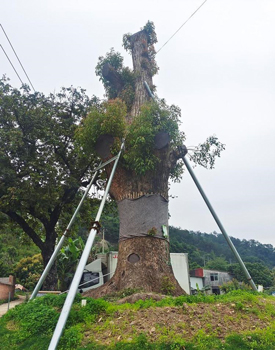

This file photo provided by interviewee taken in May 2023 shows a century-old camphor tree in Fuzhou, east China's Fujian Province. (Xinhua)


FUZHOU, 3 March 2025 (Xinhua) -- A century-old camphor tree, once on the brink of death, has been revived as a group of deputies to the municipal legislative body in Fuzhou, east China's Fujian Province, went to great lengths to come to its rescue.

Throughout 2023, the fate of the tree was the most pressing concern of Zheng Shuhong, a deputy to the municipal people's congress of Fuzhou, the city's legislature.

The camphor tree, once a source of shade for generations of locals in Xujia Village of Fuzhou's Minhou County, was reduced to a bare trunk when workers, displaying a complete lack of awareness for its safety, attempted to relocate the tree to make way for a construction project in January 2023. This careless act left it stripped of all its leaves and branches.

Locals were horrified, but they knew where to seek help: the whole-process people's democracy practice center in the county, an outreach arm of local legislature.

There, they found Zheng and poured out their concerns to the lawmaker on duty who happens to be in charge of the liaison for issues on environmental protection.

To remedy the situation, Zheng contacted the center's two other deputies at once. Together, they made a field trip to the village, informed local procuratorial organ of the damages to the tree, and managed to halt the construction project's groundwork.

The deputies initiated a followup investigation and soon uncovered that, although it was more than 100 years old, the camphor tree was not protected by laws or regulations. In fact, measures to protect and manage trees in Fuzhou only applied to urban areas at the time.

"There are over 9,000 trees that meet the standards of ancient or notable trees in the city's suburbs. Many of the trees scattered deep in mountains and forests lack effective management and protection," Zheng said.

The deputies, taken aback by such a significant oversight, embarked on a fact-finding mission that took them to Fuzhou's other counties such as Yongtai and Fuqing to see the real situation of ancient or notable trees firsthand.

They also organized meetings and discussions, and invited representatives of local forestry and landscape bureaus, as well as tree protection workers in all five districts and eight counties of Fuzhou, to understand the difficulties in the protection of these trees.

Four months later, they had dotted all the i's and crossed all the t's in their report -- which included suggestions for new regulations on the protection and management of such trees -- and submitted it to the municipal people's congress.

At the end of 2023, the newly revised measures for the protection and management of ancient or notable trees in Fuzhou were approved by the Standing Committee of the Fujian Provincial People's Congress. These measures apply to all administrative areas of Fuzhou, expanding the protection scope from over 1,000 to around 10,000 ancient or notable trees.

Deputies like Zheng are a backbone force in practicing China's democracy, which observers say is different from the democracy in the West where politicians and election campaigners would only hear what the people say when casting ballots.

The whole-process people's democracy practiced in China aims to put the people at the center so that the public enjoy not just the right to election, but also the right to be broadly involved in the whole process of decision-making and governance.

To reach out to the people and address their needs in a timely manner, legislatures at various levels have been taking a proactive approach. One relevant institutional arrangement is the launch of whole-process people's democracy practice centers known as legislative liaison stations where grassroots deputies discuss legislative drafts and collect suggestions from the public.

By March 2023, people's congresses at all levels have set up over 220,000 stations for deputies to engage with the public, covering all townships and subdistricts, as well as some communities and villages.

In Fuzhou, for instance, eight liaison stations have been launched, and each of them focuses on a specific sector, which allows deputies, with similar career backgrounds but elected in different electoral districts and at the provincial, city, county and township levels, to strengthen exchanges. In this way, they can more easily find issues of common concern, carry out deeper investigations and devise better suggestions.

Similar efforts to further advance democracy and environmental protection are not limited to Fujian. In central China's Hunan Province, more than 230,000 ancient trees have been granted legal protection, thanks to the diligent work of political advisor Lai Mingyong.

During a trip to the mountainous county of Youxian in Hunan, Lai, a member of the National Committee of the Chinese People's Political Consultative Conference (CPPCC), discovered a 1,500-year-old tree riddled with iron nails used as hangers. Moved by the need to protect such trees, he submitted a prompt proposal through the CPPCC Hunan Provincial Committee's online platform.

As a political consultative body, the CPPCC gathers members of various political parties, prominent individuals without party affiliation and people from all ethnic groups and different sectors to provide advice and recommendations to state institutions, including conducting in-depth studies on certain sectors to check if relevant policies are properly implemented, collecting feedback from the public and making proposals.

Local authorities' reaction to Lai's proposal was swift. Trial schemes were soon implemented, followed by formal regulations for the protection of ancient and notable trees. Damaging one of these trees can now result in fines of up to 5,000 yuan (about 697 U.S. dollars).

"Chinese democracy has never been an ornament," Lai said.

In January, China introduced its first national-level regulations to protect ancient and notable trees, aligning with the country's broader goals of building an ecological civilization and preserving cultural identity.

These regulations, set to take effect on March 15, define ancient trees as those over 100 years old, and notable trees as those with historical, cultural or ecological importance. A national survey conducted from 2015 to 2021 identified 5.08 million ancient or notable trees across China.

For Zhang Zhaohui, an official with the National Forestry and Grassland Administration's ecological protection and restoration department, these tree-rescuing efforts offered a glimpse into how governments responded to public concerns under the supervision of lawmakers and in collaboration with political advisors.

"By practicing democracy in this way, we pulled together and had the heritage trees better protected," he said.


Resumed Cop16 Outcomes Reaffirms the Power of Multilateralism in the Current Global Context

Deputy Minister Narend Singh at the COP16 in Rome, Italy
 

28 February 2025

The South African Deputy Minister of Forestry, Fisheries and the Environment, Mr. Narend Singh attended the 16th session of the Conference of the Parties and extended heartfelt and sincere gratitude to the people and government of Rome, Italy, for their hospitality and to the Secretariat of United Nations Convention on Biological Diversity (UNCBD) and the Food and Agriculture Organization (FAO) for the excellent logistical arrangements.

“We commend the leadership of the President of the 16th session of the Conference of the Parties H.E. Susana Muhamad in guiding us through the second round of the difficult negotiations on multiple areas of the work of this convention. The journey from Cali to Rome has not been easy but with the progress made, we can all agree that it has been worthwhile.

“The Convention is indeed stronger, thanks to the collective efforts of all parties that negotiated in good faith, prioritising biodiversity above national interests. The negotiations have reaffirmed the power of multilateralism in our current global context. We believe that we are stronger together than alone,” Deputy Minister Narend Singh said.


“Our collective commitment to the implementation of the Global Biodiversity Framework is closely linked with the means of implementation which include finance, capacity development, and sharing of technology,” Singh said. 

The South African delegation, led by Deputy Minister Singh, arrived in Rome with a clear mandate to actively participate and provide leadership in the resolution of outstanding matters that could not be resolved by the Conference of Parties held in Cali, Columbia late last year.  “We look forward to collaborating with all parties in the spirit of the Convention, as we do everything possible to continue protecting biodiversity on this planet we all call home,” Singh said. 

Deputy Minister Narend Singh and Jaimal Anand (l) of Dirco meeting with Manuel Barange, FAO Assistant Director General (photo: X)
 

South Africa is confident that with constructive approach, parties are now ready to converge their views in the same direction to achieve common objectives as per COP 16 decisions. It must be noted that BRICS played a pivotal role in providing an alternate text that led to breaking the impasse among parties. 

COP 16 has made history with the establishment of the Cali Fund.  This COP also successfully concluded a decision on the permanent financial mechanism that will function under the authority and guidance of the Conference of the Parties, and be accountable to COP. Landmark achievements, aligned with South African priorities before COP 16, accomplished through compromises, multilateralism and dialogues during negotiations and at Ministerial level, include:

• Digital Sequence Information (Cali Fund)

• The role of Indigenous People and Local Communities

• Implementation of the Global Biodiversity Framework

• Resource mobilisation, monitoring framework and climate change 

Other notable achievements included decisions on synthetic biology; Invasive Alien Species; Ecologically or Biologically Significant Marine Areas; Sustainable Wildlife Management and Plant Conservation and; Health and Risk Assessment amongst others.

However, the hard graft starts now - close the biodiversity finance gap and protect our biodiversity. Everyone must work together in the attainment of the objectives of this Convention. “While this resumed session achieved groundbreaking agreement to mobilise resources for the implementation of the Global Biodiversity Framework which is a global strategy for halting biodiversity loss, the bigger challenge facing all developing countries is to unlock the financial flows at scale enough to move the needle. Nature must be protected to continue to provide its contribution to the welfare of humanity. Without healthy biodiversity, life of earth is compromised and the price to pay is too high to bare,” said Deputy Minister Singh.  

Throughout the resumed COP16, Deputy Minister Singh hosted numerous bilateral meetings pursuing matters of mutual biodiversity interests, with among others, ministerial delegates and Heads of Delegation from the European Union, Canada, India, Norway, Germany, France, Brazil, Democratic Republic of Congo and with the Chairperson of the Africa Group of Negotiators.

Singh together with his delegation made of officials from the Department of Forestry, Fisheries and the Environment and the South African National Biodiversity Institute continued to participate and provided leadership throughout the duration of the resumed COP.   Deputy Minister Narend Singh expresses his great appreciation for the support received from the South African Ambassador to Italy, Ms. Nosipho Jezile Ncaba. Her international experience and analyses presented invaluable complementary input to South African positions.

The Department of Forestry, Fisheries and the Environment

Global challenges require G2O countries to work together

President Cyril Ramaphosa greeting delegates after his official opening address to the first meeting of the G20 Finance Ministers and Central Bank  Governors meeting at the Cape Town International Convention Centre. (photo: Kopano Tlape/GCIS)
 

27 February 2025

President Cyril Ramaphosa has emphasised the importance of the Group of 20 (G20) members working together to overcome unprecedented challenges, including slow and uneven growth, rising debt burdens, persistent poverty and inequality, and the existential threat of climate change.

“We are not moving quickly enough or boldly enough to address these global challenges. We must collectively target a step-change in our efforts to improve the lives of all of our people and protect future generations,” the President said on Wednesday.

Addressing the opening of the first meeting of the Group of 20 (G20) Finance Ministers and Central Bank Governors in Cape Town, the President said at this time of global uncertainty and escalating tension, it is now more important than ever that the members of the G20 work together.

“The erosion of multilateralism presents a threat to global growth and stability. We know from the experience of past decades that a fair, transparent and inclusive rules-based international order is an essential requirement for economic stability and for sustained growth.


“At this time of heightened geopolitical contestation, a rules-based order is particularly important as a mechanism for managing disputes and resolving conflict. It is vital to ensuring that the rights and interests of the vulnerable are not trampled beneath the ambitions of the powerful,” he explained.

Ramaphosa said one of the greatest impediments to growth, development and stability is the persistence of inequality within and between countries.

“The pursuit of the United Nations Sustainable Development Goal on reducing inequality is as much of an economic imperative as a social imperative. As the G20 we need deliberate and coordinated efforts to focus on inclusive growth based on responsive trade and investment to grow the incomes of poor nations and the poorest in society.

“We need to ensure equal access to opportunities, especially for women and young people. For nations to flourish, equality and prosperity must be available to everyone – regardless of gender, race, religious beliefs or economic status.

“The pursuit of equality is an imperative for wealthy and poor countries alike. That is why South Africa has placed solidarity, equality and sustainability at the centre of its G20 Presidency,” the President said.

Priorities 

In line with the original mandate of the G20 to promote strong, sustainable, balanced and inclusive growth, South Africa has identified four priorities for its G20 Presidency.

The first priority is to take action to strengthen disaster resilience and response.

“The increasing rate of climate-induced natural disasters is disproportionately affecting countries that can least afford the costs of recovery and rebuilding.

“When repeated disasters lead to widespread damage of infrastructure, economic activity is disrupted and livelihoods are destroyed,” the President said.

He said innovative financing and insurance mechanisms must be put in place by the global community – including international financial institutions, development banks and the private sector – to scale up funding for disaster prevention and post-disaster reconstruction.

“Our second priority is to ensure debt sustainability for developing economies. In recent years, low- and middle-income countries have seen their levels of sovereign debt and the cost of servicing that debt rise substantially.

“The combined external debt stock of low-income countries more than doubled in the decade to 2022. Debt service costs are increasingly crowding out spending on education, healthcare and other social services, as well as infrastructure needed for economic development,” the President said.

He stressed that the work of the International Financial Architecture Working Group and other working groups will be particularly important in improving the Common Framework for Debt Treatment, accelerating the reform of multilateral development banks, and strengthening capital flows to emerging markets.

“Our G20 Presidency will be addressing the high cost of capital faced by developing economies as one of the main barriers to sustainable growth. The G20 must show leadership in addressing the imbalances that persist in the global economy and filling the significant gap in funding required to achieve the Sustainable Development Goals.

“The third priority of South Africa’s G20 Presidency is to mobilise finance for a just energy transition. Significantly more funding is required to limit global temperature rise in line with the goals of the Paris Agreement, and to do so in a manner that is equitable and just.”

South Africa has pioneered the use of country platforms to coordinate funding through the Just Energy Transition Partnership.

“We continue to advocate for greater concessional and grant funding to support the energy transition in developing economies. G20 member countries should lead the way in demonstrating ambition on climate action in the lead-up to COP30 in Brazil later this year.

“The need to rapidly scale up adaptation funding is particularly important, as those countries which have contributed the least to climate change are now most vulnerable to its effects. We must also scale up the use of innovative financing instruments, improve coordination among funders, and unlock the potential of carbon markets to create new and diverse sources of funding,” the President said.

South Africa’s fourth priority for the G20 Presidency is to harness critical minerals for inclusive growth and sustainable development.

“We need a G20 framework on green industrialisation and investment that promotes value addition to critical minerals close to the source of extraction. We need to promote the development of low-carbon manufacturing value chains which can support decarbonisation while promoting growth.

“As minerals extraction accelerates to match the needs of the energy transition, the countries and local communities endowed with these resources must be the ones to benefit the most,” said President Ramaphosa.

SAnews.gov.za

Continued strengthening of South Africa-Japan cooperation

26 February 2025

Deputy President Shipokosa Paulus Mashatile received a courtesy visit from the newly appointed Ambassador of Japan to South Africa, Mr. Fumio Shimizu, at his Tuynhuys office in Parliament, Cape Town.

Ambassador Shimizu is hosting a high-powered Japanese delegation in South Africa to attend the G20 Foreign Ministers Meeting and the meeting of the G20 Finance Ministers and Central Bank Governors, alongside a number of G20 work-stream meetings.

Deputy President Mashatile and Ambassador Shimizu both remarked on the long-standing friendship and collaboration between Japan and South Africa as an essential factor in the advancement of peace, prosperity, and mutual understanding. In particular, the Deputy President appreciated the continued strengthening of South Africa-Japan cooperation in several sectors including politics, trade and investment, science and innovation, education, energy and development cooperation.

The two leaders undertook to explore additional local manufacturing and job-creating investments in South Africa.

“Because of our strong economic relations, we consider Japanese companies as our traditional investors given their long history of investing in South Africa. In Japan, we see the potential for the increase of an already sizable investment in our economy especially in the automotive industry, technology & skills development, commercialisation & manufacturing as well as machinery for mining & mineral beneficiation, which are among the key economic drivers in South Africa,” said the Deputy President.

South Africa looks forward to the 9th Tokyo International Conference on African Development (TICAD 9) to be held in Yokohama, Japan in August this year. 

Deputy President Mashatile will undertake a Working Visit to Japan next month to further strengthen trade relations and increase investments.

Office of the South African Deputy President

(photos - Jairus Mmutle/GCIS)

Malawi becomes 38th African Country to join Africa's Single Air Transport Market 


25 February 2025

In a significant stride towards unifying Africa’s skies and advancing economic integration, the Republic of Malawi has officially signed the Solemn Commitment to join the Single African Air Transport Market (SAATM). SAATM, a flagship project of the African Union’s Agenda 2063 aims to establish a unified air transport market across the continent enchaining Africa’s broader economic integration efforts.

The signing ceremony took place in Addis Ababa, Ethiopia, on the sidelines of the 38th African Union Summit. Malawi’s Foreign Minister, Honourable Nancy Tembo, officially signed the SAATM Solemn Commitment in the presence of H.E. Dr. Amani Abou-Zeid, outgoing AU Commissioner for Infrastructure and Energy, alongside officials from the Malawi Embassy in Addis Ababa and the African Union.

Malawi’s accession marks a crucial step in building a more interconnected and seamless African aviation network, one that will serve the nearly 1.5 billion people across the continent. This bold move not only aligns with the African Union's vision of a united continent and the free movement of people, goods, and services, but it will also enhance business, trade, tourism, and mobility across Africa.

H.E. Nancy Tembo remarked, “As Malawi becomes the 38th nation to join SAATM, we are making a powerful commitment to the integration of Africa. This move will not only strengthen our connectivity but also create new economic opportunities and foster cultural exchanges across the continent.”

H.E. Dr. Amani Abou-Zeid, AU Commissioner for Infrastructure and Energy, commended Malawi’s decision, stating, “Malawi’s signing of the Single African Air Transport Market agreement is an important milestone in Africa’s journey towards a more integrated and economically prosperous future.” Dr. Abou-Zeid also called on other remaining African countries to join the initiative, emphasising the importance of collective effort in achieving the full potential of SAATM.

The SAATM is set to revolutionise Africa’s air transport and mobility landscape by removing existing barriers. The operationalisation of the market will bring significant economic benefits, including lower airfares, increased flight options, and expanded air cargo services. These improvements are expected to generate job creation within the aviation sector and related industries such as tourism, logistics, and hospitality.

Beyond the SAATM, the African Union has been actively pursuing the sustainability of the air transport sector. One notable achievement is the adoption of the Continental Strategy for Sustainable Aviation Fuels (SAF) and Low Carbon Aviation Fuels (LCAF), a landmark decision made by African leaders to green and decarbonise the continent’s aviation sector.

Aviation safety and security are also top priorities for Africa, with the continent continuing to expand its operations in line with international aviation safety standards. The revised Abuja safety targets were also adopted at the Summit, underscoring Africa's commitment to ensuring the safety and security of its air transport systems.

As the number of signatories continues to grow, the vision of an open, integrated, and efficient African aviation network is increasingly becoming a reality. The benefits of SAATM will extend far beyond the aviation sector, contributing to the overall development and prosperity of the continent.

Moreover, the African Union Commission is implementing key priorities to enhance infrastructure and promote sustainable development across the continent. These include the implementation of 13 railway links as part of the African Integrated Railway Network, an Agenda 2063 Flagship project aimed at fostering regional connectivity and economic integration.  Another priority is the development of green and smart ports, alongside the creation of a multimodal urban mobility system that encourages a shift from road transport to more sustainable modes, including railways, non-motorized transport, and electric mobility central to promoting a more sustainable, integrated, and efficient transport network across Africa.

African Union Commission

CGTN

UN Security Council adopts resolution urging swift end to Russia-Ukraine conflict 

The United Nations Security Council adopts a U.S.-drafted resolution calling for a swift end to the Russia-Ukraine conflict in New York, U.S., February 24, 2025. /VCG
 

25 February 2025

The United Nations Security Council on Monday adopted a U.S.-drafted resolution calling for a swift end to the Russia-Ukraine conflict and urging lasting peace between Russia and Ukraine, as the world marked the third anniversary of the full escalation of the crisis.

The resolution calls for a quick end to the conflict and mourns the loss of life in the war, without placing blame on Russia.

The Security Council adopted the resolution with 10 votes in favor, including China, the U.S. and Russia, while France, Britain, Denmark, Greece and Slovenia abstained. Russia voted in favor after failing to amend the resolution and vetoing European bids to add language supporting Ukraine.

"This resolution puts us on the path to peace. It is a first step, but a crucial one – one of which we should all be proud," acting U.S. Ambassador to the U.N. Dorothy Shea told the council. "Now we must use it to build a peaceful future for Ukraine, Russia and the international community.”

Russia's UN Ambassador Vassily Nebenzia acknowledged "constructive changes" in the U.S. position on the conflict. He said the resolution was "not an ideal one," but "a starting point for future efforts towards a peaceful settlement."

French UN Ambassador Nicolas de Riviere said that while France was "fully committed to peace in Ukraine, we call for a comprehensive, just and lasting peace, and certainly not for the capitulation of the victim."

Earlier in the day, France, Britain and Greece asked the council to postpone a vote on the U.S. draft resolution on Ukraine until the afternoon of February 25. The United States strongly opposed delaying the vote.

Before voting on the U.S.-drafted resolution, the Security Council voted on the motion proposed by European countries. Six countries, including China, supported it, three, including the United States, opposed it, and six, including Russia, abstained. Since the motion did not receive the minimum nine votes needed, it failed, and the vote continued.

As for the U.S.-drafted resolution, Russia and other European countries proposed multiple amendments.

European countries put forward three amendments, including inserting "reaffirming the commitment to the sovereignty, independence, unity and territorial integrity of Ukraine within its internationally recognized borders, including its territorial waters" in the preamble and replacing "Achieving a lasting peace between Ukraine and the Russian Federation" with "Achieving a just, lasting and comprehensive peace between Ukraine and the Russian Federation in accordance with the Charter of the United Nations and the principles of the sovereign equality and territorial integrity of States."

None of the three amendments passed.

Russia also proposed two amendments, including one addressing the root causes of the conflict. However, both failed to gain enough votes.

On the same day, the UN General Assembly rejected the U.S. draft and passed a resolution submitted by Ukraine and European allies, which backs Ukraine's sovereignty, independence, unity and territorial integrity and calls for a just, lasting and comprehensive peace in line with the UN Charter.

Resolutions in the UN Security Council are binding under international law.

CGTN

Great Wall Motors – GWM: Reflecting China’s Growing Automobile Sector and the Future of NEVs in Africa

By Wu Lu and Wu Desheng (Kirtan Bhana)

BRICS Financial Media - BFM

Mr Li Jinhu in discussion with Mr Kirtan Bhana (Wu Desheng) - BFM Photo
 

Mr. Li Jinhu, Executive Director of Great Wall Motors South Africa, presented a promising outlook of GWM at a meeting with BRICS Financial Media (BFM). It was a bold step by the Chinese manufacturer to set up operations in South Africa in 2007 in a market dominated by European and Japanese carmakers. However, the company has since made significant progress, cementing its position in the automotive sector.

Chinese brands and products, once met with skepticism and perceived to be of lower quality, have undergone a metamorphosis, thanks to the process of high-quality development that has seen a surge in innovation and invention. This progress is evident across various industries, but the automotive sector stands out as one where China has made remarkable strides. GWM, in particular, represents these advancements, not only in technology and mechanics, but also in design, making their vehicles both desirable and aspirational.

In South Africa, GWM models have gained popularity by offering more features at a lower price compared to established brands in similar categories. This strategy has positioned GWM as the leading Chinese-manufactured vehicle brand and placed it among the top 10 brands sold in South Africa. With 94 dealerships across the country, GWM has successfully integrated into the well-established South African automotive sector and is expanding in Southern Africa, with dealerships in Namibia, Botswana, Lesotho, and Swaziland.

READ ALSO: Boost Road Safety for People, Planet and Prosperity

Recognizing the rapidly transforming African market, GWM’s global R&D facilities are actively working to provide solutions for environmentally conscious motorists. The shift towards New Energy Vehicles (NEVs) is reshaping the global automotive industry, and Africa is not exempt from this transition. As the continent experiences increasing urbanization and infrastructure development, sustainable mobility solutions are becoming more relevant than ever.


Checking out the full electric GWM ORA with Wu Lu Jun


A UN report on Road Safety highlighted several critical concerns about road user safety, comparing fatalities from road accidents to those caused by diseases. The report called for urgent action to enhance global road safety. Over the next decade, this initiative will focus on improving the well-being of road users, who are at the center of economic growth and development. As innovations in transportation continue to evolve, considerations around safety, health, and wellness must be prioritized. The UN Road Safety Decade aims to address these challenges while also analyzing the impact on the entire automotive supply chain, including financing, insurance, and associated services.

The modern epoch of transportation, logistics, and infrastructure is unfolding before us. The rise of NEVs is propelling the automotive industry into an exciting future. Just as humans once transitioned from domesticated animals to steam engines, and later to internal combustion engines, we are now witnessing the shift towards electric, alternative energy-powered and automated vehicles. The internal combustion engine, which has dominated for over a century, is now facing its potential successor.

GWM, like other emerging automotive manufacturers, is inspired by the boundless opportunities in innovation that lie ahead. As electric vehicles (EVs) and hybrid models gain traction, the industry is moving towards sustainable energy solutions that will define the future of mobility. The African continent, with its vast potential, presents a unique opportunity for the expansion of NEVs. Governments and private enterprises alike are exploring ways to develop infrastructure that supports electric mobility, from charging stations to renewable energy integration.

The P - Series Pickup (bakkie)


The success of GWM in South Africa and its expansion into the broader African market demonstrates the growing influence of Chinese automakers in shaping the future of transportation. With cutting-edge technology, improved safety measures, and an emphasis on environmental consciousness, the automotive industry is entering a transformative era. The future of NEVs in Africa is promising, and GWM is well-positioned to be a driving force in this new era of mobility.


© 2011 - 2025 The Diplomatic Society | All Rights Reserved | Website Designed by The Website Hoster