Filters

Media outlets, think tanks play vital role in promoting mutual understanding: Japanese insiders

20 February 2025

A dialogue on promoting people-to-people and cultural exchanges between media organizations and think tanks of China and Japan was held in Tokyo on Tuesday.

Japanese attendees said that media outlets and think tanks play a vital role in promoting mutual understanding in the current international situation.

GLOBALink

TBS chairman pledges more coverage of Chinese culture


"It's much better to see China for yourself." TBS Television Chairman & Director Takashi Sasaki has pledged to enhance his network's coverage of Chinese culture as well as people-to-people exchanges.

"Chance of China is the world's chance, and Japan's chance," he said on the sidelines of a media and think tank cultural dialogue in Tokyo.

Produced by Xinhua Global Service

Jiji Press sign MoU on media cooperation


This photo taken on Feb. 18, 2025 shows President of Xinhua News Agency Fu Hua meeting with Katsuhiko Sakai, president of Japan's Jiji Press, in Tokyo, Japan. (Xinhua/Jia Haocheng)
 

TOKYO, 20 February 2025 (Xinhua) -- President of Xinhua News Agency Fu Hua met with Katsuhiko Sakai, president of Japan's Jiji Press, in Tokyo on Tuesday, and signed a memorandum of understanding (MoU) to advance media cooperation.

Noting that the media is an important bridge for political exchanges, economic cooperation and cultural exchanges among countries, Fu pointed out that over the years, journalists from the Chinese and Japanese media have recorded a large number of touching stories and historic moments reflecting the friendly exchanges between the two peoples.

Jiji Press is an important partner of Xinhua, and the cooperation between the two sides has achieved fruitful results, Fu said, adding that at a time when new technologies are bringing changes to the media industry, Xinhua is willing to strengthen technical exchanges with Jiji Press, 
continuously expand cooperation in economic information and other fields and actively carry out coordination and cooperation under the mechanism of the World Media Summit to jointly build a mutually beneficial and practical relationship for exchanges and cooperation.

Sakai welcomed Fu's visit, saying that the new cooperation document signed by the two agencies opens a new chapter for the friendly relations between the two sides and he looks forward to strengthening mutual learning with Xinhua in the future and jointly establishing a long-term and stable cooperative relationship.

United Nations

Boost Road Safety for People, Planet and Prosperity 

(photo credit: pixabay)

19 February 2025

Global leaders must take urgent, concerted action to end road carnage

If you had to guess the leading cause of death for children and young people globally, what would you say? Malaria? Pneumonia? Suicide? They’re all up there, but no, it’s road crashes. Cars have been around for over 120 years, and we know how to prevent these tragedies. Yet road crashes still claim more than two lives every minute, and nearly 1.2 million lives every year.

If these deaths were caused by a virus, it would be called a pandemic and the world would scramble to develop vaccines to prevent them. 

And yet reducing road deaths has long been overlooked, misunderstood and underfunded. 

People will always make mistakes on the roads, but we have proven solutions that ensure our transport systems can absorb these errors in a way that significantly reduces the risk of death. 

As part of the United Nations Sustainable Development Goals and the UN Decade of Action for Road Safety 2021-2030, the world has set an ambitious target of halving road deaths worldwide by 2030. 

Just ten countries - including some hard-hit low and middle-income countries – managed to reduce road deaths by more than 50% in a decade, and more than 30 countries are close behind.  This shows that the target can be met but it is nowhere near enough. We need urgent action. 

Key to meeting this goal is the decision to design and build our transport systems for people - not for motor vehicles - and to make safety paramount in all decisions and actions. 

This is especially important for the most vulnerable road users such as pedestrians, cyclists and motorcycle riders, who are often left dangerously exposed. 

Advancing road safety is crucial in itself, but it is also key to sustainable development overall. 

The world is going through an unprecedented wave of motorization. More than a billion vehicles are on the roads. This is unsustainable, so we must focus on moving people, not cars, motorbikes and trucks. 

Transport accounts for one quarter of global carbon emissions, and fuels congestion in our cities. Yet when mobility is made safe and accessible, people choose the greener options of public transport, walking and cycling.

Designing cities around sustainable transport - with cycling lanes, pedestrian zones, and accessible public transport - also strengthens communities by making spaces safer and more livable, while improving access to adequate housing and basic services for all.

Safe roads power economies. Road deaths can cost countries around 3 to 5% of GDP, and ensuring more people can move safely to their jobs, schools and vital services drives development. 

Safe, accessible and affordable transport also breaks down barriers to jobs, schools and opportunities for disadvantaged groups. This helps ensure everyone can reach their potential.

The same holds true for gender equality, and in some countries up to 80% of women report suffering harassment on public transport, so we must make transport safe for women and girls.

Road safety is everyone’s business and to succeed we need a range of sectors to be involved. 

Urban planners and engineers must ensure safety is built into infrastructure. Academia and civil society can generate evidence. The media can dig deeper into what works, what doesn’t and why. 

The private sector has tremendous influence. Businesses can contribute to safe and sustainable mobility by applying proven principles and practices throughout their value chains. They must only sell vehicles that meet United Nations safety standards. 

Yet the role of government is paramount. Governments must provide strategic and well-coordinated approaches, strong policy and legal frameworks that enforce safety standards and safe behaviors, and sufficient funding. Law enforcement and education are also key. 

This vision is right at the heart of the Global Plan for the United Nations Decade of Action for Road Safety 2021-2030, which offers a blueprint for governments to reduce road deaths.

This week, world leaders will meet for a Global Ministerial Conference on Road Safety in Morocco. They will assess progress, share knowledge, and advance actions to halve road deaths by 2030.

They are set to adopt a new Marrakech Declaration, which recognizes road safety as an urgent public health and development priority, and that our efforts must be guided by the principles of equity, accessibility, and sustainability. 

The Declaration calls on leaders to step up efforts to action the Global Plan for the UN Decade of Action for Road Safety. We need a step change in political will, a sense of urgency, evidenced-based, strategies that are costed and implemented, strong coordination and adequate financing. 
Road safety is a crisis that has gone on far too long. No road deaths are necessary or acceptable. 

Yet it is also much more than that. Safe and sustainable mobility can power a better future for us all. 

This Op-ed is initiated by WHO and the UN Secretary-General’s Special Envoy for Road Safety, co-signed by 15 Heads of UN agencies/departments and by H.E. Mr. Abdessamad Kayouh, Minister of Transport and Logistics of the Kingdom of Morocco, Host of the 4th Global Ministerial Conference on Road Safety.

United Nations Information Centre, Pretoria, South Africa

Xi urges healthy, high-quality development of private sector

 
Xi Jinping, general secretary of the Communist Party of China Central Committee, also Chinese president and chairman of the Central Military Commission, attends a symposium on private enterprises, where he delivers an important speech, in Beijing, capital of China, Feb. 17, 2025. (Xinhua/Xie Huanchi)


BEIJING, 18 February 2025 (Xinhua) -- Xi Jinping, general secretary of the Communist Party of China (CPC) Central Committee, on Monday urged efforts to promote the healthy and high-quality development of the country's private sector.

Xi, also Chinese president and chairman of the Central Military Commission, made the remarks when attending a symposium on private enterprises, where he delivered an important speech after listening to representatives of private entrepreneurs.

The private sector enjoys broad prospects and great potential on the new journey in the new era. It is a prime time for private enterprises and entrepreneurs to give full play to their capabilities, Xi said.

He urged reaching a consensus and firming up confidence to promote the healthy and high-quality development of the private sector.

Li Qiang, a member of the Standing Committee of the Political Bureau of the CPC Central Committee and Chinese premier, and Ding Xuexiang, a member of the Standing Committee of the Political Bureau of the CPC Central Committee and Chinese vice premier, also attended the symposium.

Wang Huning, a member of the Standing Committee of the Political Bureau of the CPC Central Committee and chairman of the National Committee of the Chinese People's Political Consultative Conference, presided over the symposium.

Huawei's Ren Zhengfei, BYD's Wang Chuanfu, New Hope's Liu Yonghao, Will Semiconductor's Yu Renrong, Unitree Robotics' Wang Xingxing, and Xiaomi's Lei Jun put forward their opinions and advice on the development of the private sector.

Xi said the Party and the country are committed to unswervingly consolidating and developing the public sector and unswervingly encouraging, supporting and guiding the development of the non-public sector.

The Party and the country ensure that economic entities under all forms of ownership have equal access to factors of production in accordance with the law, compete in the market on an equal footing, and are protected by the law as equals, he said.

The new journey in the new era has provided abundant new opportunities and greater space for the development of the private sector, Xi said. He stressed that the current difficulties and challenges facing the private sector can be overcome and called for confidence in the future.

Xi urged resolutely dismantling obstacles that prevent enterprises from accessing production factors equally and competing in the market fairly, further opening the competitive areas of infrastructure to various business entities in a fair manner, and continuously making solid efforts to address the difficulties faced by private enterprises in obtaining affordable financing.

He also stressed the effective protection of the lawful rights and interests of private enterprises and entrepreneurs in accordance with the law.
Private enterprises and entrepreneurs should embrace entrepreneurship and patriotism, focus on strengthening, optimizing, and expanding their businesses, and be firm contributors to building socialism with Chinese characteristics and advancing Chinese modernization, Xi said. 

 
Xi Jinping, general secretary of the Communist Party of China Central Committee, also Chinese president and chairman of the Central Military Commission, attends a symposium on private enterprises, where he delivers an important speech, in Beijing, capital of China, Feb. 17, 2025. (Xinhua/Xie Huanchi)
 
Xi Jinping, general secretary of the Communist Party of China Central Committee, also Chinese president and chairman of the Central Military Commission, attends a symposium on private enterprises, where he delivers an important speech, in Beijing, capital of China, Feb. 17, 2025. (Xinhua/Shen Hong)
 
Xi Jinping, general secretary of the Communist Party of China Central Committee, also Chinese president and chairman of the Central Military Commission, attends a symposium on private enterprises, where he delivers an important speech, in Beijing, capital of China, Feb. 17, 2025. (Photo by Zhan Zheng/Xinhua)

 
Xi Jinping, general secretary of the Communist Party of China Central Committee, also Chinese president and chairman of the Central Military Commission, attends a symposium on private enterprises, where he delivers an important speech, in Beijing, capital of China, Feb. 17, 2025. (Xinhua/Wang Ye)
 
Xi Jinping, general secretary of the Communist Party of China Central Committee, also Chinese president and chairman of the Central Military Commission, talks with representatives of private entrepreneurs in Beijing, capital of China, Feb. 17, 2025. Xi on Monday attended a symposium on private enterprises, where he delivered an important speech after listening to representatives of private entrepreneurs. (Xinhua/Li Xueren)


AU endorses Nigeria as AfCFTA Digital Trade Champion

February 17, 2025
by Oru Leonard - newsdotafrica

The African Union (AU) has endorsed Nigeria as the Digital Trade Champion for the continent under the African Continental Free Trade Area (AFCFTA) Digital Trade protocol, following the impressive record of the Federal Government in promoting digital enterprise and innovation.

This is contained in the press release signed by the Special Adviser to the President (Information and Strategy), Mr. Bayo Onanuga on Monday.

The 38th Ordinary Session of the Assembly of Heads of State and Government, which concluded on Sunday in Addis Ababa, Ethiopia, recognised Nigeria’s proactive role in advancing the implementation of the digital trade protocol adopted in February 2024.


The protocol features an agenda to develop eight annexes covering critical areas, including rules of origin, digital identities, cross-border data transfers, legitimate and legal public interest reasons for disclosing source code, online safety and security, emerging and advanced technologies, and financial technology.

In his annual report on the progress of the AfCFTA’s digital trade protocol, former president of Niger Republic and AU AfCFTA champion Mahamadou Issoufou lauded Nigeria’s leadership for convening the Digital Economy Roundtable in January.

He noted that the gathering was pivotal in driving the digital trade agenda forward.

”No organisation, region, or continent has negotiated or adopted such a comprehensive legal instrument on digital trade, positioning the African continent to benefit from the digital economy for innovation and job creation,” former President Issoufou said.

The former Nigerien leader observed that young Africans are leaders in digital innovation, particularly in mobile banking and other digitally enabled services.

”The AfCFTA Protocol on Digital Trade will establish a conducive environment for these young people to fully participate in Africa’s digital economy,” he added.

Reflecting on the Digital Economy Roundtable in Abuja, Issoufou commended President Bola Tinubu and his administration for convening the event and inviting the AfCFTA Secretariat to participate.

”The Roundtable was attended by young pioneers in Fintech, mobile banking and other areas of the digital economy.

”It was evident from the discussions that young people are eager to take advantage of Africa’s digital economy through the AfCFTA Protocol on Digital Trade,” the former Niger president said in his progress report to the 38th Assembly.

On the significance of the AU endorsement of Nigeria, Minister of Industry, Trade and Investment, Dr Jumoke Oduwole, told the summit:

“Africa has demonstrated global leadership by pioneering the first-of-its-kind AfCFTA Protocol on Digital Trade—establishing a comprehensive regulatory framework.

“The Assembly of Heads of State and Government has officially designated Nigeria as AfCFTA Digital Trade Champion. The AfCFTA Digital Trade Protocol is a game changer in advancing Africa’s economic development. It is set to create millions of jobs for Africa’s growing, tech-savvy youth, contribute billions to the continent’s GDP and attract substantial investments for public digital infrastructure across African nations.”

Xi's congratulatory message to 38th AU summit draws warm responses
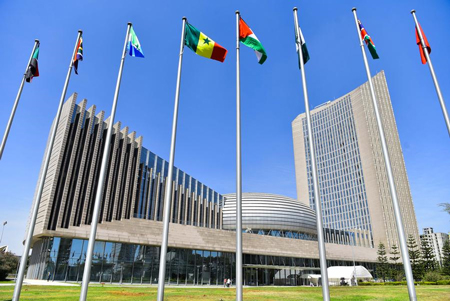

This photo taken on Feb. 13, 2025 shows the buildings of the African Union (AU) Headquarters in Addis Ababa, capital of Ethiopia. (Xinhua/Michael Tewelde)


With the successful Beijing Summit of the Forum on China-Africa Cooperation, China and Africa have embarked on a new stage of jointly building an all-weather community with a shared future for the new era, and stayed at the forefront of building a community with a shared future for humankind.

NAIROBI, 18 February 2025 (Xinhua) -- Chinese President Xi Jinping on Saturday sent a message to the 38th African Union (AU) Summit, extending warm congratulations to African countries and people.

Experts from African countries noted that the message highlights China's unwavering commitment to China-Africa relations and its steadfast support for Africa's independence, self-reliance and development.

They said that China-Africa relations will continue to serve as a model of South-South cooperation, as the two sides work together on the path to modernization.

STRONGER GLOBAL SOUTH COOPERATION

In his congratulatory message, Xi noted that over the past year, the AU has united and led African countries in vigorously advancing integration, actively responding to regional and global challenges and speaking in unison as the "voice of Africa."

Noting that these efforts have led to a continuous boost in Africa's international status and influence, he sincerely wished African countries and people even greater success on their path to independence, self-reliance and development.

Lerato D. Mataboge, the newly elected AU Commissioner for Infrastructure and Energy, could hardly contain her excitement during an interview.
"We're quite honored to receive the congratulatory message from President Xi. We all are quite proud of the China-Africa relationship over the years and the partnership in development," Mataboge said.

"President Xi's congratulatory message on the 'Global South' is truly inspiring," Ibrahim Gambari, a former Nigerian foreign minister, said after attending the opening ceremony of the AU summit.

Gambari, who has made many trips to China, highlighted China's role in strengthening the Global South's influence, especially within the frameworks of the G20 and BRICS.

"China was the first major country to openly support the AU's entry into the G20, which ensures Africa's voice is heard on the global stage," he said.

The 2025 AU summit, with the theme of "Justice for Africans and People of African Descent Through Reparations," reflects Africa's pursuit of strategic autonomy and self-determined development.

Benjamin Mgana, chief editor of foreign news at The Guardian newspaper in Tanzania, said global governance structures have long been dominated by developed nations, often sidelining the interests of the Global South.

By strengthening strategic partnerships with China and other emerging economies, Global South nations, including African countries, can navigate external pressures while pursuing self-reliant growth and sustainable modernization, he said.

"There is no doubt that China has become the biggest champion of pragmatic multilateralism, coming up with proposals that have significantly transformed the world economy," said Adhere Cavince, a Kenyan scholar on international relations.

China-proposed initiatives, including the Belt and Road Initiative, the Global Development Initiative and the Global Security Initiative, are designed to ensure that all nations share the benefits of peace and development, Cavince said.

He noted that these efforts are particularly valuable for Global South nations, helping advance sustainable development, maintain regional stability and promote intercultural exchanges.

SUCCESSFUL PLATFORMS, ALL-WEATHER FRIENDS

In his message, Xi said that the year 2024 saw a vigorous development of China-Africa relations.

With the successful Beijing Summit of the Forum on China-Africa Cooperation (FOCAC), China and Africa have embarked on a new stage of jointly building an all-weather community with a shared future for the new era, and stayed at the forefront of building a community with a shared future for humankind, Xi noted.

The 2024 Summit of the Forum on China-Africa Cooperation (FOCAC) opens in Beijing, capital of China, Sept. 5, 2024. (Xinhua/Zhai Jianlan)


Xi's message not only affirms the joint efforts of the two sides in the past but also expresses hope for brighter prospects regarding China-Africa relations, said Marius Kudumo, a Namibian public policy analyst and international relations expert.

China has made immense contributions to Africa's industrialization, agricultural modernization and talent cultivation as a major partner of the continent over the past years, he said.

The message also resonated with Mathias Eric Owona Nguini, vice-rector of the University of Yaounde in Cameroon. He said that the FOCAC, which was established in 2000, marked a new phase of practical and friendly cooperation between China and Africa.

The FOCAC has developed into an effective mechanism for China-Africa cooperation, and it has made remarkable gains in boosting mutual political trust and practical cooperation, benefiting the peoples of both sides, Nguini said.

Roger Agana, managing director of News Ghana, said the all-weather China-Africa community with a shared future for the new era exemplifies the fraternal bond between China and Africa.

"China and Africa have been all-weather friends, that is to say, the two sides will always support and trust each other regardless of the chaos and vicissitudes; this brotherhood is unbreakable," he said.

Dennis Munene Mwaniki, executive director of the China-Africa Center at Kenya's Africa Policy Institute, said that the concept of an all-weather community with a shared future for the new era reflects the deepening and multifaceted partnership between China and Africa.

"It emphasizes a long-term, resilient and mutually beneficial relationship that transcends political and economic changes. It is not just about economic gains but also about creating a model of South-South cooperation that promotes peace, development and prosperity for all," Mwaniki said.

NEW JOURNEY OF MODERNIZATION

In his congratulatory message, Xi expressed his readiness to work with African leaders to promote the implementation of the six proposals for jointly advancing modernization and 10 partnership actions, so as to bring more tangible results to benefit over 2.8 billion Chinese and Africans.

"China has been quite a great contributor to infrastructure development on the African continent ... I'm looking forward to further exploring the type of collaborations that we can have with China," said Mataboge, the AU commissioner for infrastructure and energy.
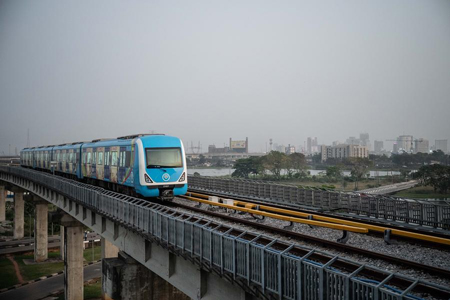
 
 This photo taken on Dec. 1, 2024 shows a train of the Lagos Rail Mass Transit (LRMT) Blue Line in Lagos, Nigeria. (Xinhua/Wang Guansen)


The six proposals and 10 partnership actions provide a structured framework for addressing key development challenges in Africa, said Zan Bi Claude Evariste, a researcher and lecturer at the University of San Pedro in Cote d'Ivoire.

He suggested that to promote implementation, it is necessary to ensure the active participation of local governments, improve transparency, encourage the participation of the private sector, and establish a regular monitoring and evaluation mechanism.

China's zero-tariff treatment on 100 percent of tariff lines for least-developed countries with diplomatic ties reflects its sincerity in fostering development and achieving win-win outcomes, said James Arrey Abangma, a political science professor at the University of Buea in Cameroon.
The 10 partnership actions focus on the career development of African youth, help Africa cultivate a new generation of talents, and promote the long-term sustainable development of African countries, he said.

China-Africa ties focus on infrastructure development, industrialization and people-to-people connectivity, fostering long-term sustainable growth, said Mgana.

With the support of Chinese investment, Africa's industrialization and agricultural modernization will enhance job creation, economic resilience and self-sufficiency, Mgana said.

Emmanuel Yenshu Vubo, dean of the Faculty of Social and Management Sciences at the University of Buea in Cameroon, believed that sincerity, openness and mutual trust are the keys to China and Africa moving forward side by side.

President Xi's proposal to make sure "on the path to modernization, no one, and no country, should be left behind" has brought hope to the modernization of the Global South, he said.




Lerato Mataboge appointed AU Commissioner for Infrastructure and Energy

17 February 2025

The South African government has congratulated Lerato Mataboge on her historic election as Commissioner for Infrastructure and Energy of the African Union (AU). Mataboge, who is currently the Deputy Director-General at the Department of Trade, Industry and Competition (the dtic), has an impressive track record.

She is the founder and former leader of Trade Invest Africa, an initiative aimed at promoting sustainable partnerships between governments and the private sector, with a particular emphasis on boosting intra-African trade and investment in infrastructure and energy.

According to her LinkedIn profile, she holds a BA Honours in Law and International Relations from the University of Witwatersrand. 

She also has a Master’s Degree in International Political Economy from the University of Warwick, as well as a qualification in Infrastructure in a Market Economy from Harvard Kennedy School Executive Education.

Mataboge has since committed to providing credible responses to new technologies, including biotechnologies, digitisation, and artificial intelligence while acknowledging Africa’s vital mineral resources in developing global technologies. 

“I will prioritise rail and the required policy instruments for harmonising our rail links; because rail is a key integrative infrastructure and presents manufacturing potential for Africa as a producer of rail components and maintenance services.” 

The newly appointed Commissioner took to LinkedIn on Thursday to thank Africa for electing her to this new position.

“The hard work begins now. We will integrate the continent in our lifetime,” Mataboge wrote.

Meanwhile, International Relations and Cooperation Minister, Ronald Lamola said, South Africa was confident that Mataboge would play a pivotal role in advancing infrastructure development and enhancing energy security across the continent. 

SAnews.gov.za

Xinhua think tank report emphasizes China's commitment to promoting world peace

BEIJING, 18 February 2025 (Xinhua) -- As global security challenges increase and intensify, China has initiated a vision for common, comprehensive, cooperative and sustainable security, following a path of peaceful development while striving to promote peaceful coexistence and inclusive exchange of civilizations, said a Xinhua think tank report released on Tuesday.

China has always been a practitioner of peaceful development, as highlighted in the report titled "Promoting the Development and Progress of Human Civilization through Exchange and Mutual Learning" released by Xinhua Institute, a think tank affiliated with Xinhua News Agency.

China is the only major country that has enshrined peaceful development in its Constitution -- elevating it to a national commitment, according to the report.

It noted that as a permanent member of the United Nations (UN) Security Council, China has faithfully fulfilled its responsibilities and missions, being the second largest financial contributor to both the UN and UN peacekeeping operations, while also providing more peacekeepers than any of the other permanent members of the Security Council.

China, in addition, firmly supports the core role of the UN in international affairs, while actively promoting security cooperation within frameworks such as the Shanghai Cooperation Organization and developing international security dialogue platforms -- including the Beijing Xiangshan Forum, the report stated.

The report also highlighted China's role in leading the reform of global security governance, noting that the country has offered Chinese wisdom to further improve global security governance by proposing the Global Security Initiative.

Concerning non-traditional security, China leads international security governance in emerging fields. Through efforts such as enacting the world's first legislation on generative AI, China has shared its extensive experience in AI governance with the world, making significant contributions to global AI governance, the report explained. 


Xinhua think tank report highlights Chinese solutions to global challenges

BEIJING, 18 February 2025 (Xinhua) -- With its rapid development and growing international influence, China has been increasingly engaging in global affairs, offering Chinese solutions to global challenges such as poverty and climate change in both concept and action, said a Xinhua think tank report released on Tuesday.

The report, titled "Promoting the Development and Progress of Human Civilization through Exchange and Mutual Learning," was released by Xinhua Institute, a think tank affiliated with Xinhua News Agency.

By 2020, China's large-scale anti-poverty campaign had lifted 98.99 million rural residents out of poverty, marking a monumental victory in the fight against poverty, which is also a common question for international economic governance.

As the world's largest developing country, China has always closely linked its growth with global development. According to the report, China has supported over 6,000 projects for livelihood improvement in numerous developing countries.

Chinese hybrid rice has been introduced to nearly 70 countries across five continents. Juncao -- a China-originated technology that uses grass instead of timber as a substrate when growing mushrooms -- has been promoted in over 100 countries, according to the report.

Regarding climate change response, China made a commitment in 2020 to peak carbon emissions before 2030 and achieve carbon neutrality before 2060, meaning that China will cut carbon emission intensity more than any other country in the world and move from carbon peak to carbon neutrality in the shortest span in history, the report said.

It added that China had established the world's largest carbon market. The country's installed capacity for hydropower, wind power, solar power and biomass power generation is the highest in the world, and its production of new energy vehicles has topped the world for 10 consecutive years.

China has also been introducing more global public goods that embody Chinese wisdom and serve the development of all humanity, the report said.

In 2021, in response to anti-globalization trends, China proposed the Global Development Initiative, which has been echoed by an increasing number of countries and regions around the world. Under the initiative, more than 30 cooperation platforms have been established, with over 1,100 projects launched, covering all 17 of the United Nations' sustainable development goals.


© 2011 - 2025 The Diplomatic Society | All Rights Reserved | Website Designed by The Website Hoster