

From Robot Baristas to Smart Cities connecting China’s AI Revolution and Africa’s Digital Future
By Fiifi Nettey | Freelance Journalist and Columnist, Business and Financial Times
21 October 2026
The rapid advancement of technology has brought the world closer than ever before. From the analogue era, when communication relied largely on coaxial cables, to today’s fibre-optic networks that transmit data at remarkable speeds using light, technological progress has transformed how people connect, communicate and share information. This evolution highlights the remarkable strides humanity has made in technological innovation.
Today, information can be transmitted across the world in the blink of an eye. As the world embraces a new era of digital convergence and artificial intelligence (AI), some countries are emerging as major forces in shaping the technological future.
China has made remarkable strides in this area, investing heavily in artificial intelligence and other advanced technologies to develop innovative solutions and address complex challenges. Its rapid technological advancement demonstrates how AI and emerging technologies are increasingly becoming central to the future of global development.
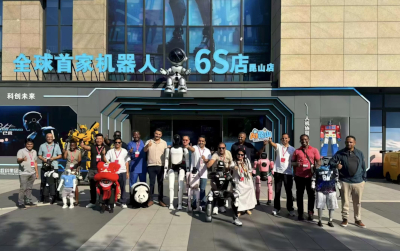
My recent visit to several key locations in China as part of the Belt and Road Journalists Forum 2026 tour offered a firsthand glimpse into the country’s remarkable progress in artificial intelligence. One notable example is Kunshan, in Jiangsu Province, home to the world’s first robotic 6S store, known as the Robot 6S Store, which officially opened on 18 July 2026.
Located in the International Digital Innovation Valley, the store is operated by Kunshan Digital Intelligence Technology Group and serves as a key component of the Kunshan Smart Computing Origin Community. This initiative aims to establish a national demonstration zone for artificial intelligence.
The store demonstrates how robots are moving beyond industrial factories and becoming increasingly integrated into everyday life, offering visitors a fascinating and accessible glimpse into the future of AI and robotics.
One of the most fascinating experiences during my visit to the Robot 6S Store was witnessing a robot prepare coffee grown in Ethiopia, one of Africa’s renowned coffee-producing countries. The demonstration was particularly striking because it brought together advanced technology and Africa’s rich agricultural heritage. It also offered an encouraging glimpse of the opportunities for cooperation between China and Africa in technological innovation and development.
Another impressive demonstration featured a robot roasting popcorn, which I had the opportunity to taste. The popcorn was delicious, providing a practical example of how robotics and artificial intelligence can be integrated into everyday activities to improve efficiency and convenience.
These experiences demonstrated the growing potential of technology to address everyday needs, support production and transform traditional processes. Beyond the demonstrations, the store also features a range of related products, including 3D printers, spare parts and accessories. It provides after-sales maintenance and technical support while gathering customer feedback to help shape the development of future products. The store also showcases humanoid robots, robotic dogs and AI-powered toys.
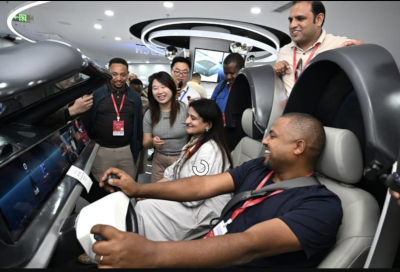
Another remarkable stop was AISpeech Co. Ltd., a leading Chinese enterprise specialising in artificial intelligence platforms. The company’s exhibition hall showcases its conversational AI technologies and large-model integrated applications across smart homes, intelligent vehicles and smart cities.
AISpeech is at the forefront of developing technologies that enable people to interact with digital devices through voice commands. Its AI-powered solutions are designed to make homes smarter, vehicles more intelligent and urban services more efficient. These innovations allow digital systems to understand spoken instructions, provide real-time information and support everyday activities, making life more convenient and connected.
Through these visits, I have come to recognise China as an important global technology partner, particularly in areas such as telecommunications, 5G, cloud computing, artificial intelligence, digital education and renewable energy. These are sectors with considerable potential to support development around the world, particularly in Africa, where digital transformation presents both significant challenges and exciting opportunities.
China is contributing to digital development across many African countries through investments in digital infrastructure and the training of thousands of Africans in information and communications technology (ICT)-related skills. It is also supporting initiatives in emerging fields such as artificial intelligence, robotics, cybersecurity, software development and digital education. From what I witnessed, China offers valuable opportunities for Africa to learn, innovate and accelerate its digital transformation.
During a conversation with my Ethiopian colleague and fellow journalist, Nigatu Nebiyou Wondwosen, I learned that China’s presence in Ethiopia is particularly visible in the telecommunications sector. He explained that Chinese companies are supporting the development of the country’s telecommunications infrastructure. He also mentioned Telebirr, a digital financial service that provides mobile money and other digital payment solutions. Its role in transforming everyday financial transactions illustrates how digital technology can improve access to services and create new possibilities for individuals and businesses.
Experiences such as these highlight the potential of technology to connect countries, strengthen economic relations and improve people's lives. However, the benefits of technological advancement will depend on how effectively countries adapt innovations to their own needs and ensure that the opportunities are accessible to their populations.
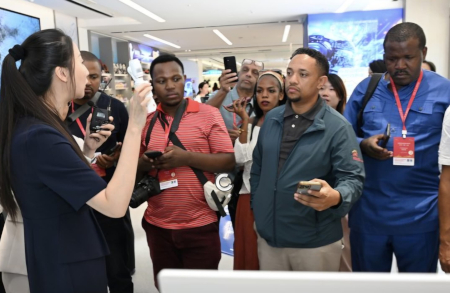
In my view, Africa must strengthen its partnerships with China, learn from its technological advancements and explore practical ways to bridge the digital and economic gaps between the two continents. However, the next step must go beyond technology transfer and knowledge sharing. We must transform this bridge into a sustainable economic partnership that creates opportunities, drives innovation, promotes investment and delivers mutual benefits for businesses across both continents.
The Belt and Road Initiative provides a platform through which infrastructure, technology and people-to-people exchanges can contribute to this shared ambition. For Africa, the priority should be to build on these opportunities by developing local skills, supporting entrepreneurship, encouraging research and innovation, and creating an environment in which African businesses can participate meaningfully in the digital economy.
China’s advances in artificial intelligence offer an important glimpse into the possibilities ahead. The challenge for Africa is to turn these lessons into practical outcomes that support inclusive development, strengthen economic cooperation and ensure that the continent is not merely a consumer of new technologies, but also an active participant in shaping the digital future.
END