You are not connected. The newsletter may include some user information, so they may not be displayed correctly.

A Year of Exchanges

A Year of Exchanges


20 January 2026 Issue 344 - A Year of Exchanges


Lavrov Brands Today's World Order as Game of 'Might Makes Right'


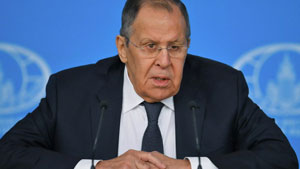
‍Russian Foreign Minister Sergey Lavrov at a press conference outlines Russia's Diplomatic Course for 2025 (photo: Yuri Kochetkov)

‍MOSCOW - Sputnik International - 20 January 2026


In today's world, the 'might makes right' game is currently in play, Russian Foreign Minister Sergey Lavrov said on Tuesday.

"The rules that should supposedly underpin a world order that suits the West — these rules have all been crossed out. A game of 'might makes right' is being played out... We are all witnessing this. But the consequences of this policy are being felt not only by states in the Global South and the Global East; crisis trends are also building within Western society itself," Lavrov said at a press conference on the results of Russian diplomacy in 2025.


India officially becomes BRICS Chair


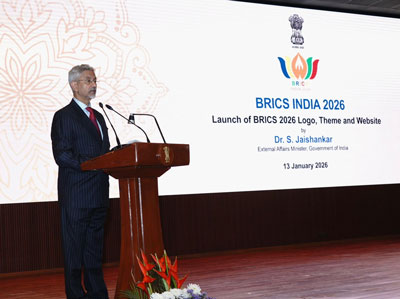
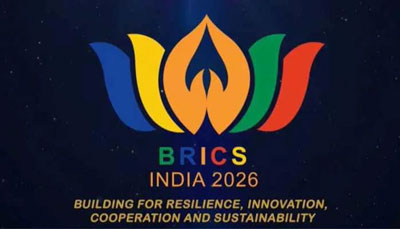
‍India’s External Affairs Minister Subrahmanyam Jaishankar launching preparations for BRICS India 2026 with the unveiling of the website, theme and logo (photo: X @DrSJaishankar)


India’s External Affairs Minister Subrahmanyam Jaishankar has stressed the need for international institutions to become more representative, inclusive and effective. This is reported by ANI, a partner of TV BRICS.

Speaking in New Delhi at an event marking the launch of the BRICS 2026 logo, Jaishankar highlighted BRICS as a key platform for advancing economic cooperation and sustainable development among its members. He noted that financial cooperation within the group has become an important tool for supporting infrastructure projects and long-term growth, particularly in emerging economies.

India, he said, remains committed to strengthening BRICS mechanisms, while delivering tangible benefits to member states.

‍


People at the Centre of China and Africa, 2026


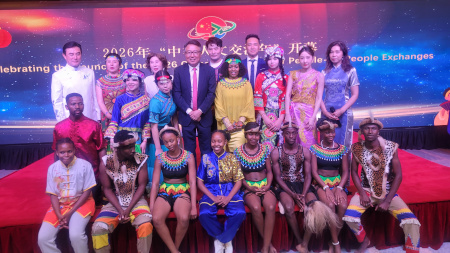
Ambassador Wu with Chinese and African cultural performance artists (photo: TDS)

The phenomenal and unprecedented development of the People’s Republic of China has, at its core, a simple yet profound principle, the people. Guided by the collective mandate of the Communist Party of China (CPC), China’s modernization journey has consistently placed people’s wellbeing, aspirations, and collective consensus at the centre of governance and development.

As Africa advances its own integration and transformation agenda, the continent is increasingly recognising a parallel truth, that its greatest asset lies in its people, its youthful dynamism and the untapped value of its ancient civilizations.

It is against this philosophical and developmental convergence that the Year of China–Africa People-to-People Exchanges was formally launched, marking a new and deeper phase in China–Africa relations, one that foregrounds human connection as the foundation of sustainable partnership.


Vietnam's Foreign Affairs: 40 Years of Historic Achievements 


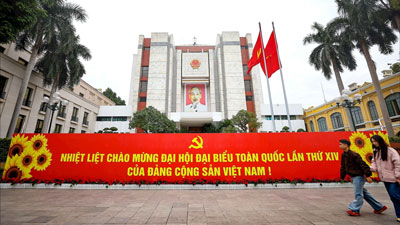
‍A banner welcoming the 14th National Congress of the Communist Party of Vietnam in front of the headquarters of the Hanoi People’s Committee (Photo: VNA)

Vietnam has obtained historic achievements in foreign affairs over 40 years of "Doi moi" (renewal) under the leadership of the Communist Party of Vietnam (CPV), which is set to continue to build on these successes to proactively seize opportunities and surmount challenges to further strengthen diplomatic efforts, thereby safeguarding national interests and affirming Vietnam’s role as a responsible and active member of the international community in an ever-changing world.

Looking back, one of the Party’s most significant achievements is to break through isolation and embargoes, and gradually normalise and expand relations with all countries, transforming Vietnam from a marginalised state into a nation with a broad diplomatic network spanning most regions of the world.

Today, Vietnam maintains diplomatic relations with 194 countries and territories, and holds strategic or comprehensive partnerships with 38 nations, including the five permanent members of the UN Security Council, G7 countries, and most G20 economies.


Kazakhstan's Strategic Vision: Interview with President Kassym-Jomart Tokayev


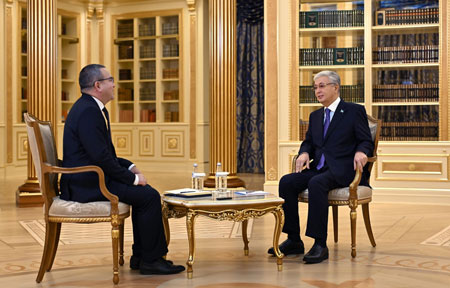
‍Kazakhstan’s Strategic Vision: Interview with President Kassym-Jomart Tokayev


‍President Kassym-Jomart Tokayev outlined Kazakhstan's strategic development priorities in an extensive interview with Turkistan newspaper on January 5, 2026. The head of state declared: "Kazakhstan has entered a new stage of modernisation". The discussion covered economic achievements, digital transformation, strategic resources, political reforms, and social priorities.

The President reviewed last year's results, highlighting substantial progress: "Our economy grew by more than 6 per cent, GDP exceeded $300 billion, and GDP per capita surpassed $15,000". These "record figures not only for our country, but for the entire region" demonstrate sustained growth. Tokayev emphasized the "irreversibility of reforms," stating: "Kazakhstan took a major step forward on the path of modernisation".

Declaring 2026 the "Year of Digitalisation and Artificial Intelligence," Tokayev pointed to Kazakhstan's solid foundation: "Astana Hub innovation cluster brings together two thousand companies," with "total exports of IT services in 2025 amounted to approximately one billion US dollars". Key achievements include "two supercomputers – Alem.Cloud and Al-Farabium," AI-Sana program training for over 650,000 students, and plans for a "specialised, research-focused AI university."

More Articles


X


Click here to view it online‍ ‍ ‍