


A Practical Global Development Framework for Shared Prosperity - 5 years of GDI
By Kirtan Bhana
6 August 2026
As the Global Development Initiative (GDI) marks its fifth anniversary, the conversation surrounding international development is steadily moving beyond traditional measures of economic growth. Increasingly, development is being viewed as a comprehensive undertaking—one that balances economic opportunity with environmental sustainability, responsible governance, technological innovation and equitable participation in the global economy.
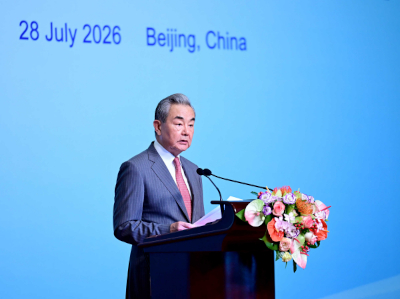
Addressing the High-Level Meeting on the Global Development Initiative in Beijing, Chinese Foreign Minister Wang Yi reaffirmed China's commitment to advancing sustainable development in partnership with the United Nations and countries across the Global South. Five years after President Xi Jinping introduced the GDI at the United Nations General Assembly, the initiative has evolved from a policy proposal into an expanding platform for international cooperation.
According to Wang Yi, more than 130 countries and international organisations have expressed support for the initiative, while the Group of Friends of the GDI has grown to 88 member states. Thousands of development projects, capacity-building programmes and technology partnerships have been launched under its framework, demonstrating an emphasis on practical implementation rather than political rhetoric.
The significance of the initiative extends beyond statistics. It reflects an increasingly important debate about what genuine development should mean in the twenty-first century.
For many developing nations, sustainable development is no longer simply about increasing GDP or attracting foreign investment. It is equally about building resilient economies capable of managing energy resources efficiently, protecting environmental assets, strengthening food security, embracing digital innovation and creating employment that leads to long-term prosperity rather than perpetual dependence.
Perhaps most importantly, development must enable countries to move progressively from reliance on external assistance towards greater economic self-reliance. Investment, technology transfer, skills development and fair participation in international trade offer more durable foundations for prosperity than aid alone.
This philosophy aligns closely with the aspirations of the Global South, where governments increasingly seek partnerships that expand productive capacity, strengthen domestic industries and improve competitiveness in global markets. Sustainable development succeeds when countries become active participants in value creation rather than remaining suppliers of raw materials or recipients of financial assistance.
China's own development experience provides one example of this transition. Over several decades the country has transformed itself through long-term planning, industrial modernisation, infrastructure investment, technological advancement and sustained poverty reduction. While every nation's development path is unique, the willingness to share practical experience has become an important feature of China's international engagement.
Equally notable is China's continued confidence in multilateral institutions. Its consistent support for the United Nations reflects a foreign policy that places considerable emphasis on multilateral cooperation and an increasingly multipolar international order. As global challenges become more interconnected—from climate change and food security to energy resilience and digital governance—effective international institutions remain essential for coordinating collective responses.
Wang Yi's remarks also underscored several priorities that are becoming central to global development discussions: creating peaceful conditions for development, accelerating implementation of the Sustainable Development Goals, promoting innovation and narrowing the technological divide, particularly in artificial intelligence, while reforming global financial and economic governance to better reflect the interests and realities of developing countries.
These themes are becoming increasingly relevant as governments prepare for the next phase of international development policy. The United Nations is already looking beyond the current 2030 Sustainable Development Goals towards a post-2030 development framework. At the same time, the international community is approaching a significant moment of institutional transition, with the forthcoming United Nations General Assembly expected to be the final session under Secretary-General António Guterres before the organisation begins selecting new leadership. The transition presents an opportunity to renew momentum around development priorities and strengthen the role of the United Nations in an increasingly complex geopolitical landscape.
For Africa, this evolution presents both responsibility and opportunity. The continent possesses abundant natural resources, a rapidly growing population and significant renewable energy potential. The challenge lies in converting these advantages into diversified industrial economies that generate value locally, expand regional trade through the African Continental Free Trade Area (AfCFTA) and create sustainable employment for future generations.
Development therefore cannot be measured solely by financial investment or infrastructure delivered. Its true success is reflected in stronger institutions, improved governance, environmental stewardship, affordable and reliable energy, competitive industries and societies that are increasingly capable of determining their own economic futures.
As the Global Development Initiative enters its second five-year phase, its long-term significance will ultimately be judged not by the number of participating countries, but by whether it contributes to a more balanced international economic system—one where development becomes a pathway to shared prosperity, greater resilience and genuine self-reliance.