

Zimbabwe–SA: Better and Stronger Together
By Kirtan Bhana
24 April 2026
The relationship between Zimbabwe and South Africa is often framed through politics and economics, but its true depth lies in a shared civilizational story, one that stretches back millennia before colonial borders divided the region. Archaeological discoveries such as Great Zimbabwe Kingdom and Mapungubwe reveal a sophisticated pre-colonial world of trade, governance and cultural exchange. These sites stand as memory of an interconnected, highly skilled society that once thrived across what is now southern Africa.
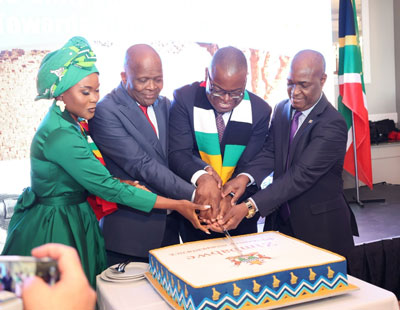
Today, that historical continuity is finding renewed relevance in a rapidly shifting global order. Zimbabwe’s National Day (April 12) celebrations, held annually on Zimbabwe Independence Day, provide a moment for reflection and recalibration. At the 46th anniversary reception in Pretoria, hosted by Ambassador Lovemore Mazemo, this sense of resurgence was palpable. The occasion, attended by South African officials including Deputy Minister of Communications and Digital Technologies, Mondli Gungubele, acknowledged the strength diplomatic and cultural ties binding the two nations.
In his keynote address, Zimbabwe’s Minister of Foreign Affairs, Amon Murwira, positioned independence beyond a static achievement but as an evolving responsibility. Rooted in the principles of the Constitution of Zimbabwe, the country’s foreign policy is guided by the doctrine of being “a friend to all and an enemy to none.” This approach reflects a pragmatic understanding of global interdependence while maintaining a firm commitment to sovereignty, peace and mutual respect.
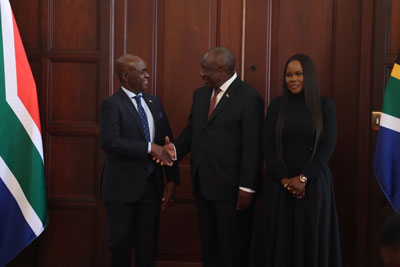
Zimbabwe’s aspirations extend beyond regional cooperation. Its bid for a non-permanent seat on the United Nations Security Council for the 2027–2028 term signals a desire to contribute more actively to global governance. Drawing on a history of peacekeeping missions in countries such as Angola and South Sudan, Zimbabwe presents itself as a credible advocate for diplomacy and equitable international relations.
Yet, perhaps the most powerful symbol of Zimbabwe’s ongoing journey of decolonization and cultural restoration is the return of the Zimbabwe Bird. These iconic soapstone carvings, long removed during the colonial era have gradually been repatriated, including the final piece returned from South Africa this month after 137 years. More than artefacts, these birds embody national identity, resilience and the reclamation of historical narrative.
The repatriation extended beyond objects to include human remains taken under colonial-era pseudoscientific practices, a process acknowledged by South African officials as an essential act of restorative justice. Such gestures highlight a maturing bilateral relationship, one that is political, economic and also moral and historical.
Economically and socially, the ties between Zimbabwe and South Africa are profound. Millions of Zimbabweans live and work in South Africa, contributing to sectors ranging from healthcare to construction. Trade between the two nations remains robust, with South Africa as Zimbabwe’s largest trading partner. This interdependence reinforces the necessity of cooperation in addressing shared challenges such as migration, energy security and regional development.
At a time when global power structures are shifting and the call for a more representative international system grows louder, the Zimbabwe–South Africa partnership offers a compelling model. It is a relationship grounded in shared struggle and in shared potential, anchored by history, strengthened by diplomacy, and oriented toward a future of collective prosperity.
As Minister Murwira emphasized, the bonds between these nations are foundational. From ancient civilizations to modern statecraft, from the symbolism of the Zimbabwe Bird to strategic engagement on the global stage, Zimbabwe and South Africa continue to demonstrate that their greatest strength lies in unity.
(In memory of Jonisayi Maromo)